

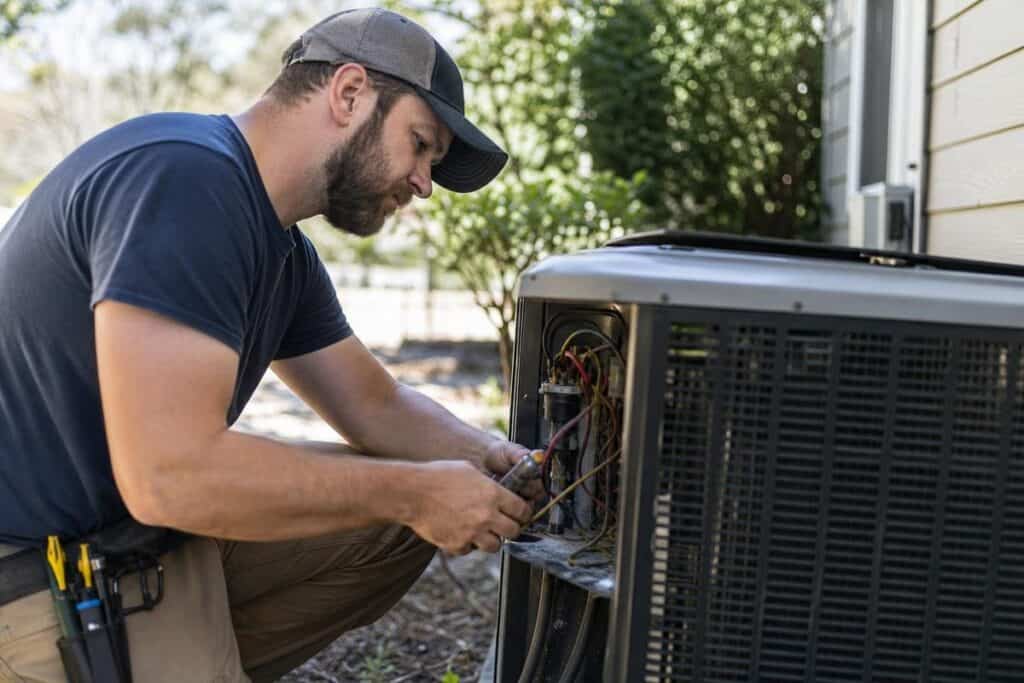
An AC that keeps running without shutting off is usually caused by low refrigerant, a clogged air filter, or a unit that is too small for your home. If your San Marcos home’s AC keeps running without ever cycling off, something is wrong, and it will cost you more on every utility bill until it gets fixed. Summer temps in San Marcos regularly push past 95 degrees, and your cooling system is already working hard. Add a refrigerant leak, a dirty filter, or an undersized unit and the system just never catches up. We Care Plumbing, Heating and Air is based in Murrieta and serves San Marcos and the surrounding communities, and we have been diagnosing and fixing these exact problems across Southern California since 2000. We know what to look for fast.
AC running nonstop? Get it diagnosed before the next heat wave hits.
Key Takeaways
- A San Marcos home’s AC keeps running most often because of low refrigerant, a dirty filter, or a system that is too small for the space.
- San Marcos summer highs above 95 degrees put extra strain on cooling systems, especially in west-facing homes with poor attic insulation.
- An AC that never shuts off is not just uncomfortable; it drives up energy bills and shortens the life of your equipment.
- Most causes of a continuously running AC can be diagnosed in a single service visit and repaired the same day.
Why San Marcos Homes Are Especially Vulnerable to This Problem
It’s 3 in the afternoon, the thermostat is set to 74, and your AC has been running for three hours straight. The house is still 80 degrees. In neighborhoods like San Elijo Hills and Twin Oaks Valley, this is not an unusual call for us to get in July. San Marcos sits in a transitional climate zone, close enough to the coast near Carlsbad to catch the marine layer some mornings but far enough inland that summer highs push past 95 degrees from late June through September. That mix of coastal moisture and inland heat puts real stress on residential cooling systems.
An AC that won’t shut off is more than uncomfortable. It drives up your energy bill, wears out your equipment faster, and usually signals a problem that will get worse if you ignore it. The good news is that most causes are fixable, and some you can check yourself before calling anyone.
This guide covers the most common reasons why your San Marcos home’s AC keeps running without reaching your set temperature, what you can check on your own, and when you need a licensed technician. Our team serves greater San Diego County and the Inland Empire, including San Marcos and surrounding communities. If you need hands-on help, our air conditioning repair service is available throughout the region.
What It Means When Your AC Keeps Running
An air conditioner that never shuts off is not just annoying. It is a sign that something in the system is not working the way it should. In hillside developments where afternoon heat can push indoor temperatures hard even with the AC running, it is easy to assume constant operation is normal. Sometimes it is not.
Constant Running vs. Short-Cycling: What Is the Difference
These are two separate problems, and they get confused all the time.
Constant running means the compressor and air handler never shut off. The system runs in one long, unbroken cycle even after the thermostat setpoint should have been reached. Your home stays warm. The unit just keeps going.
Short-cycling is the opposite failure. The unit kicks on, runs for two to four minutes, shuts off, then restarts within five to ten minutes. It never completes a full cooling cycle. Both conditions put serious wear on the compressor, which is the most expensive single component in your system. Both also drive up your electricity bill fast.
How to Tell Which Problem You Have
You can figure this out yourself before calling anyone. Here is a simple two-step check:
- Look at your thermostat. Note the setpoint temperature and the actual room temperature reading.
- Time your AC. If it runs for more than 20 minutes without shutting off and the indoor temp never drops to the setpoint, you likely have a constant-running problem. If it shuts off but restarts within 10 minutes, that is short-cycling.
Either result means your system needs a professional look, not just a thermostat adjustment. Our blog on troubleshooting tips when AC is not working covers additional signs to watch for before your appointment.
Not sure which problem you have? Our technicians diagnose AC issues same-day across San Marcos and the surrounding areas.
The Most Common Reasons Your AC Won’t Stop Running
Most cases of AC troubleshooting in San Marcos and the surrounding North County area come down to four root causes. Some you can fix yourself in five minutes. Others need a technician. Here is what to check first.
Dirty Air Filter
Yes, a clogged filter really can make your AC run all day. The filter sits between your return air duct and the evaporator coil. When it gets packed with dust and debris, airflow drops. The system has to run longer to move the same volume of cooled air through your home.
Homes near active construction, like the newer phases around San Elijo Hills, clog filters faster than average because grading dust travels on the afternoon breeze. Pet hair makes it worse. Check your filter every month and replace it every one to three months depending on your household. A clean filter is the single easiest thing you can do to cut runtime. For more ways to reduce how hard your system works, read our blog on summer energy-saving tips for your HVAC system.
Low Refrigerant or a Coolant Leak
Refrigerant is the substance that absorbs heat from your indoor air and releases it outside. Most systems installed after 2010 use R-410A. Older units use R-22. When the charge is low due to a leak, your system loses cooling power and runs continuously chasing the temperature setpoint.
Watch for these signs: ice forming on the refrigerant lines, a hissing sound near the outdoor unit, or warm air blowing from your vents even after the system has been running for a while. This is not a DIY fix. Under federal law, refrigerant handling requires EPA Section 608 certification, and our technicians carry it. Call a certified professional to find the leak, repair it, and recharge the system to the manufacturer’s spec. We Care Plumbing, Heating and Air holds a CSLB contractor’s license, so refrigerant work is handled correctly and legally.
Frozen Evaporator Coil
Restricted airflow or low refrigerant can cause the evaporator coil inside your air handler to ice over. Once that happens, the coil cannot absorb heat at all. Your AC runs continuously but barely cools anything.
You can spot this yourself. Open the access panel on your indoor air handler and look for visible frost or ice on the coil. If you see it, shut the system off completely and switch the fan to “on” at the thermostat to help it thaw. Give it two to four hours. Replace the filter. Then restart the system. If it freezes again, the problem is refrigerant or airflow related and needs a professional diagnosis through our AC repair team.
Wrong System Size
An undersized AC runs constantly because it cannot keep up with your home’s heat load. An oversized unit is a different problem: it cools the space too fast, shuts off before it finishes removing humidity, then restarts when temperatures rebound. Both situations drive up your energy bill and wear out the system faster.
Homes with west-facing walls and tile roofs carry a higher heat load than their square footage suggests. The only way to know if your system is properly sized is a Manual J load calculation. Our team has been evaluating system sizing for North County homeowners since 2000. If you think your unit is the wrong size, our San Marcos HVAC team can run the numbers and give you a straight answer.
Why San Marcos Homes Put Extra Strain on AC Systems
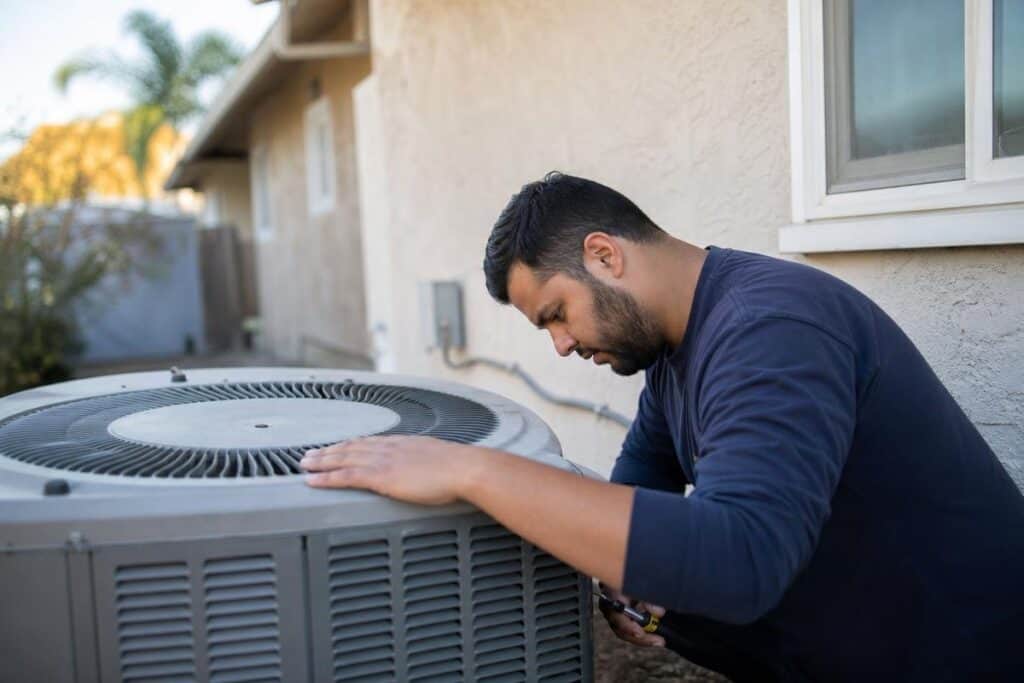
If your AC keeps running while a friend’s system near the coast shuts off on schedule, it is not a coincidence. Homes in the 92069 and 92078 zip codes sit in a transitional climate zone, caught between the cooler coastal marine layer and the hotter inland corridor. Summer highs regularly push past 95 to 100 degrees from late June through September. That kind of sustained heat load forces your AC to work far harder than a system a few miles closer to the ocean ever would.
Inland Climate Heat Load
Homes in newer tract developments face a specific problem. West-facing walls absorb direct afternoon sun for hours. Tile roofs radiate that heat down into attic spaces, which can reach 140 to 150 degrees on a hot day. That heat pushes through your ceiling into the living space, adding to the indoor heat load your AC has to overcome.
Santa Ana wind events make things worse. Those low-humidity, high-temperature conditions drive refrigerant pressure fluctuations and force your system into longer cycles, sometimes causing what feels like short cycling in Southern California homes that are otherwise running fine. A proper Manual J load calculation, which measures the actual heat gain of your specific home, is the only way to know if your system is correctly sized for this geography.
Attic Insulation and Duct Losses
We crawl through a lot of attics in this area, and what we find in homes built in the 1990s and early 2000s is consistent. Insulation settles and thins out over time. Flex duct runs develop small leaks at connections and fittings. A system losing 20 to 30 percent of its cooled air before it reaches your living space is effectively cooling the attic. The unit runs and runs because the house never reaches setpoint.
An attic insulation inspection is often the fastest way to find out why your system runs constantly. Sealing and reinsulating can cut run times noticeably, sometimes without touching the AC unit itself. If duct leakage is the culprit, our air duct cleaning and duct sealing service can address it directly.
Thermostat and Electrical Issues That Keep Your AC Running
Faulty Thermostat
Yes, your thermostat can absolutely cause your air conditioner to run all day. The thermostat reads your room temperature and tells the AC when to start and stop. If that reading is off, the system never gets the signal to shut down.
A dirty sensor, a thermostat placed near a sunny window, or one sitting directly under a supply vent will read the room as warmer than it actually is. The AC keeps chasing a setpoint it can never reach. Smart thermostats can develop software glitches that cause the exact same problem.
Here is a quick self-check you can do safely. Hold an accurate thermometer next to your thermostat for five minutes and compare the readings. A difference of more than two to three degrees points to a calibration or placement issue. If the numbers match and the AC still won’t shut off, the problem likely sits elsewhere in the system. A maintenance plan is one of the best ways to catch thermostat drift before it turns into a bigger repair.
Wiring and Relay Switches
Inside your outdoor unit is a part called a contactor relay. Think of it as an electrical switch that opens and closes to start and stop the compressor. When it sticks in the closed position, the compressor runs nonstop, even after your thermostat is satisfied.
Contactors wear out over time. Corrosion and electrical surges speed that process up. Inland North County neighborhoods see more electrical surges during peak summer demand and Santa Ana wind events, which puts extra stress on these components. This is a technician-level repair. Do not open the electrical panel on your outdoor unit.
Our NATE-certified technicians stock common relay and contactor parts on their service vehicles. For most homes in the area, that means same-day repairs are possible. If you want a full diagnosis, our air conditioning repair service covers both electrical components and system performance.
Thermostat or electrical issues can keep your AC running around the clock and drive up your energy bill fast. Call us at (760) 858-3830 and we will send a NATE-certified technician to diagnose the problem the same day.
Should You Repair or Replace Your AC?
This is the question we get most often after a homeowner calls about why their AC runs constantly. The honest answer depends on the age of your system, its repair history, and whether a single fix will actually solve the problem or just delay the inevitable.
Repairs That Are Worth Making
If your system is under 10 years old and has been reasonably maintained, a single component failure is almost always worth fixing. A bad capacitor, stuck relay, or dirty evaporator coil can cause constant running without meaning the whole system is failing. Replacing a capacitor typically restores normal cycling the same day. A coil cleaning can recover significant efficiency on a unit that still has years of life left.
These are cost-effective fixes. If the refrigerant charge is correct, the thermostat is working, and the rest of the system checks out, one repair is the right call. Our AC repair service covers exactly these kinds of targeted fixes.
Signs the System Is Past Its Prime
Southern California systems work hard. In inland valleys and North County communities, summer heat loads push units to their limits for months at a stretch. A 12-year-old system here may have accumulated wear equal to a much older unit in a cooler climate.
Look for these replacement signals:
- The unit is 12 to 15 years old or older
- It has needed multiple repairs over the past two seasons
- It uses R-22 refrigerant, which is phased out and expensive to source
- The compressor is drawing high amperage
- It runs constantly but still cannot keep up with your home’s heat load
That last point matters most. No repair fixes a system that is simply too worn to match your home’s cooling demand. If you are leaning toward replacement, read our complete guide to HVAC installation or explore a modern heat pump installation as a high-efficiency alternative. We have been helping Southern California homeowners make this call honestly since 2000, and we will never push you toward the most expensive option.
An AC Maintenance Checklist to Prevent Constant Running
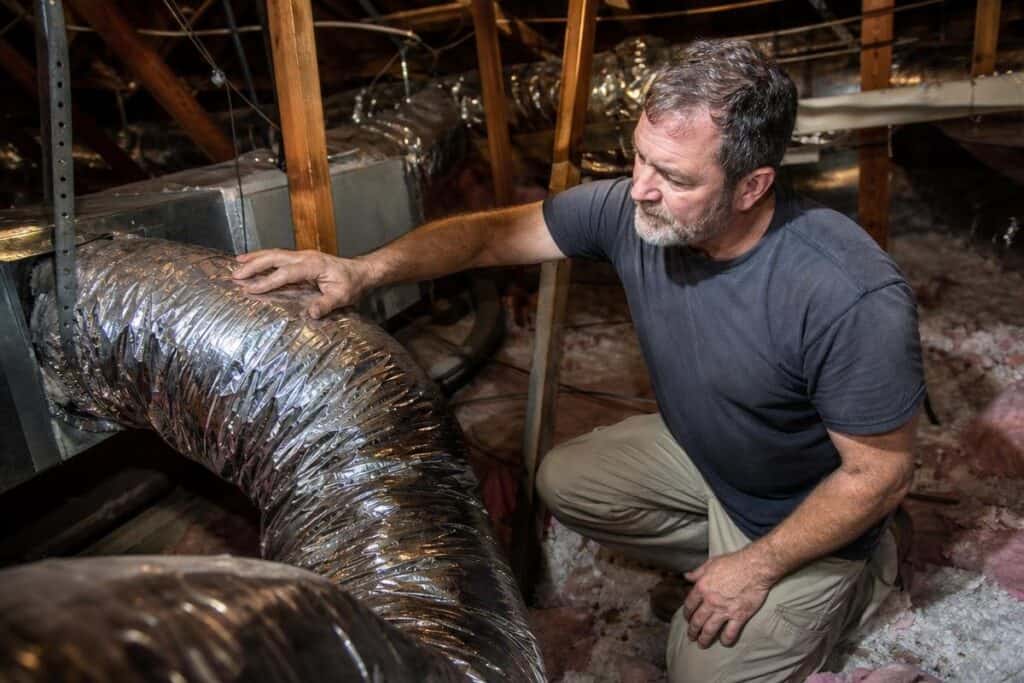
Most of the problems covered in this article are preventable. Regular maintenance catches a dirty coil, a weak capacitor, or a clogged drain line before it turns into a system that never cycles off through a 100-degree heat wave. Here is what you can check yourself and what a licensed technician should handle each season.
DIY Checks You Can Do Today
Run through this list before calling anyone. You may find the fix yourself.
- Replace the air filter. Check it every month. Replace it every one to three months. A clogged filter is the single most common cause of an overworked system.
- Clear the outdoor condenser unit. Remove leaves, dirt, and debris. Keep at least two feet of clearance on all sides. After wind events that push debris into inland valleys, check this first.
- Open all supply and return vents. Closed vents or furniture blocking returns forces the system to work harder and run longer.
- Check the condensate drain line. A blocked drain triggers a safety float switch that can shut the system down or cause water damage. Flush it with a cup of distilled vinegar every few months, especially during humid late-summer conditions when the coastal marine layer raises indoor moisture.
- Set the thermostat fan to “Auto,” not “On.” The “On” setting runs the blower continuously even when the compressor is off. That feels like the system never stops.
For a broader seasonal checklist, the year-end HVAC maintenance checklist on our blog covers additional steps worth bookmarking.
What a Professional Tune-Up Covers
DIY checks only go so far. Our NATE-certified technicians go deeper during a seasonal tune-up. A full air conditioning maintenance includes checking refrigerant charge and inspecting for leaks, cleaning evaporator and condenser coils, testing capacitors and contactors, measuring airflow across the coil, inspecting ductwork for leaks, and verifying thermostat calibration.
These are exactly the failure points that cause constant running. Catching them early saves you from a breakdown mid-summer and keeps electric bills in check. Ask us about our San Marcos maintenance plan for scheduled tune-ups that keep your system running right all year.
Frequently Asked Questions
Is It Normal for My AC to Run All Day in Southern California During Summer?
On days above 100 degrees, a properly sized system may run 80 to 90 percent of the day just keeping up with the heat load. That is normal. What is not normal is a system that runs continuously without ever reaching your thermostat setpoint. If your home never cools down to the temperature you set, something is wrong, and running the system harder will not fix it.
How Long Should an AC Cycle Last Before Shutting Off?
A healthy central AC typically runs 15 to 20 minutes per cycle before shutting off. On extremely hot days, cycles can stretch to 30 minutes. If your system shuts off after 2 to 5 minutes and immediately restarts, that is short-cycling. It signals a real problem, not just a hot day.
Can a Dirty Air Filter Really Cause My AC to Run Constantly?
Yes, and it is one of the most common causes we see. A clogged filter restricts airflow so severely that the evaporator coil cannot absorb heat efficiently. The system keeps running because it cannot finish the job. Replacing a dirty filter takes less than five minutes and costs a few dollars. Check yours first before calling anyone.
What Does Short-Cycling Do to My AC System Over Time?
Short-cycling is hard on the compressor. Every startup draws a surge of electrical current far exceeding the steady-state draw during normal operation. Frequent startups accelerate wear on the compressor windings and the capacitor. Over time, this shortens system lifespan significantly and leads to expensive repairs that could have been avoided. Our air conditioning maintenance catches early signs of short-cycling before they become compressor failures.
How Much Does It Cost to Fix an AC That Keeps Running?
Cost depends entirely on the cause. A new filter is a few dollars. A capacitor replacement is a relatively minor repair. A refrigerant recharge or coil cleaning is a mid-range service call. A compressor or full system replacement is a major investment. We Care Plumbing, Heating and Air diagnoses the problem first and explains every option before any work begins. No guesswork, no pressure.
When Should I Call a Technician Instead of Troubleshooting Myself?
Call a technician if you have already replaced the filter and cleared the vents and the system is still running constantly or short-cycling. Call immediately if you notice any of these:
- Ice forming on the refrigerant lines
- A hissing or bubbling sound near the outdoor unit
- Water pooling around the indoor handler
- A burning smell coming from the vents
Those are signs of a problem that gets worse the longer the system runs. Our emergency HVAC services are available for situations that cannot wait.
Ready to Get Started with We Care Plumbing, Heating and Air?
Call (760) 858-3830 to speak with our team directly. We’re ready to answer your questions, walk you through your options, and help you find the right solution for your needs. Whether you’re just starting to plan or ready to move forward, we’ll make the process simple and stress-free.
Reach out today and let’s talk about how we can help.