

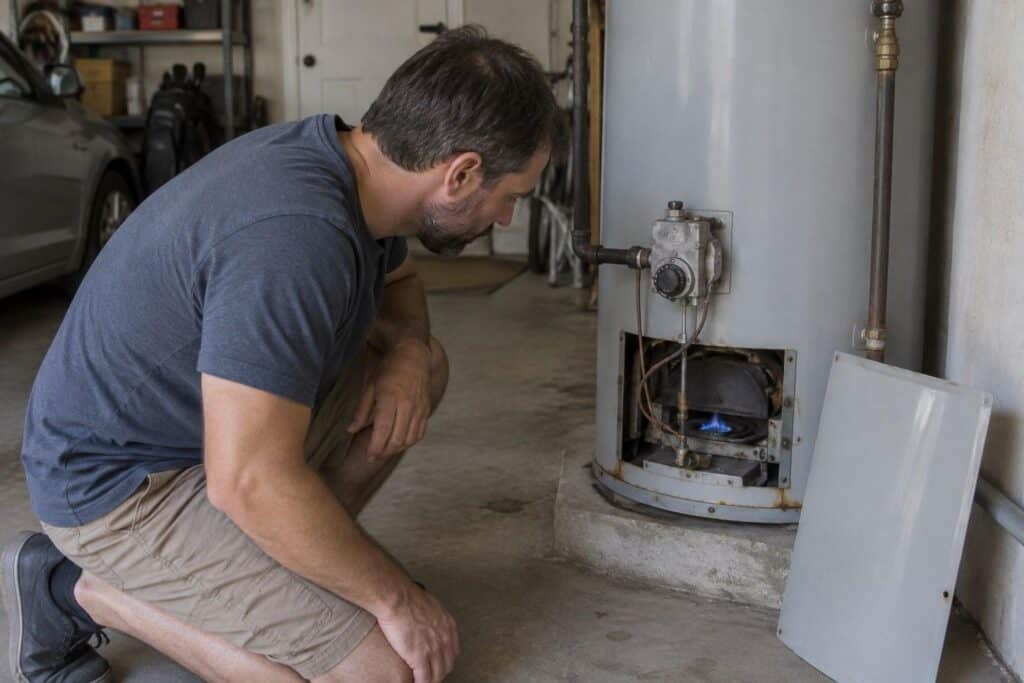
When your water heater pilot light keeps going out, you lose hot water at the worst possible moments, and you start to wonder whether something unsafe is happening inside the tank. The good news is that most repeat pilot outages trace back to a short list of causes, from a worn thermocouple to a dirty pilot tube or a draft problem in the garage.
At We Care Plumbing, Heating and Air, we help homeowners in Orange and across Orange County sort out what is a simple fix and what needs a licensed technician. Below you will find the likely causes, safe steps you can take, and clear signs it is time to call for help.
Tired of relighting the pilot every few days? Let a licensed technician find the real cause.
Key Takeaways
- A pilot light that will not stay lit is usually caused by a failing thermocouple, a dirty pilot assembly, a gas supply issue, or poor combustion air.
- If you ever smell gas, leave the home right away, avoid switches and flames, and call Southern California Gas Company (SoCalGas) or 911 from outside.
- Relighting is only safe when you follow the instructions printed on your water heater label and feel comfortable doing it.
- Drafts from open garage doors and Santa Ana winds can blow out a pilot, but repeat outages on calm days point to a part or supply problem.
- Routine water heater maintenance helps catch worn parts, sediment, and venting issues before they leave you with cold showers.
How a Gas Water Heater Pilot Light Works
Before you can figure out why the flame keeps dying, it helps to understand what the pilot actually does. Most standard tank water heaters in Orange homes run on natural gas. A small, steady flame called the pilot sits under the tank and waits to ignite the main burner whenever the water cools down.
The Pilot, the Burner, and the Gas Control Valve
The gas control valve, usually a box on the front of the tank with a temperature dial, feeds a tiny stream of gas to the pilot. When the thermostat senses the water has cooled, the valve opens more gas to the main burner, and the pilot lights it. Once the water reaches the set temperature, the burner shuts off, but the pilot stays on.
The Thermocouple or Flame Sensor
A thermocouple is a thin metal rod that sits in the pilot flame. As it heats, it generates a very small electrical signal that tells the gas valve it is safe to keep gas flowing. If the flame goes out or the thermocouple stops sending that signal, the valve shuts off gas as a safety measure. Some newer units use a thermopile or an electronic flame sensor instead, but the idea is the same.
Why This Safety Design Matters
This system is designed to fail safe. When the pilot goes out, gas to the pilot and burner should stop. That is good news for safety, but it also means any weakness in the flame, the sensor, or the gas supply will show up as a pilot that will not stay lit.
Common Reasons a Water Heater Pilot Light Keeps Going Out
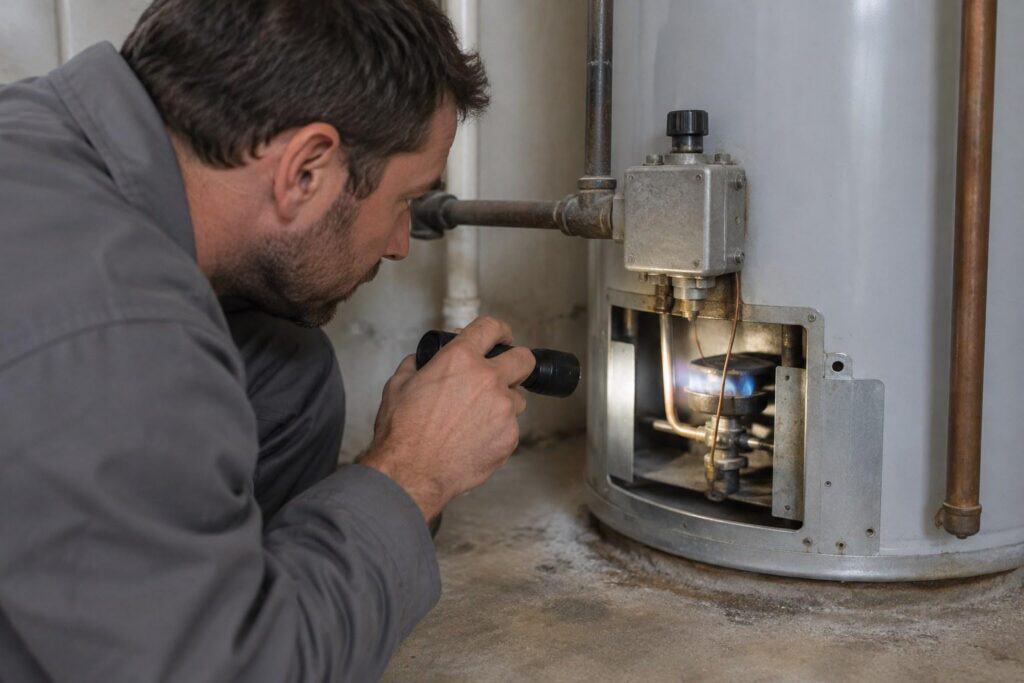
Repeat outages rarely happen at random. In most homes, one of the following issues is behind the problem. Some are simple, while others call for a licensed professional.
A Worn or Misaligned Thermocouple
The thermocouple is one of the most frequent culprits. Over time, constant heat wears it down, and it may not produce enough signal to hold the gas valve open. It can also get bumped out of position so the flame no longer wraps around its tip. You may notice the pilot lights fine while you hold the button, then goes out a few seconds or minutes after you let go.
A Dirty or Clogged Pilot Tube
The pilot orifice is tiny, so even a little dust, lint, or corrosion can choke the flame. A weak flame may look small, lazy, or mostly yellow instead of a crisp blue. That weaker flame may not heat the thermocouple well enough, which leads to shutdowns. Garages in Orange tend to collect dust, laundry lint, and debris from yard tools, all of which can find their way into the burner compartment.
Drafts and Wind
Many water heaters in Orange County tract homes sit in the garage or in an exterior closet. An open garage door, a nearby fan, or strong Santa Ana winds pushing air down the vent can blow out a pilot. If outages line up with windy days or with times the garage door stays open, a draft may be the cause. If the pilot goes out on calm days too, keep looking.
Gas Supply Problems
The pilot needs steady gas pressure. A partially closed gas shutoff valve, a kinked or undersized supply line, or a problem with the gas control valve can starve the flame. If other gas appliances in the home are also acting up, the issue may be upstream of the water heater. Gas line work should always be handled by a qualified professional or the utility.
Poor Combustion Air or Venting Issues
A gas water heater needs fresh air to burn properly and a clear vent to carry exhaust outside. Storage boxes stacked around the tank, a closet door that seals too tightly, or a blocked or disconnected vent can choke the flame. Some modern units also have a flammable vapor sensor or a thermal cutoff that shuts the system down if conditions near the burner are unsafe. Repeated trips from these devices are a warning sign, not a nuisance.
A Failing Gas Control Valve
If the thermocouple, pilot tube, and gas supply all check out, the gas control valve itself may be wearing out. These valves contain small internal parts that can fail with age. Replacing a gas valve is a job for a licensed technician because it involves gas connections and careful testing afterward.
Want a clear answer instead of guessing? Talk with a licensed technician today about your water heater.
Quick Symptom Guide for Pilot Light Problems
Use the table below to match what you are seeing with the likely cause and the right next step. It is a starting point, not a substitute for an in-person inspection.
| What You Notice | Likely Cause | Recommended Next Step |
|---|---|---|
| Pilot lights but goes out when you release the button | Worn or misaligned thermocouple | Schedule a repair to test or replace the thermocouple |
| Small, weak, or yellow pilot flame | Dirty pilot tube or orifice, or poor combustion air | Clear clutter around the tank and have the pilot assembly cleaned |
| Pilot goes out on windy days or with the garage door open | Drafts or downdraft through the vent | Reduce drafts and have the vent and cap inspected |
| Pilot will not light at all | Gas supply issue or closed shutoff valve | Confirm the shutoff is open, then call a professional |
| Smell of gas near the water heater | Possible gas leak | Leave the home and call SoCalGas or 911 from outside |
| Repeated shutdowns with a reset or sensor light | Flammable vapor sensor, thermal cutoff, or venting problem | Stop relighting and schedule a professional inspection |
Safe Steps You Can Take Before Calling a Pro
There are a few things you can safely check on your own. Anything beyond these steps should be left to a licensed technician, especially when gas lines or valves are involved.
Start With a Safety Check
Before you touch anything, use your nose. If you smell rotten eggs or sulfur near the water heater or anywhere in the home, do not try to relight the pilot. Leave the home right away, do not use light switches, phones, or anything that could create a spark, and call SoCalGas or 911 from outside.
Clear the Area Around the Tank
Move boxes, paint cans, cleaning supplies, and other stored items away from the water heater. Flammable products should never sit near a gas appliance. Giving the tank breathing room improves combustion air and reduces the chance of a vapor sensor shutting things down.
Check the Gas Shutoff Valve
Locate the gas shutoff on the supply line leading to the water heater. The handle is usually open when it runs parallel to the pipe. If someone recently worked in the garage, it may have been bumped partly closed. Do not loosen fittings or attempt any repair on the gas line itself.
Relight Only Per the Manufacturer Label
Every gas water heater has lighting instructions printed on a label on the tank. If you are comfortable doing so, follow those steps exactly, including any waiting period that lets gas clear before relighting. If the pilot will not stay lit after one or two careful attempts, stop. Repeatedly relighting a unit with an underlying problem is not a fix, and it can mask a safety issue.
Watch for Patterns
Write down when the pilot goes out. Note the weather, whether the garage door was open, and whether other gas appliances were running. These details help a technician narrow down the cause faster during a visit.
Orange, CA Conditions That Affect Your Water Heater

Local conditions play a real role in how water heaters behave in Orange and the surrounding Orange County communities. Knowing what you are up against helps you protect your system.
Santa Ana Winds and Garage Installations
Fall and winter Santa Ana wind events bring strong, gusty air into the area. In homes where the water heater sits in a garage or a small exterior closet on a stucco wall, those gusts can push air down the vent or through closet louvers and snuff out a weak pilot. A properly installed vent cap and clean, sealed connections make a big difference.
Hard Water and Sediment Buildup
Much of Southern California has hard water, and that mineral content settles at the bottom of tank water heaters as sediment. Heavy sediment makes the burner work harder and can lead to overheating near the base of the tank. While sediment does not directly blow out a pilot, it adds stress to the whole system and can contribute to sensor trips. Regular flushing during water heater maintenance helps keep that buildup in check.
Cool Nights and Higher Hot Water Demand
Even with mild days, Orange sees cooler evenings, especially in winter. Showers run longer, and the burner cycles more often. That extra workload tends to expose a weak thermocouple or a struggling gas valve, which is why many homeowners notice pilot problems when the weather cools.
Older Homes and Aging Equipment
Orange has a mix of historic homes near Old Towne and newer tract neighborhoods. Older installations may have outdated venting, tight closets, or water heaters that are near the end of their service life. If your unit is aging and the pilot keeps going out, it may be worth weighing repair against replacement. You can read more about how heating equipment wears in our post on troubleshooting heater problems.
When to Call a Professional for Pilot Light Problems
Some pilot issues are quick to resolve, but many involve gas components that should only be handled by trained hands. Here is when to stop troubleshooting and get help from professional water heater repair.
Signs You Need Help Now
- You smell gas at any point, before or after relighting.
- The pilot goes out repeatedly even on calm days with the garage closed.
- The pilot flame looks yellow, orange, or unstable.
- You see scorch marks, soot, or melted parts near the burner access panel.
- A reset button, status light, or flammable vapor sensor keeps tripping.
- Water is pooling around the base of the tank.
If you have a leak, no hot water, or a safety concern after hours, our emergency plumbing services page explains how to reach help.
What a Technician Will Check
During a visit, a licensed technician typically inspects the thermocouple or flame sensor, cleans the pilot assembly, checks gas pressure and the gas control valve, and looks at the vent, draft hood, and combustion air supply. They will also look at the overall condition of the tank, including sediment and signs of corrosion, so you get an honest picture of whether a repair makes sense.
Repair or Replace
A new thermocouple or a pilot cleaning often solves the problem. But if the tank is leaking, heavily corroded, or the gas valve has failed on an older unit, replacement may be the smarter choice. If you are considering an upgrade, a tankless model is one option worth discussing, and flexible financing options can help you plan.
How to Keep Your Pilot Light Burning Reliably
Preventive care is the simplest way to avoid repeat outages. A few habits and a regular service schedule go a long way.
Schedule Regular Maintenance
An annual inspection lets a technician clean the pilot assembly, test the thermocouple, flush sediment, and confirm the vent is drawing properly. Members of our VIP Club maintenance plan get routine care that helps catch small problems before they turn into cold showers.
Keep the Space Clean and Open
Dust around the burner compartment, keep stored items at a safe distance, and avoid using the water heater closet as extra storage. Make sure louvered doors or vents that supply combustion air stay unblocked.
Plan Ahead for Trips
If you are leaving town, many water heaters have a vacation setting that keeps the pilot lit while lowering the burner temperature. For other ways to protect your plumbing while you are gone, see our tips on turning your water off before vacation.
Want your water heater checked by a licensed technician serving Orange, CA? Request a visit and get a clear plan.
Frequently Asked Questions
Is it dangerous if my water heater pilot light keeps going out?
A pilot that goes out is not automatically dangerous, because the gas valve is designed to shut off gas when the flame is lost. However, repeat outages signal a problem with a part, the gas supply, or venting. If you ever smell gas, leave the home and call SoCalGas or 911 from outside before doing anything else.
Can I relight the pilot light myself?
Yes, if you feel comfortable and you follow the lighting instructions printed on the label on your water heater exactly. Take your time and respect any waiting period the label lists. If the pilot will not stay lit after one or two careful attempts, stop and call a licensed technician instead of trying again and again.
How do I know if the thermocouple is bad?
A classic sign is a pilot that lights while you hold the control knob down but goes out shortly after you release it. A thermocouple can also look discolored or sit outside the flame. A technician can test its output and position, then replace it if needed, which is often a straightforward repair on many standard tank units.
Why does my pilot light go out when it is windy?
Strong gusts, including Santa Ana winds, can push air down the vent or through garage and closet openings and blow out a weak pilot. A loose or damaged vent cap makes this worse. If outages only happen on windy days, have the vent checked. If they also happen on calm days, another issue is likely involved.
What color should a healthy pilot flame be?
A healthy pilot flame is usually a steady, crisp blue with perhaps a small hint of yellow at the tip. A flame that is mostly yellow or orange, flickering, or lazy can point to dirt in the pilot assembly or poor combustion air. That kind of flame deserves a professional look, since it may also affect safe burning.
How often should my water heater be serviced?
Most homeowners benefit from having a gas water heater inspected about once a year. A yearly visit lets a technician clean the pilot area, test safety components, check venting, and flush sediment that builds up from hard water. Regular care helps the system run more reliably and can help you spot aging equipment before it fails.
Ready to Get Started with We Care Plumbing, Heating and Air?
If your water heater pilot light keeps going out, you do not have to keep relighting it and hoping for the best. We Care Plumbing, Heating and Air (CA License #779604) helps homeowners in Orange, Anaheim, Tustin, Santa Ana, Villa Park, and nearby Orange County communities find the cause and fix it safely. Call (951) 277-6848 or visit our Orange office at 1144 W Shelley Ct, Orange, CA 92868.