

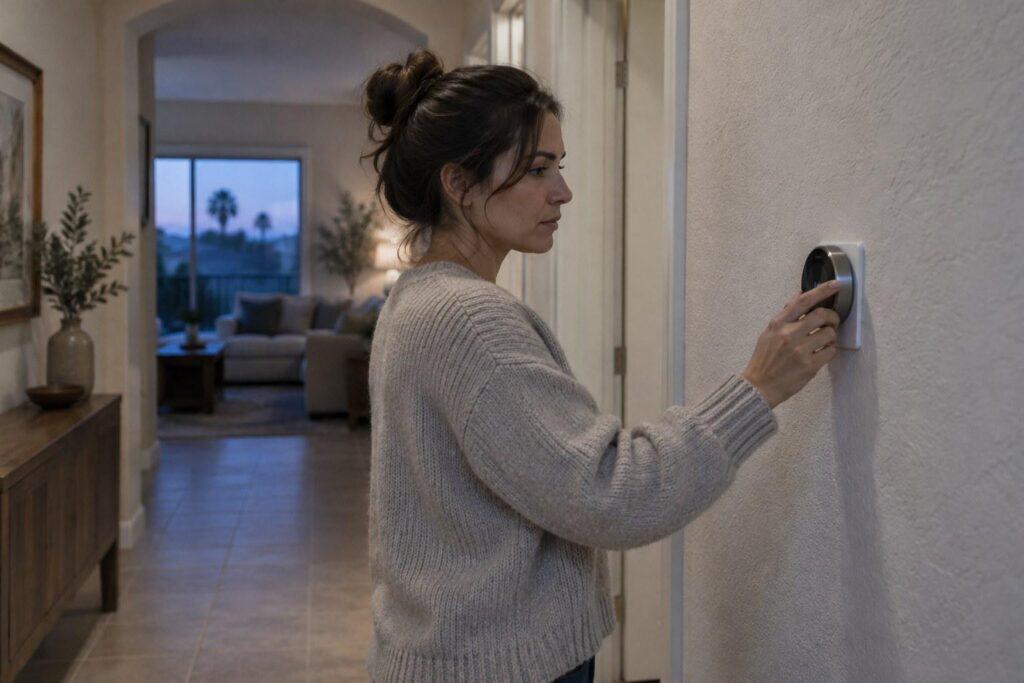
A heat pump not heating on a chilly San Marcos evening can leave you wrapped in blankets and wondering whether the problem is a simple setting or a failing part. Many causes are small and easy to rule out, such as a thermostat in the wrong mode, a tripped breaker, or a clogged filter. Others, like a refrigerant leak or a stuck reversing valve, need a trained technician.
At We Care Plumbing, Heating and Air, we help North San Diego County homeowners sort out heating problems safely. Below you will find the checks you can do yourself, the warning signs that point to a repair, and what to expect when a professional arrives.
If your home is getting colder and the basic checks do not help, our team can take a look.
Key Takeaways
- Start with the thermostat, because a wrong mode, a low setpoint, or dead batteries can make a working heat pump seem broken.
- Check the air filter and the breakers for both the indoor air handler and the outdoor unit before assuming a major failure.
- Cool air during a defrost cycle is normal for a few minutes, but constant cool air while set to heat is not.
- Ice that stays on the outdoor coil for hours, loud grinding, or a burning smell are signs to turn the system off and call a professional.
- Refrigerant, electrical, and reversing valve problems are not do-it-yourself repairs and should be handled by a licensed technician.
- Seasonal maintenance before the cooler months helps you catch weak parts before they leave you without heat.
How a Heat Pump Heats Your San Marcos Home
A heat pump does not burn fuel to make heat. Instead, it moves heat from the outdoor air into your home, even when the air outside feels cool.
The same system that cools your home in summer runs in reverse during winter. A part called the reversing valve switches the direction of refrigerant flow, so the indoor coil becomes the warm side and the outdoor coil becomes the cool side. That heat transfer approach is why heat pumps can be an efficient option in moderate climates like San Marcos.
Why Our Local Climate Matters
San Marcos and the surrounding North County communities usually see mild winters, but inland valleys can get surprisingly cold at night. Clear skies after a warm afternoon let temperatures drop quickly, and morning dew or fog can settle on the outdoor coil. Those conditions are exactly when you are most likely to notice a heat pump that struggles.
Because heat pumps here often sit idle for much of the year in heating mode, small problems can hide for months. A unit that cooled fine all summer may reveal a weak part the first cold week of the season.
Heat Pump Versus Furnace Expectations
A heat pump delivers air that feels warm but not hot. If you are used to a gas furnace, the air from the vents may feel milder than you expect, even when everything is working. The key is whether the house actually reaches and holds the temperature you set. If you are still deciding which system fits your home, our post on whether a heat pump or a furnace is better for a Southern California home covers the differences.
Simple Checks to Try When You Have a Heat Pump Not Heating
Many heating complaints come down to something quick. Work through these steps in order before you schedule a visit. Do not open electrical panels on the equipment or remove access covers on the units.
Confirm the Thermostat Settings
Make sure the thermostat is set to heat, not cool, auto, or fan only. Set the temperature a few degrees above the current room temperature and wait several minutes, since many systems have a built-in delay to protect the compressor.
If your thermostat runs on batteries, a weak battery can cause a blank screen or erratic behavior. Replace them and check again. Also look for a schedule or vacation mode that may be overriding your setting. Our tips on adjusting your thermostat for California winter months can help you choose comfortable, efficient settings.
Look at the Emergency or Auxiliary Heat Setting
Some thermostats include an emergency heat or auxiliary heat option. Emergency heat turns off the outdoor unit and relies on backup electric heat strips, if your system has them. If someone switched to this setting by accident, your energy use may jump while the heat pump itself sits idle. If emergency heat is the only way you get warm air, that is a sign the heat pump needs service.
Check the Air Filter
A dirty filter restricts airflow across the indoor coil. With too little air moving, the system can overheat, shut itself off, or deliver weak, lukewarm air. In homes with pets, dusty yards, or recent Santa Ana wind events, filters can clog faster than you expect.
Pull the filter and hold it up to a light. If you cannot see light through it, replace it with the correct size. Our post on the importance of HVAC filters explains why this simple task matters so much.
Reset the Breakers
A heat pump normally has two power sources: one for the indoor air handler and one for the outdoor unit. Check your main electrical panel, often in the garage in many North County tract homes, for a tripped breaker. Reset it once by switching it fully off and then back on.
If the breaker trips again, leave it off. Repeated tripping points to an electrical or component problem that needs a professional.
Inspect the Outdoor Unit
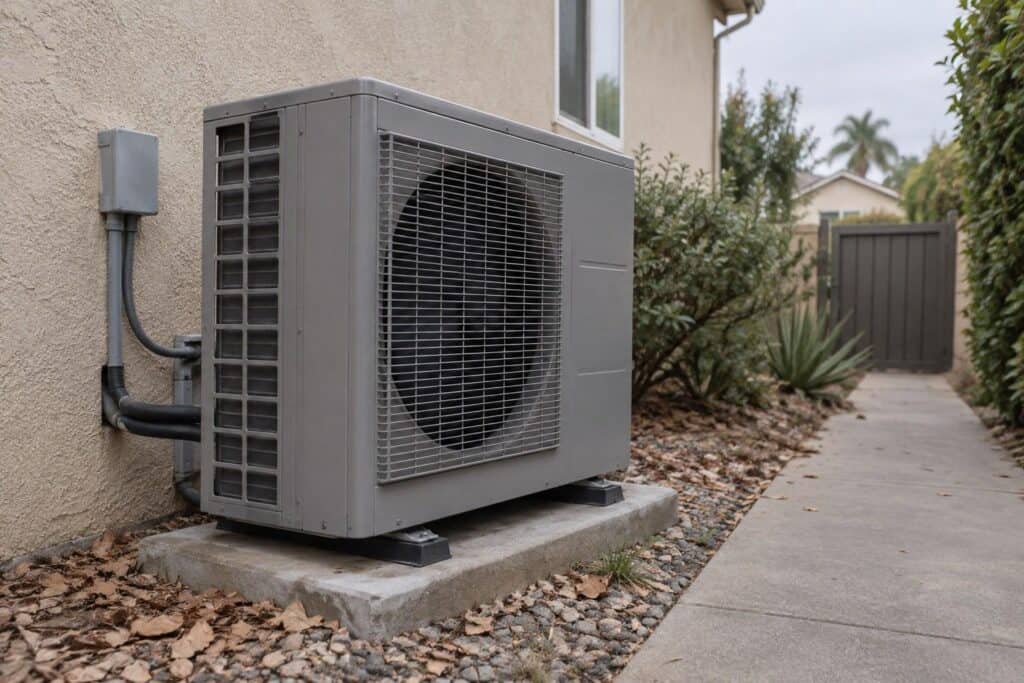
Walk outside and look at the outdoor unit from a safe distance. Leaves, yard debris, overgrown shrubs, or items stored against the cabinet can block airflow. Clear loose debris by hand and keep about two feet of open space around the unit. Do not spray water into the unit while it is running, and do not try to chip away ice.
Still not getting warm air after these checks? Talk with our team about what you are seeing.
Common Causes That Need a Professional
When simple checks do not restore heat, the cause is usually inside the equipment. These problems call for a licensed technician with the right tools and training.
Low Refrigerant or a Refrigerant Leak
Refrigerant carries heat between the indoor and outdoor coils. A heat pump does not use up refrigerant, so a low charge means there is a leak somewhere. Signs include weak heat, longer run times, ice on parts of the outdoor coil, or a hissing sound. Handling refrigerant requires certification, so this is never a do-it-yourself job.
A Stuck Reversing Valve
The reversing valve lets your system switch between cooling and heating. If it sticks or its control coil fails, the heat pump may keep blowing cool air even when set to heat. A technician can test the valve and its electrical signal to see whether a repair or replacement is needed.
Defrost Control Problems
In cool, damp weather, frost can form on the outdoor coil. A normal heat pump runs a defrost cycle to melt it, which can briefly cause cooler air indoors and some steam outside. If the defrost board, sensor, or timer fails, ice can build into a thick layer that blocks heat transfer.
Electrical and Capacitor Failures
Capacitors help start the compressor and fan motors. A weak capacitor may cause a humming sound, a fan that does not spin, or a unit that tries to start and stops. Contactors, relays, and wiring can also wear out over time. These parts store electrical charge, so leave them to a professional.
Compressor or Fan Motor Trouble
The compressor is the heart of the system. If it fails to start, overheats, or makes grinding sounds, the heat pump cannot move heat. Outdoor and indoor fan motors can also wear out. A technician can tell whether the issue is the motor itself or a control part that powers it.
Duct Leaks and Airflow Issues
Sometimes the heat pump works, but warm air never reaches your rooms. Disconnected or leaking ducts in the attic can dump heated air where you do not need it. If some rooms stay cold while others feel fine, ductwork may be part of the problem. A duct inspection can help uncover these issues.
Quick Symptom Guide for Heat Pump Problems
Use this table to match what you notice with a likely cause and your next step. It is a general starting point and not a substitute for an on-site diagnosis.
| What You Notice | Possible Cause | Suggested Next Step |
|---|---|---|
| No air from vents and outdoor unit is silent | Thermostat setting, dead batteries, or tripped breaker | Check thermostat mode and batteries, then reset breakers once |
| Cool air for a few minutes, then warm air returns | Normal defrost cycle | No action needed if heat returns on its own |
| Cool air the whole time the system is set to heat | Reversing valve or refrigerant problem | Turn the system off and schedule professional service |
| Weak, lukewarm airflow | Dirty filter, blocked return, or duct issue | Replace the filter and make sure vents are open |
| Thick ice on the outdoor coil that does not melt | Defrost control failure, low refrigerant, or airflow problem | Turn the system off and call a technician |
| Humming, buzzing, or clicking without starting | Capacitor, contactor, or motor issue | Shut the system off and schedule an inspection |
| Breaker trips again after one reset | Electrical fault or failing component | Leave the breaker off and call a professional |
| Burning smell or smoke | Overheated motor or wiring | Turn off power at the breaker and call for help |
When Normal Behavior Looks Like a Problem
Heat pumps do a few things that surprise new owners. The outdoor unit may release a cloud of steam during defrost. These are usually signs the system is working as designed.
What matters is the pattern. Short, occasional events are normal. Constant cool air, ice that never clears, or repeated shutdowns are not.
Safety Steps to Take Before You Troubleshoot
Your safety comes first. Most heat pumps run fully on electricity, but some homes pair a heat pump with a gas furnace as a backup in what is called a dual fuel system. If your home has gas appliances, know the warning signs.
If You Smell Gas
If you notice a rotten egg smell, leave the home right away. Do not flip light switches, use the thermostat, or light any flame. Once you are outside and at a safe distance, call San Diego Gas & Electric (SDG&E) or call 911. Do not return until you are told it is safe.
Electrical Safety
Never open the outdoor unit cabinet or the air handler panel. These areas contain high voltage and parts that hold an electrical charge even after the power is off. Limit your checks to the thermostat, the filter, the breaker panel, and clearing debris from outside the unit.
Protect Your Equipment
If you see heavy ice, hear grinding, or smell burning, turn the system off at the thermostat. Running a damaged heat pump can turn a modest repair into a much larger one. Use safe space heaters as directed by their manufacturer while you wait for service, and keep them away from curtains, bedding, and furniture.
What to Expect From Professional Heat Pump Repair
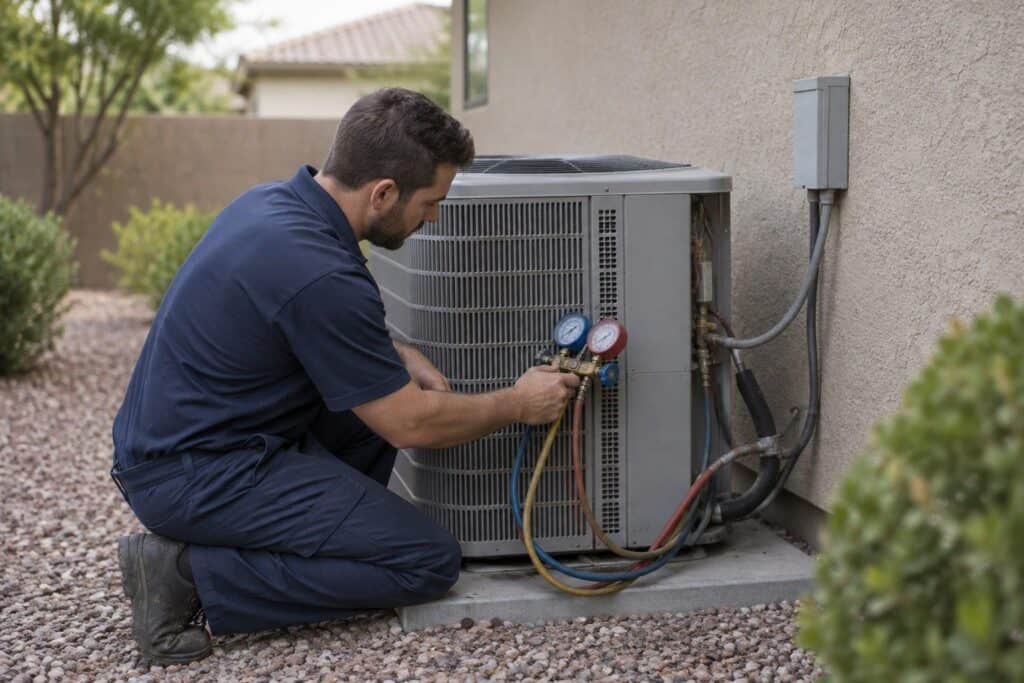
When you call a professional, a clear process helps you understand what is happening and why. At We Care Plumbing, Heating and Air, we are licensed under CA License #779604, and our technicians work on heat pumps, furnaces, and ductless mini-splits throughout North San Diego County.
A Full System Diagnosis
A technician will start by asking what you noticed and when it began. They will then check the thermostat, airflow, electrical parts, refrigerant pressures, and the defrost and reversing controls. The goal is to find the root cause rather than treat a symptom.
Clear Options Before Work Begins
Once the problem is found, you should get a plain explanation of the repair and your options. If the system is older and needs a major part, the technician can talk through repair versus replacement so you can decide what makes sense for your home and budget. Our heat pump repair service in San Marcos covers everything from capacitors to reversing valves.
When Replacement Makes More Sense
Heat pumps that need frequent repairs, struggle to keep up, or use an outdated refrigerant may be good candidates for replacement. Newer systems often offer better comfort and efficiency. If you are weighing an upgrade, our San Marcos heat pump installation team can help you compare options, and financing options are available for qualified homeowners. As a Mitsubishi Diamond Contractor, we also install ductless systems for homes where ductwork is limited.
How to Prevent Heat Pump Heating Problems
A little routine care goes a long way. Because your heat pump handles both cooling and heating, it works year round and benefits from regular attention.
Schedule Seasonal Maintenance
A professional tune-up before the cooler months lets a technician clean coils, test electrical parts, check refrigerant levels, and confirm the defrost and reversing controls work. Our San Marcos heating maintenance service is designed to catch small issues early. Pair this with the VIP Club maintenance plan so visits stay on schedule.
Keep Up With Filters
Check your filter monthly during heavy use and replace it as needed. After windy days, wildfire smoke, or home projects that create dust, check it sooner.
Protect the Outdoor Unit
Trim plants away from the cabinet, keep sprinklers from spraying directly on the coil, and make sure gutters do not drip onto the top of the unit. Dripping water can freeze into heavy ice on cold nights.
Pay Attention to Early Signs
New noises, longer run times, rising energy bills, or rooms that feel cooler than usual are early warnings. Learn more about getting the most from your system in our post on heat pump efficiency.
Want to stay ahead of cold nights this season? Book a heat pump inspection with our team.
Frequently Asked Questions
Why is my heat pump blowing cold air?
A heat pump may blow cool air for a few minutes during a normal defrost cycle, and warm air should return on its own. If cool air continues the entire time the thermostat is set to heat, the cause could be a thermostat setting, a stuck reversing valve, or low refrigerant. Check the settings first, then call a technician if the problem continues.
Is ice on my heat pump normal?
A light layer of frost on the outdoor coil can be normal on cool, damp nights, and the defrost cycle should melt it. Thick ice that covers the coil or stays for hours is not normal. It may point to a defrost control failure, low refrigerant, or an airflow problem. Turn the system off and schedule professional service rather than chipping the ice away.
Should I use emergency heat?
Emergency heat is meant for short-term use when the heat pump itself cannot run. It relies on backup heat strips, which typically use more electricity. If you need to switch to emergency heat to stay warm, use it only until a technician can diagnose the heat pump. Leaving it on by accident can raise energy use without fixing the real problem.
How long should a heat pump run to warm my home?
When you suspect a heat pump not heating, remember that heat pumps usually run in longer, steady cycles than furnaces, and the air from the vents feels warm rather than hot. That is normal. The real question is whether your home reaches and holds the setpoint. If the system runs constantly and the house never warms up, or it shuts off often without reaching temperature, it is time for an inspection.
Can a dirty filter stop my heat pump from heating?
Yes. A clogged filter limits airflow across the indoor coil, which can cause weak heat, overheating, or safety shutdowns. It also makes the system work harder and wear out sooner. Checking the filter is one of the easiest steps you can take. Replace it with the correct size and see whether heating improves before you schedule a repair visit.
When should I repair or replace my heat pump?
Repair often makes sense for a single failed part on a system in good overall shape. Replacement may be worth considering when the heat pump needs frequent repairs, cannot keep your home comfortable, or uses an older refrigerant. A licensed technician can inspect the equipment, explain your options clearly, and help you weigh comfort, efficiency, and long-term reliability before you decide.
Ready to Get Started with We Care Plumbing, Heating and Air?
A heat pump not heating does not have to mean a long, cold wait. If the thermostat, filter, and breaker checks do not solve the problem, We Care Plumbing, Heating and Air can diagnose the cause and get warm air flowing again. We serve San Marcos and communities across North San Diego County, along with Southwest Riverside County and Orange County. Call (760) 858-3830 or visit our San Marcos office at 445 Ryan Dr # 101, San Marcos, CA 92078.