

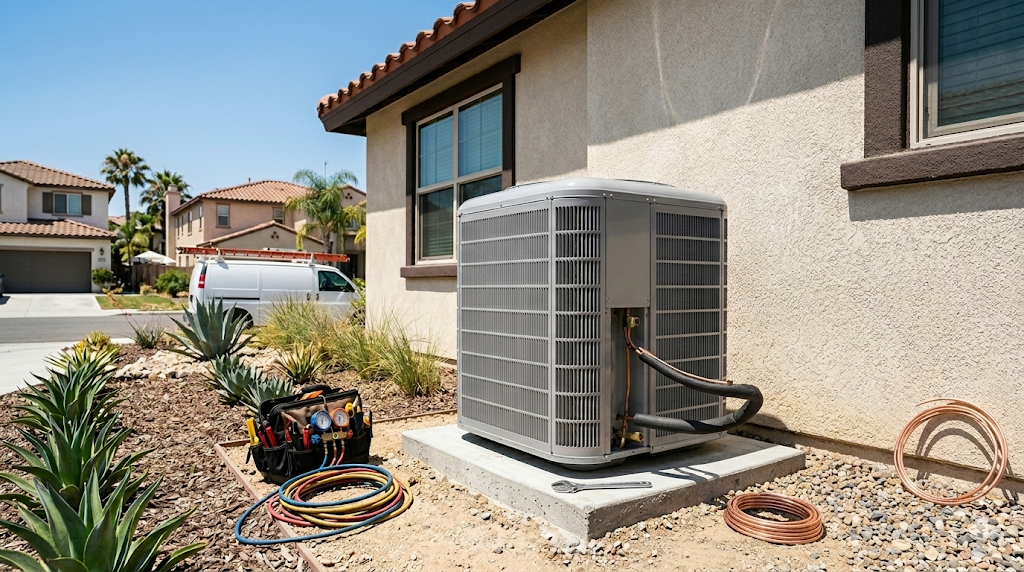
Orange County summers push air conditioning systems hard. Inland areas like Anaheim, Orange, and Tustin can see triple-digit heat during August, while coastal cities like Newport Beach and Huntington Beach deal with persistent marine humidity that accelerates equipment wear. Whether your current system is aging out after 15 years, failing at the worst possible time, or you are building a new home and need to start fresh, HVAC installation is one of the most significant home improvement investments an Orange County homeowner will make.
The decisions you make before the install matter as much as the install itself. The right system type, the right size, the right efficiency rating, and the right contractor determine whether you get a system that runs quietly and efficiently for 20 years or one that fails early, drives up utility bills, and creates air quality problems in your home.
We Care Plumbing, Heating and Air serves Orange County homeowners with professional HVAC installation, replacement, and service. This guide walks through everything you need to know before scheduling an installation.
When to Replace Rather Than Repair Your HVAC System
One of the first questions Orange County homeowners face is whether to repair a struggling system or replace it entirely. The answer depends on the system’s age, repair history, and the cost of the repair relative to the system’s remaining useful life.
A central air conditioning system or heat pump in Southern California typically has a useful life of 15 to 20 years with proper maintenance. If your system is within a few years of that range and is experiencing a significant failure such as a compressor issue or refrigerant leak requiring major work, replacement is often the financially sound choice rather than investing in repairs on aging equipment.
The 5,000 rule is a useful rule of thumb: multiply the age of the equipment in years by the estimated repair cost in dollars. If that number exceeds 5,000, replacement is generally more economical than repair. A 12-year-old system facing a $600 repair is worth fixing. A 16-year-old system facing a $400 repair gives a number of 6,400, which tilts toward replacement.
Other clear signals that replacement is the better path include rising summer utility bills that cannot be explained by rate increases, uneven cooling or heating throughout the house that persists despite maintenance, unusual noises or refrigerant issues requiring repeated service calls, and systems using R-22 refrigerant, which is no longer manufactured and is increasingly expensive to service.
Types of HVAC Systems for Orange County Homes
Orange County’s climate creates specific HVAC requirements. Hot dry summers inland, mild but humid coastal winters, and homes that range from 1950s ranch houses to modern two-story construction all factor into system selection. The three main system types worth understanding are central split systems, heat pumps, and ductless mini-splits.
Central split systems are the most common HVAC configuration in Orange County homes. The system consists of an outdoor condensing unit that houses the compressor and condenser coil, an indoor air handler that contains the evaporator coil and blower, and a furnace or heating system connected to the air handler. Cooled or heated air is distributed throughout the home via a duct network. Central systems are well-suited for homes with existing ductwork and provide whole-home comfort from a single thermostat.
Heat pumps have become increasingly popular in Orange County because the mild winters here mean the climate rarely demands the heating output that only a gas furnace can provide. A heat pump functions as both an air conditioner in summer and a heating system in winter by reversing the refrigeration cycle to pull heat from outdoor air and move it indoors. Modern cold-climate heat pumps operate efficiently in temperatures that would have made earlier models struggle, and Orange County’s mild winters are well within the efficient operating range of any quality heat pump. Heat pump installations paired with solar panels are a common energy efficiency upgrade in newer Orange County homes.
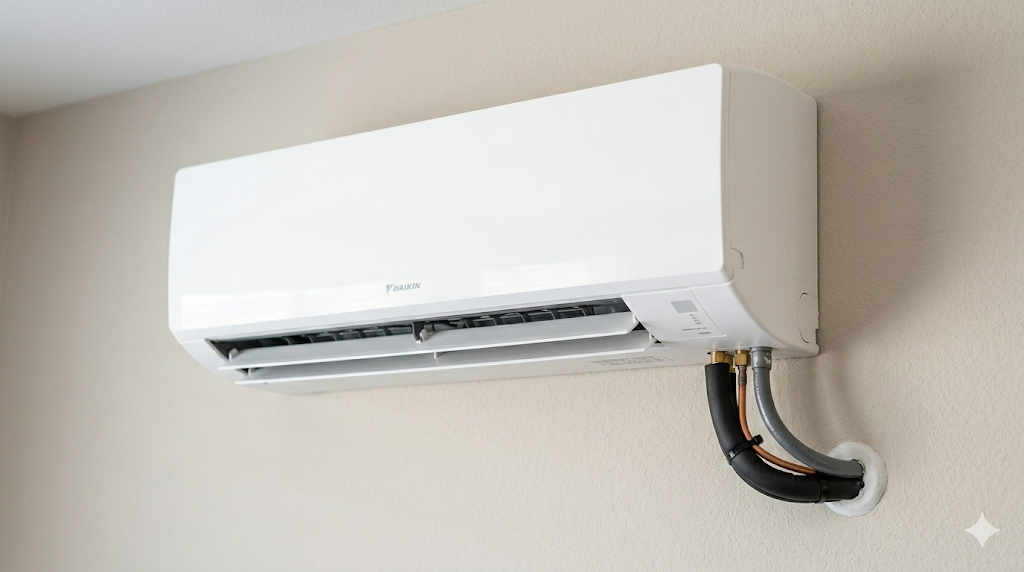
Ductless mini-split systems consist of an outdoor compressor unit connected to one or more indoor air handlers mounted high on interior walls, with no ductwork required. Mini-splits are an excellent choice for homes without existing ductwork, room additions, garages converted to living space, and situations where zoned cooling and heating of specific rooms is the priority. Each indoor unit can be controlled independently, providing energy savings by conditioning only occupied spaces.
HVAC Sizing: Why Getting It Right Matters in Orange County
An oversized air conditioner in an Orange County home will short cycle, meaning it reaches the thermostat setpoint quickly and shuts off before completing a full cooling cycle. Short cycling prevents the system from running long enough to adequately dehumidify the air, which is a significant problem in coastal Orange County cities where humidity contributes heavily to comfort issues in summer. An oversized system also creates uncomfortable temperature swings, increases energy consumption, and accelerates wear on compressor components because of repeated starts and stops.
Proper HVAC sizing requires a Manual J load calculation, a formal process that accounts for your home’s square footage, ceiling height, insulation values, window area and orientation, local climate data for Orange County, air infiltration, and the number of occupants. A Manual J calculation from a qualified HVAC contractor takes into account the specific conditions of your home rather than applying a simple square footage multiplier.
When selecting a contractor for HVAC installation in Orange County, ask whether they perform a Manual J calculation. Any contractor who offers to size your new system based solely on the size of the old unit or a square footage estimate without further analysis is skipping a critical step.
SEER Ratings and Energy Efficiency
SEER stands for Seasonal Energy Efficiency Ratio, a measure of how efficiently a central air conditioning or heat pump system converts electricity into cooling over an entire season. Higher SEER ratings mean lower operating costs and lower environmental impact for an equivalent amount of cooling.
California has some of the most stringent minimum efficiency standards in the country. As of current federal and California state requirements, new central air conditioning equipment installed in the Southwest climate zone, which includes Orange County, must meet a minimum SEER2 rating of 15.2, which corresponds to roughly SEER 16 under the older rating standard. Equipment installed before this standard applied still operates in many Orange County homes, and replacing an old 10 or 12 SEER unit with a new system can reduce air conditioning energy use by 25 to 35 percent.
For homeowners who run air conditioning heavily through Orange County summers, investing in a higher-efficiency system in the 18 to 20 SEER range offers meaningful long-term savings. Variable-speed compressor technology, available in higher-efficiency systems, allows the equipment to modulate its output precisely to match cooling demand rather than simply cycling on and off at full capacity, resulting in more consistent comfort, better humidity control, and quieter operation.
The HVAC Installation Process in Orange County
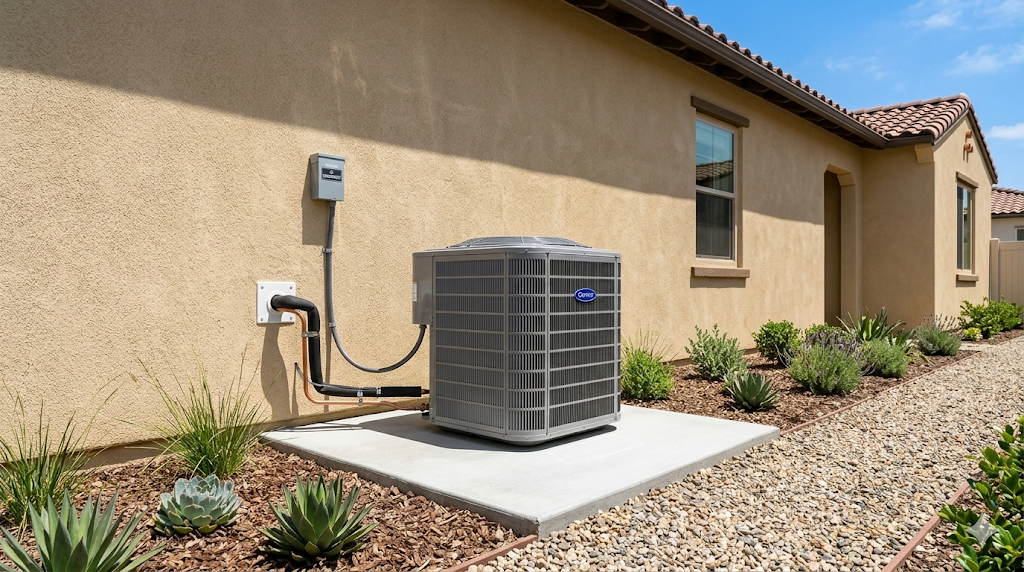
Understanding what a proper HVAC installation involves helps Orange County homeowners evaluate contractor proposals and set appropriate expectations for the project.
The process begins with the Manual J load calculation and system selection discussed above. Once equipment is selected and ordered, the installation typically proceeds with removal of the existing outdoor unit and indoor equipment, followed by installation of the new outdoor condensing unit on a properly sized pad or mounting system. The refrigerant line set connecting the outdoor and indoor units is inspected and replaced if it is not compatible with the new refrigerant type or has signs of deterioration.
Indoors, the air handler or coil is installed in the attic, closet, or utility room location. Ductwork is inspected and repaired or sealed as needed, since duct leakage is one of the largest sources of energy waste in Orange County homes. The new system is connected, the refrigerant charge is verified against manufacturer specifications using proper gauges and weighing equipment, and the system is tested through a complete heating and cooling cycle.
A quality HVAC installation also includes setting up the thermostat with proper wiring and configuration, verifying airflow at registers throughout the home, and reviewing maintenance requirements with the homeowner. The entire process for a standard residential replacement installation in an Orange County home typically takes one to two days.
Permits and Inspections for HVAC Installation in Orange County
Permit requirements vary by city within Orange County. Anaheim, Santa Ana, Irvine, Costa Mesa, and other cities each have their own building departments and processes, though the work itself must meet California Mechanical Code requirements in all jurisdictions. A licensed HVAC contractor will typically pull the permit on your behalf as part of the installation contract.
Be cautious of HVAC contractors who propose to install equipment without pulling a permit. Beyond the code compliance issues, an unpermitted installation can create complications when you sell your home, void equipment manufacturer warranties that require code-compliant installation, and leave you without recourse if the work is done incorrectly.
What HVAC Installation Costs in Orange County
HVAC installation costs in Orange County vary based on system type, equipment efficiency, the complexity of the installation, and whether ductwork modifications are required.
A standard central air conditioning replacement in a typical Orange County home, including removal of the old equipment, a new 14 to 16 SEER system, and standard installation with no major ductwork changes, generally falls in the range of $5,000 to $9,000 depending on system size and specific equipment selection. Higher-efficiency systems or complete HVAC system replacements that include both air conditioning and heating equipment will typically run $8,000 to $15,000 or more for larger homes.
Ductless mini-split installations depend on the number of zones required. A single-zone system for one room or addition might run $3,500 to $5,000 installed. A whole-home multi-zone system with three or four indoor units could range from $10,000 to $18,000 or more.
Utility rebates and California state programs can reduce out-of-pocket costs for high-efficiency upgrades. Southern California Edison and other Orange County utilities have offered rebates for qualifying high-efficiency systems. The California Energy Commission’s financing programs and federal tax credits for qualifying heat pumps and high-efficiency systems have also been available in recent years. Ask your installer about current incentive programs when evaluating quotes.
How to Choose an HVAC Contractor in Orange County
The HVAC contractor you choose matters as much as the equipment you select. A high-quality system installed poorly will not perform to its potential and may fail well before its expected service life. A lower-efficiency system installed by a skilled contractor will likely serve you better than premium equipment put in incorrectly.
Verify that any contractor you consider holds a valid California HVAC contractor license. In California, HVAC installation requires either a C-20 Warm-Air Heating, Ventilating and Air Conditioning Contractor license or a C-38 Refrigeration Contractor license depending on the scope of work. You can verify a contractor’s license status through the California Contractors State License Board.
Ask specifically whether the contractor performs a Manual J calculation for sizing, pulls required permits, and provides a written warranty covering both labor and equipment. Request references from other Orange County homeowners for comparable projects. Be wary of quotes that seem significantly lower than others, as they may reflect shortcuts in equipment quality, permitting, or installation practices.
We Care Plumbing, Heating and Air is a licensed HVAC contractor serving Orange County homeowners. Contact us at (760) 309-3474 to schedule an in-home HVAC assessment and receive a detailed installation quote.
Frequently Asked Questions
How long does HVAC installation take in an Orange County home?
A standard residential HVAC replacement in an Orange County home typically takes one full day for a straightforward installation. Projects involving ductwork modifications, the installation of a multi-zone ductless system, or unusual equipment access situations may require two days. Your contractor should be able to give you a clear time estimate after the initial site assessment.
Do I need to replace my ductwork when I install a new HVAC system in Orange County?
Not always. If your existing ductwork is in good condition, properly sealed, and sized correctly for the new equipment, it can remain in place. However, many Orange County homes built before 1990 have ductwork with significant leakage, undersized main trunks, or flex duct that has deteriorated over time. A thorough duct inspection as part of the HVAC installation process will identify whether repairs, sealing, or replacement are warranted. Unsealed or leaking ducts can waste 20 to 30 percent of conditioned air before it reaches living spaces.
Is a heat pump a good choice for Orange County homes?
Yes. Orange County’s climate makes heat pumps one of the most practical and efficient HVAC options available. The mild winters mean outdoor temperatures rarely drop below the efficient operating range of modern heat pumps, allowing them to provide low-cost heating throughout most of the year. In summer, a heat pump functions as a highly efficient air conditioner. For homeowners with solar panels or those seeking to reduce natural gas consumption, an all-electric heat pump system is an especially strong choice.
What SEER rating should I look for when replacing my Orange County AC?
California requires new installations to meet at minimum the current SEER2 efficiency standards for the Southwest climate zone, which corresponds to roughly SEER 16 under legacy ratings. For Orange County homeowners who run their air conditioning heavily through summer, investing in a system rated at 18 to 20 SEER typically provides meaningful long-term energy savings that offset the higher upfront equipment cost. The right choice depends on your usage patterns, budget, and how long you plan to stay in the home.
What permits are required for HVAC installation in Orange County cities?
Most Orange County cities require a mechanical permit for HVAC equipment replacement or new installation. This includes cities like Anaheim, Santa Ana, Irvine, Huntington Beach, Costa Mesa, and others. Your HVAC contractor should pull the required permit before starting work and schedule a city inspection upon completion. Confirm that your contractor includes permit fees in their proposal and that an inspection will be performed before the project is considered complete.
About We Care Plumbing, Heating and Air
We Care Plumbing, Heating and Air has been serving Southern California homeowners with trusted plumbing, heating, and air conditioning services for over 25 years. Our licensed technicians serve Murrieta, Temecula, San Marcos, Orange County, and communities throughout San Diego County and the Inland Empire. We are available 24 hours a day, seven days a week for plumbing emergencies. Call We Care at (760) 309-3474 or visit wecareteam.com to schedule service today.