

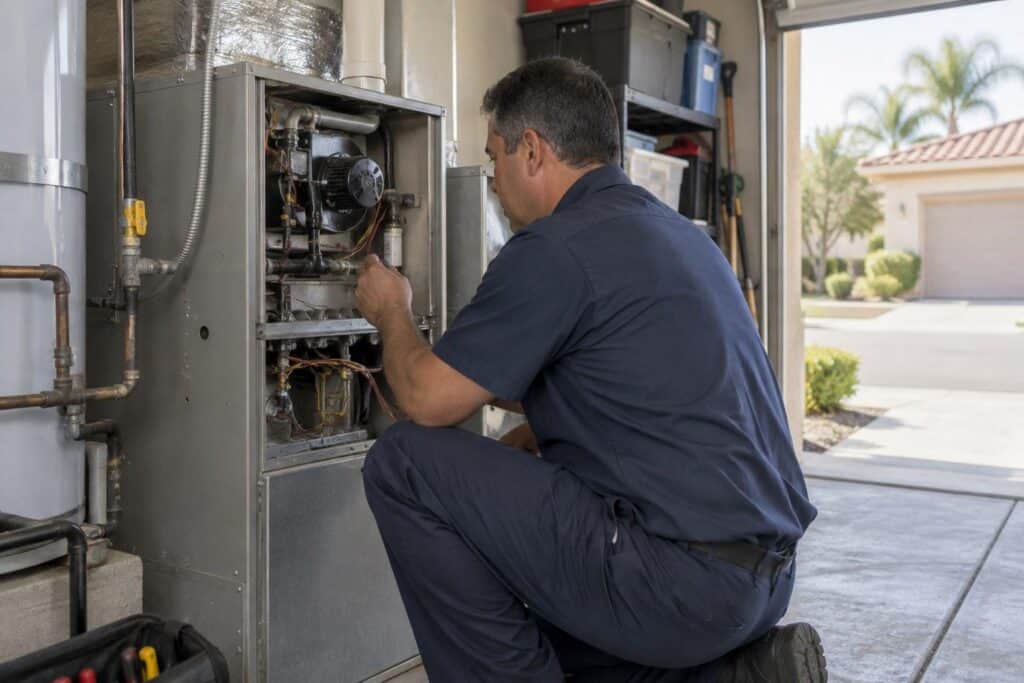
Furnace short cycling happens when your heater turns on, runs for only a few minutes, and shuts off before your home reaches the temperature on the thermostat. Then it starts again, and the pattern repeats. In Temecula, where cool inland nights follow mild afternoons, you may notice this most during the first cold snaps of the season.
At We Care Plumbing, Heating and Air, we help homeowners across Southwest Riverside County understand why their furnace behaves this way and what to do about it. Some causes are simple, like a clogged filter. Others point to safety controls doing their job, which means a trained technician should take a look.
If your furnace keeps starting and stopping, a professional inspection can find the cause before it wears out parts or leaves you without heat.
Key Takeaways
- Short cycling means your furnace runs in brief bursts instead of complete heating cycles, which adds wear and leaves rooms uneven.
- A dirty air filter is one of the easiest causes to check, and replacing it is a safe first step for homeowners.
- Overheating, a dirty flame sensor, thermostat placement, and an oversized furnace are other frequent sources of the problem.
- Repeated shutdowns from the high limit switch are a warning sign that should be inspected rather than ignored.
- If you ever smell gas, leave your home right away and call Southern California Gas Company (SoCalGas) or 911 from outside.
What Is Furnace Short Cycling?
A healthy gas furnace follows a steady sequence. The thermostat calls for heat, the inducer fan starts, the igniter lights the burners, the heat exchanger warms up, and the blower pushes warm air through your ducts. The system keeps running until the thermostat is satisfied, then shuts down in an orderly way.
When a furnace short cycles, that sequence gets cut off early. The burners may light and then go out within a minute or two. Or the blower may run, stop, and run again while the house never quite warms up.
How to Recognize the Pattern
You do not need special tools to spot short cycling. Pay attention to a few things over an evening:
- The furnace starts and stops several times within a short period.
- Rooms feel warm near the vents but cool a few feet away.
- The thermostat never reaches the set temperature, or it overshoots and then drops.
- You hear the ignition sequence repeating more often than usual.
- Your energy bills seem higher than last winter without a clear reason.
Why It Matters for Your Equipment
Every startup puts stress on the igniter, inducer motor, gas valve, and blower. A furnace that cycles too often goes through far more starts than it was designed for. Over time, that can shorten the life of components and lead to repairs that might have been avoided.
Short cycling also hurts comfort. Brief run times do not give warm air a chance to mix through your home, so you may end up turning the thermostat higher just to feel comfortable.
Common Causes of Furnace Short Cycling in Temecula Homes
Many Temecula neighborhoods are made up of stucco tract homes built over the past few decades, often with furnaces tucked into garages, attics, or hallway closets. Those setups bring their own quirks. Below are the causes our technicians look at most closely.
A Clogged Air Filter
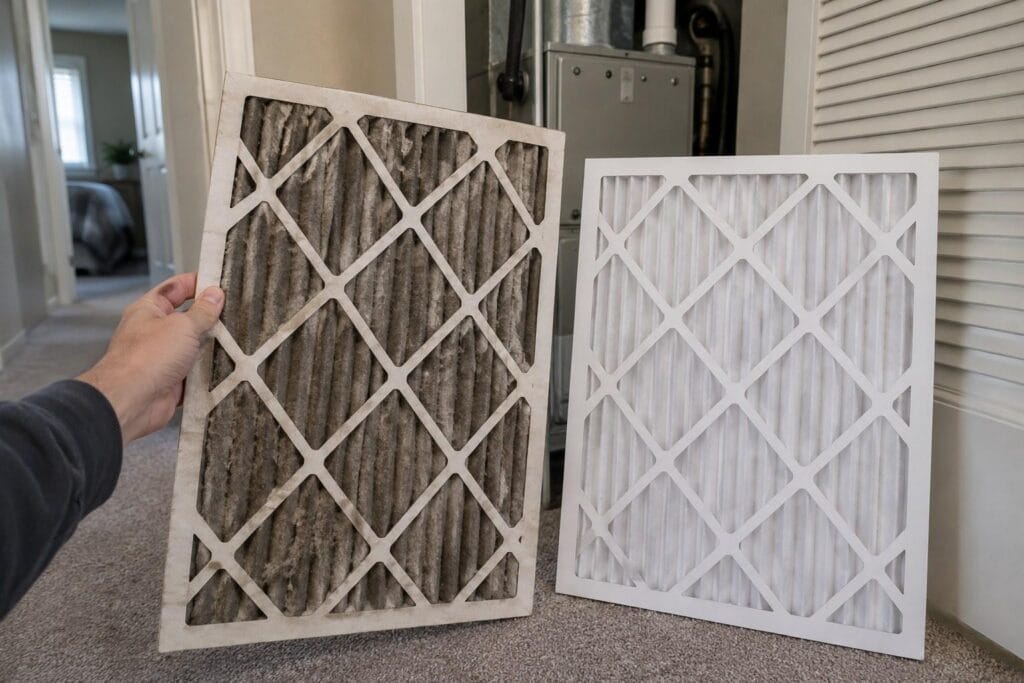
Your furnace needs a steady flow of air across the heat exchanger. A dirty filter chokes that airflow, so heat builds up inside the cabinet. When the temperature climbs too high, the high limit switch shuts the burners off to protect the equipment. Once things cool down, the furnace tries again, and the cycle repeats.
Dust from dry inland air, Santa Ana wind events, and nearby construction can load filters faster than you might expect. Checking your filter regularly is one of the simplest ways to protect your system. You can learn more in our post on the importance of HVAC filters.
Overheating and the High Limit Switch
The high limit switch is a safety device. It is not the problem itself, but it tells you something else is wrong. Restricted airflow, blocked return vents, closed supply registers, a weak blower motor, or dirty ductwork can all cause overheating. If the limit switch trips again and again, the underlying issue needs attention.
A Dirty or Failing Flame Sensor
The flame sensor is a small metal rod that confirms the burners are lit. If it gets coated with residue, it may not detect the flame, and the control board will shut off the gas as a precaution. The result is a furnace that lights, runs for a few seconds, and stops. Cleaning or replacing a flame sensor involves working near the gas burners, so it is best handled by a technician.
Thermostat Location or Settings
A thermostat placed near a supply vent, in direct afternoon sun, or close to a kitchen can read the wrong temperature. It may think the house is warm when only one spot is. Weak batteries, loose wiring, or incorrect settings can also send confusing signals to the furnace.
An Oversized Furnace
Bigger is not always better. A furnace that is too large for your home heats the space around the thermostat very quickly and shuts off before the rest of the house catches up. This is common when equipment is replaced without a proper load calculation, or after a home has been updated with better windows and insulation.
Not sure which of these is behind your furnace trouble? Our team can walk you through what we find and explain your options clearly.
Other Factors That Can Trigger Short Cycling
Beyond the usual suspects, several less obvious issues can cause a furnace to stop and start. These often take a closer inspection to confirm.
Blocked Flue or Venting Problems
Your furnace must safely vent combustion gases outside. If the flue pipe is blocked by debris, a bird nest, or a disconnected section, a pressure switch may stop the furnace from running. This safety feature is important because poor venting can allow carbon monoxide to build up. The U.S. Environmental Protection Agency offers helpful information about carbon monoxide in the home. Make sure you have working carbon monoxide alarms on every level.
Leaky or Undersized Ductwork
Ducts that run through hot or cold attic space in Temecula homes can develop gaps over time. Leaks and undersized returns reduce the airflow your furnace depends on. Dust and debris inside the ducts can also restrict flow. If your ducts have not been looked at in a while, air duct cleaning may be part of the solution.
Cracked Heat Exchanger
Repeated overheating can stress the metal of a heat exchanger. A cracked heat exchanger is a serious concern because it may allow combustion gases to mix with the air you breathe. Only a qualified technician should inspect for this condition. If a crack is found, the furnace should not be used until it is resolved.
Electrical or Control Board Issues
Loose wires, a failing control board, or a weak capacitor on the blower motor can interrupt normal operation. These problems often show up as erratic behavior, such as the blower running without heat or the system shutting off at random times.
Quick Reference Table for Short Cycling Symptoms
Use the table below to match what you notice with likely causes and the safest next step.
| What You Notice | Possible Cause | Safe Homeowner Step | When to Call a Pro |
|---|---|---|---|
| Furnace shuts off after a few minutes and feels hot near the cabinet | Dirty filter or restricted airflow tripping the limit switch | Replace the filter and open all supply and return vents | If cycling continues after a new filter |
| Burners light and go out within seconds | Dirty flame sensor or ignition issue | Note how often it happens | Right away, since it involves gas components |
| One room warm, others cold, short run times | Thermostat location or oversized equipment | Check thermostat batteries and settings | If the thermostat is near a heat source or the issue persists |
| Furnace will not stay running and you hear clicking | Pressure switch or venting problem | Keep the area around the unit clear | Promptly, and confirm your CO alarms work |
| Blower runs without warm air or stops at random | Electrical or control board issue | Reset the furnace breaker once | If the reset does not solve it |
What You Can Safely Check Before Calling
There are a few simple steps you can take on your own. These are safe for most homeowners and can sometimes resolve the problem.
Replace the Air Filter
Turn the thermostat off, then remove the filter and hold it up to a light. If you cannot see light through it, swap in a new filter of the correct size. Make sure the airflow arrow points toward the furnace.
Check Vents and Returns
Walk through your home and make sure supply registers are open and return grilles are not blocked by furniture, rugs, or stored items. In garage installations, keep boxes and tools away from the furnace cabinet.
Look at the Thermostat
Replace thermostat batteries if your model uses them. Confirm it is set to heat and that the fan setting is on auto. If the thermostat sits in a sunny spot or near a vent, mention it to your technician.
Reset the Breaker Once
If the furnace seems stuck, you can turn off its breaker, wait a minute, and turn it back on. If the problem returns, stop resetting it and schedule service. Repeated resets can hide a safety issue.
When to Stop and Get Help
Do not open burner compartments, bypass switches, or attempt electrical or gas repairs. If you ever smell gas, leave the house immediately. Do not flip light switches, use phones inside, or light any flame. Once outside, call SoCalGas or 911. Our heater troubleshooting tips offer more guidance on what is safe to check yourself.
How Professionals Fix Short Cycling Problems
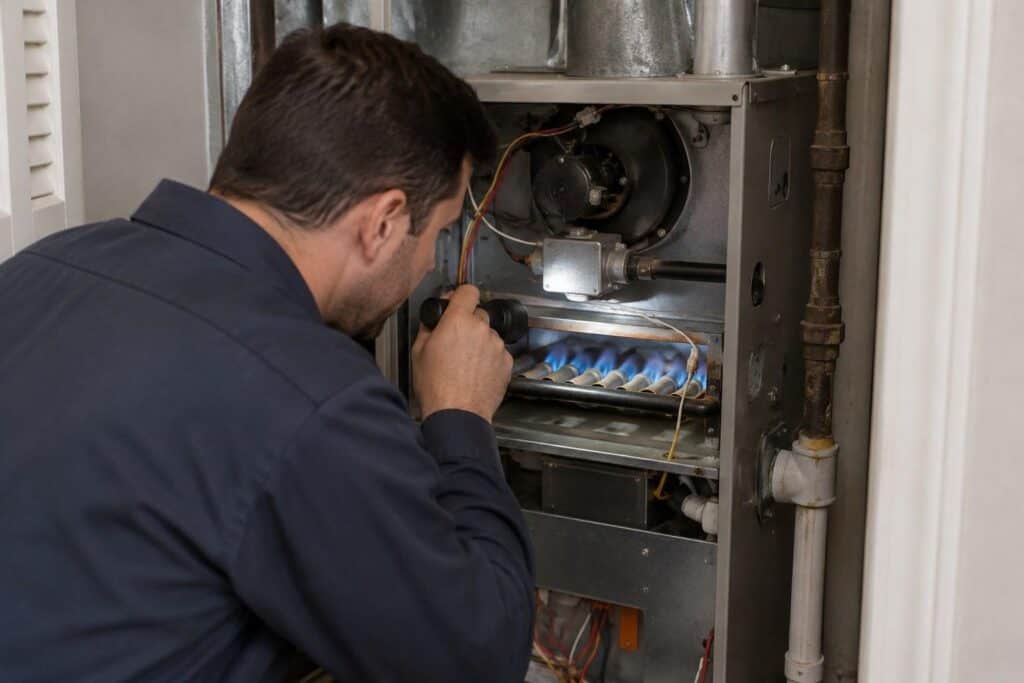
A technician will look at the whole system rather than just one part. That approach helps make sure the real cause is fixed and the problem does not come back next month.
Thorough Diagnosis
The visit usually starts with watching the furnace run through a full cycle. The technician checks airflow, temperature rise, gas pressure, flame quality, venting, and safety switches. They will also look at the thermostat, wiring, and ductwork. This step tells them whether the limit switch, flame sensor, pressure switch, or something else is shutting the system down.
Targeted Repairs
Depending on what they find, the fix may involve cleaning a flame sensor, replacing a failed limit or pressure switch, repairing a blower motor, clearing a blocked flue, or sealing duct leaks. Our furnace repair service covers these issues for homes throughout Temecula and nearby communities.
Thermostat Relocation or Upgrade
If the thermostat is giving false readings, moving it to a central interior wall or upgrading to a newer model can make a noticeable difference. A technician can make sure it is wired and configured correctly for your system.
Right Sizing When Replacement Makes Sense
If your furnace is oversized or near the end of its useful life, replacement may be the better long-term choice. A proper load calculation looks at your home’s size, insulation, windows, and layout. With furnace installation from a licensed team, you get equipment sized for how your home actually loses heat. If cost is a concern, ask about our financing options.
Preventing Short Cycling in the Future
Most short cycling problems are easier to prevent than to repair. A little routine care goes a long way, especially in a climate like ours where the heater may sit idle through long, warm months before cold nights return.
Schedule Annual Furnace Maintenance
A yearly tune-up before the heating season gives a technician the chance to clean the flame sensor, check safety controls, test the blower, and inspect venting. Regular furnace maintenance can catch small issues before they lead to short cycling or a breakdown on a chilly night.
Join a Maintenance Plan
Our VIP Club maintenance plan helps you stay on schedule with seasonal visits for both heating and cooling. It is a simple way to keep your system checked without having to remember the dates yourself.
Keep Up With Filters and Airflow
Set a reminder to check your filter regularly, and more often after windy or smoky periods. Keep vents open and clear. If your home has a lot of dust, an indoor air quality review may help you choose the right filtration for your system.
Pay Attention to Changes
Changes in sound, smell, or run time are worth noting. The sooner you mention them to a technician, the easier the fix usually is.
Ready to stop the on and off cycle and enjoy steady heat again? Reach out and we will set up a visit that fits your schedule.
Frequently Asked Questions
Is furnace short cycling dangerous?
Short cycling is not always dangerous on its own, but it can point to problems that are. Overheating, blocked venting, or a cracked heat exchanger can create safety risks, including carbon monoxide concerns. That is why repeated cycling should be inspected. Make sure your carbon monoxide alarms are working, and if you smell gas, leave the home and call for help from outside.
Can a dirty filter really cause my furnace to shut off?
Yes. A clogged filter restricts the air moving across the heat exchanger, which causes heat to build up inside the furnace. When it gets too hot, the high limit switch shuts the burners off to protect the equipment. Replacing a dirty filter is one of the easiest and safest first steps, and it often improves how evenly your home heats.
How often should a furnace cycle on and off?
There is no single number that fits every home, because it depends on outdoor temperature, insulation, equipment size, and thermostat settings. In general, a furnace should run long enough to warm the house evenly before shutting off. If you notice it starting and stopping every few minutes while rooms stay cool, that pattern is worth having a technician evaluate.
Will a new thermostat fix short cycling?
Sometimes. If the thermostat is failing, wired incorrectly, or placed in a spot that gives false readings, replacing or relocating it can solve the issue. However, if the cause is airflow, a dirty flame sensor, or an oversized furnace, a new thermostat alone will not fix it. A full inspection helps you avoid paying for the wrong solution.
Why does my furnace short cycle only on certain nights?
Temperature swings can make an existing problem more noticeable. On colder nights the furnace runs harder, so restricted airflow or a weak component is more likely to trip a safety switch. Windy days can also stir up dust that loads filters faster. Tracking when the problem happens gives your technician useful clues during the service visit.
Should I repair or replace a furnace that short cycles?
Many short cycling problems are fixed with repairs such as cleaning a sensor, replacing a switch, or improving airflow. Replacement may make more sense if the furnace is oversized for your home, has a cracked heat exchanger, or is aging and needs frequent repairs. A technician can explain the condition of your system so you can make an informed decision.
Ready to Get Started with We Care Plumbing, Heating and Air?
Furnace short cycling wastes energy, adds wear to your equipment, and keeps your home from feeling comfortable. We Care Plumbing, Heating and Air is ready to find the cause and fix it the right way. Call (951) 277-6848 to schedule service in Temecula, Murrieta, Menifee, Wildomar, Lake Elsinore, Canyon Lake, and nearby communities. Our office is located at 41085 Golden Gate Cir, Murrieta, CA 92562.