

Sewer backups don’t give you much warning. One day your drains are slow, and the next you’ve got sewage coming up through your shower floor. For homeowners across Temecula and Murrieta, the risk is real, especially in neighborhoods where sewer laterals have been in the ground for decades and tree roots have had years to find their way in. We serve both cities and the surrounding southwest Riverside County communities, so this guide speaks to the shared soil, water, and infrastructure conditions that affect all of them. Knowing how to prevent sewer backup before it happens can save you thousands in cleanup and repairs. We Care Plumbing, Heating and Air has been helping Inland Empire homeowners protect their homes since 2000, and this guide covers exactly what you need to do.
Worried about your sewer line? Our team can inspect it before a small problem turns into a big mess.
Key Takeaways
- Knowing how to prevent sewer backup before it happens starts with regular drain maintenance and annual sewer line inspections.
- Grease, wipes, and food scraps are the top causes of residential sewer blockages in this region’s homes.
- Aging sewer laterals in Temecula and Murrieta neighborhoods are especially vulnerable to root intrusion and joint separation.
- A backwater valve is one of the most effective tools to stop sewage from flowing back into your home during heavy rain.
- Catching early warning signs like slow drains or gurgling sounds can prevent a full backup before it causes damage.
Why Sewer Backups Happen in Temecula and Murrieta Homes
Sewer backups rarely come out of nowhere. In most homes across zip codes 92562 and 92563, there are three main causes: grease buildup inside the pipe, tree roots growing into the line, and municipal system overload during heavy rain. Understanding which one is affecting your home is the first step toward preventing a backup before it starts.
Grease, FOG, and the Buildup You Cannot See
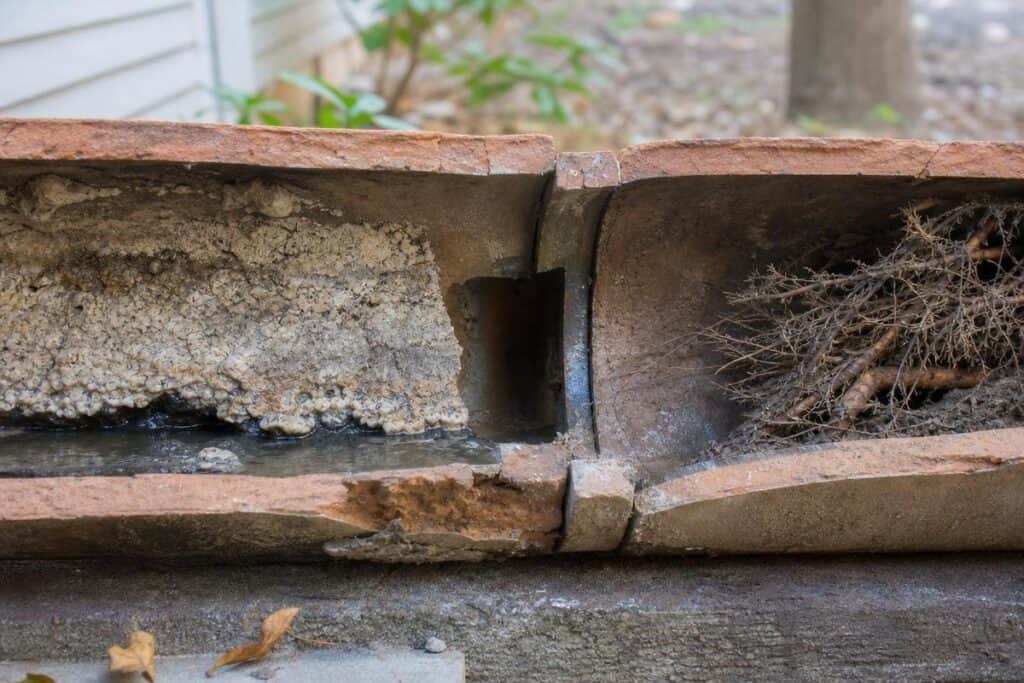
FOG stands for fats, oils, and grease. Bacon drippings, cooking oil, butter, and meat juices all go down the drain as warm liquid. Once they hit the cooler underground pipe, they solidify and stick to the pipe wall. Over months and years, that layer thickens until water can barely get through.
“Flushable” wipes make this worse. They do not break down the way toilet paper does. They catch on existing grease deposits and build a debris net that accelerates blockages fast. A professional hydro-jetting service is the most effective way to clear hardened FOG from a sewer lateral, but stopping the buildup at the source is always the better move.
Tree Roots: The Silent Threat in Murrieta’s Established Neighborhoods
Sewer pipes are not perfectly sealed. Joints shift. Small cracks form. Tree roots follow moisture and find those openings, then grow inside the pipe and spread into a debris-catching mass. Many laterals installed during the early 2000s building boom are now well into the age range where joints loosen and gaps open up. The trees planted when those tracts were built have had decades to grow toward your pipes.
Clay soils in the Santa Rosa Valley make this worse. Clay expands when wet and contracts when dry, stressing pipe joints with every seasonal cycle. That movement creates new entry points for roots year after year. If you have mature trees anywhere near your property line, a plumbing inspection with a camera is the only way to know what is actually inside your line.
Have mature trees near your property line? Find out exactly what is inside your pipe with a video camera inspection before roots cause a backup.
Heavy Rain Events and Overwhelmed Municipal Lines
This one surprises a lot of homeowners. During the region’s winter wet season, atmospheric river storms can push the municipal sewer system past capacity. When the main line fills up, sewage has nowhere to go but backward into residential laterals. Lower-elevation areas near Murrieta Creek face the highest backflow risk during these events.
This is a different problem from an in-home blockage. Your pipes can be completely clear and a backup can still happen if the street-side system surges. Knowing this matters because the fix is different too. Read our guide on how to prepare for emergency plumbing issues so you know exactly what to do if a storm backup hits your home. Protecting an older home means planning for both the buildup inside your pipes and the pressure coming from the street.
Daily Habits That Keep Your Sewer Line Clear
The most effective daily habits for sewer backup prevention are avoiding grease disposal, using drain catchers, and limiting what goes down the toilet. Most backups don’t happen overnight; they build up slowly from years of small choices at the sink, toilet, and shower drain. The good news is that changing a few daily habits is the cheapest form of drain protection you have.
What Should Never Go Down Your Drains
This is the short list that causes the most damage. If any of these go down your drains regularly, you’re building a clog one flush at a time. Check out our full breakdown of what to do when drains are blocked if you’re already seeing slow flow.
- Cooking grease and oils (any amount)
- “Flushable” wipes (they don’t break down the way toilet paper does)
- Paper towels and facial tissues
- Cotton balls and cotton swabs
- Feminine hygiene products
- Dental floss
- Medications
- Cat litter
- Food scraps beyond what your disposal handles
Kitchen Practices That Protect Your Pipes
Your garbage disposal grinds food into smaller particles, but those particles still travel through your pipes and accumulate. It reduces the size of the problem, not the problem itself. Starchy foods like pasta, rice, and potato peels absorb water and paste against pipe walls, narrowing flow over time.
Let grease solidify in a container, then trash it. Wipe pans with a paper towel before rinsing. Run cold water through the disposal for a full 30 seconds after each use. If you’re noticing a stubborn clog under the sink, our kitchen plumbing repair team can help, because that buildup may already be significant.
Bathroom Habits That Prevent Blockages
Put a small trash can next to every toilet in your home. That one change stops most non-flushable items from ever reaching your pipes. Add hair catchers to every shower and tub drain. Hair is one of the top contributors to slow drains that eventually back up completely.
Here in the Temecula Valley area, hard water is also a factor. Local water supplies carry high calcium and magnesium content, according to water quality reporting from the Eastern Municipal Water District, and that mineral scale deposits on the inside of your pipes over time. It narrows the pipe diameter and creates rough surfaces where grease and debris catch more easily. If scale buildup is a concern in your home, ask us about Flo-Tech descaling to restore full pipe flow.
How Backwater Valves and Drain Plugs Protect Your Home
Some prevention tools go beyond daily habits. If your home sits in a lower-elevation area near Murrieta Creek or in a wash-adjacent neighborhood in Wildomar or Menifee, two physical devices can make a real difference: backwater valves and drain plugs. Both stop sewage from entering your home, but they work in very different ways and have very different limits.
What a Backwater Valve Does and When You Need One
A backwater valve, sometimes called a check valve or backflow preventer, installs directly in your sewer lateral. That is the pipe connecting your home to the city main. The valve uses a hinged flap that swings open when wastewater flows out normally. If sewage tries to push back in from the street side during a storm surge or main blockage, the flap closes automatically and blocks it.
This is a permanent, code-compliant fix. A plumbing installation like this requires cutting into the sewer lateral, which is not a DIY project. A licensed plumber needs to locate the lateral, confirm pipe condition, and make the cut cleanly. We recommend a plumbing inspection before any installation begins, especially in homes built during the 1990s growth boom in zip codes 92562 and 92563, where laterals have been in the ground for decades. Check with the City of Murrieta public works department too. Some municipalities in the region offer rebate programs that can offset installation costs.
Drain Plugs: A Temporary Barrier During Flood Events
Drain plugs are a practical short-term tool, not a permanent solution. You insert them into floor drains, toilets, or standpipes to physically block sewage entry during a known storm event. Three common types are available:
- Inflatable plugs expand inside the drain pipe to create a seal
- Mechanical screw-type plugs thread into the drain opening and tighten manually
- Standpipe plugs cap open standpipes in laundry areas or utility rooms
For homes in lower-lying parts of southwest Riverside County, having a set of drain plugs on hand before the winter storm window is smart preparation. The regional atmospheric river season runs from roughly December through March, and a single heavy event can overwhelm a city main fast. Plugs buy you time. They do not fix the underlying problem.
When DIY Solutions Are Not Enough
Backwater valves and drain plugs both assume your lateral is otherwise in decent shape. If you are seeing multiple slow drains at once, smelling sewage from a floor drain, or you have had a backup before, those are signs of a deeper problem. Root intrusion, joint separation, or a collapsed section of pipe will not respond to any plug or valve.
Check our guide on 11 signs that you may need a sewer line inspection if any of those symptoms sound familiar. A camera inspection confirms what is actually happening inside the pipe. From there, a hydro-jetting service can clear roots and debris that no plug will touch. Do not wait until the backup happens to find out what you are dealing with.
Steps You Can Take Right Now to Prevent Sewer Backup
Daily habits help, but they only go so far. The only way to actually know what’s happening inside your sewer line is to look. For homeowners in zip codes 92562 and 92563, where laterals have aged for decades and clay soil movement stresses pipe joints every wet season, skipping routine maintenance is a gamble that rarely pays off. For older homes, staying ahead of a backup that can cost thousands to clean up is not optional. It is basic protection.
What a Camera Inspection Reveals
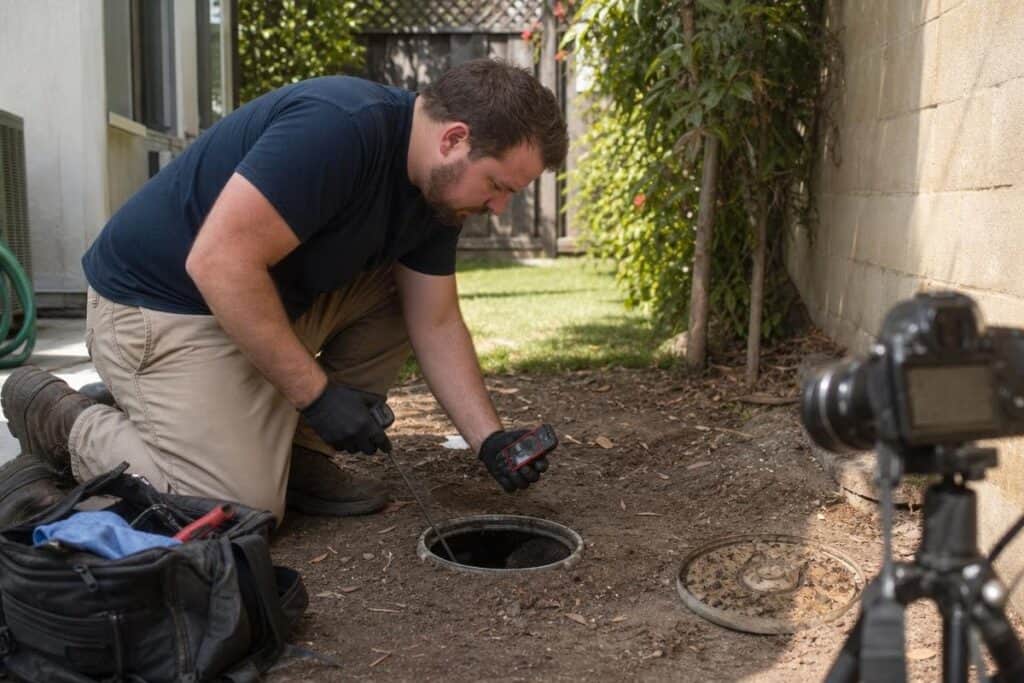
A camera inspection service works by feeding a waterproof camera through your cleanout access point and running it all the way to the city main. Your plumber sees the pipe interior in real time on a monitor. There’s no guessing and no digging.
The camera shows grease buildup, root intrusion, cracked pipe walls, joint separations, offset sections, and any foreign objects stuck in the line. These are problems that build slowly and silently. If you’ve ever wondered whether your line is actually clear or just draining slowly, a camera inspection gives you a definitive answer. Read more about 9 reasons regular plumbing inspections are important for long-term prevention.
Hydro-Jetting: The Professional Drain Cleaning Method
A drain snake punches a hole through a clog. That’s it. A hydro-jetting service does something completely different. It blasts water at 3,000 to 4,000 PSI through a specialized nozzle, scouring the full interior diameter of the pipe. Grease, mineral scale, root fragments, and compacted debris all get flushed out, not just punctured.
For homes along the older tracts of Whitewood Road, where grease-heavy blockages and recurring slow drains are common complaints, hydro-jetting is the right call. It’s also the preferred follow-up after root removal to flush out any remaining debris. See the full breakdown of 8 benefits of high-pressure drain cleaning if you want to understand why it outperforms snaking for serious buildup.
How Often Murrieta Homeowners Should Schedule Service
Here’s a simple framework based on what we see in the field:
- Mature trees near your sewer line: Camera inspection every 18 to 24 months.
- No known root issues, newer pipes: Every 3 to 5 years.
- After a backup has occurred: Inspect immediately, then annually for at least two years.
If you’re in Temecula or the broader Inland Empire and you’re not sure which category fits your home, a quick inspection tells you exactly where you stand. Schedule before the winter rains arrive if possible. The regional atmospheric river season runs from about December through March, and a partially blocked line won’t survive a heavy rain event. Check out our top 9 tips for preventing holiday plumbing problems as a seasonal starting point. As a licensed C-36 plumbing contractor, our crews are available Monday through Friday 7 a.m. to 8 p.m. and weekends 8 a.m. to 5 p.m.
Think your sewer line is due for a checkup? Call us at (951) 277-6848 to schedule a camera inspection or hydro-jetting service before the rainy season hits.
Sewer Backup Prevention Checklist for Temecula and Murrieta Homeowners
Run through this list once a season, and always before the winter rain window opens.
- Dispose of grease in the trash. Pour cooled cooking grease into a container, seal it, and throw it away. Never pour it down the drain.
- Remove wipes and cotton products from bathrooms. Replace “flushable” wipes with toilet paper. Toss cotton balls, swabs, and pads in the trash.
- Install hair catchers on every shower and tub drain. Clean them weekly. Hair is one of the fastest ways to build a clog.
- Watch for slow drains. A drain that takes more than 10 seconds to clear is telling you something. Don’t ignore it.
- Check floor drains after rain. If you’re in a lower-elevation area near Murrieta Creek, look for standing water or odors around floor drains after any storm.
- Locate your sewer cleanout. Know where it is before you need it. It’s usually a capped pipe near your foundation or in the yard.
- Inspect trees within 20 feet of your sewer line. Mature landscaping in established neighborhoods means root intrusion risk is real. Check annually.
- Ask about a backwater valve. If you don’t have one, talk to a plumber. It’s your best mechanical defense against sewage flowing back into your home.
- Schedule high-pressure drain cleaning every 1 to 2 years. A hydro-jetting service clears grease, scale, and debris that snaking misses.
- Keep a drain plug on hand. If you’re in a flood-prone zip code like 92562 or 92563, a drain plug gives you a fast barrier during heavy rain events.
If any item on this list raises a concern, our plumbing services team can help. Call us at (951) 277-6848.
Why Temecula and Murrieta Homes Are Particularly Vulnerable to Sewer Problems
Homes in the Temecula Valley and surrounding areas face a specific combination of conditions that put sewer lines under more stress than most parts of the region. Clay-heavy soil, aging pipe infrastructure, intense seasonal rain, and hard water all work against your sewer system at the same time. Understanding why helps you know where to focus your prevention efforts.
Soil Conditions, Pipe Age, and Seasonal Rain
The soil in this area contains a high percentage of expansive clay. When rain soaks the ground, that clay swells. When dry conditions return, it shrinks back. That repeated movement puts constant stress on underground pipe joints, and over time, joints separate or crack. Homes built during the late 1980s through early 2000s growth boom in communities off Murrieta Hot Springs Road now have laterals that have aged for decades. PVC from that era holds up reasonably well, but any older clay or cast-iron sections are far more vulnerable to cracking and root intrusion.
Atmospheric river storms, the multi-day heavy rain events that hit the Inland Empire every few winters, can overwhelm both your home lateral and the city main at the same time. Lower-elevation areas near local floodplains carry the highest combined risk during those events. If you have an older lateral and you live in a lower-lying area, a plumbing inspection before the rainy season is a smart move. A cracked lateral can also become a burst pipe emergency faster than most homeowners expect.
Hard Water and Mineral Scale in Local Pipes
Water in this region carries high levels of calcium and magnesium. Over years, those minerals deposit on the interior walls of your drain pipes, narrowing the effective opening and creating a rough surface where grease and debris stick faster. A pipe that was once four inches wide can function like a much smaller pipe after years of scale buildup.
Professional Flo-Tech descaling removes that mineral buildup without damaging the pipe itself. Addressing the root cause through water quality treatment slows new scale formation going forward. Both steps are part of solid prevention in this area.
Frequently Asked Questions
What is the most common cause of sewer backup in a home?
FOG buildup, which stands for fats, oils, and grease, is the leading cause of sewer backups both nationally and right here in the Inland Empire. Tree root intrusion is a close second, especially in Temecula and Menifee neighborhoods with mature landscaping planted close to sewer laterals. Both causes are preventable with the right daily habits and periodic professional maintenance.
How do I know if my sewer line is about to back up?
Multiple slow drains happening at the same time is the clearest warning sign. If you also hear gurgling from your toilet when you run the bathroom sink, or smell sewage from a floor drain, those are signals your main lateral is struggling. A single slow drain is usually a localized clog. Multiple fixtures acting up at once means the problem is deeper. Read our full breakdown of 11 signs that you may need a sewer line inspection to know what to watch for.
Can I prevent sewer backup myself or do I need a plumber?
You can handle quite a bit on your own. Changing what goes down your drains, installing hair catchers, placing drain plugs, and knowing where your cleanout is located are all owner tasks. But a camera inspection service, backwater valve installation, and hydro-jetting service require a licensed plumber. Think of it this way: you check the oil, a mechanic handles the engine.
How much does backwater valve installation cost in Temecula or the surrounding area?
Cost varies based on your lateral location, cleanout accessibility, and pipe material. Cost varies based on your lateral location, cleanout accessibility, and pipe material. A plumbing inspection is the right first step to get an accurate estimate for your specific home. Municipal rebate programs may offset part of the cost, so it is worth asking before you commit. A plumbing inspection is the right first step to get an accurate estimate for your specific home.
How often should I have my sewer line professionally cleaned?
Most homes need professional cleaning every three to five years. If your home is near mature trees, has a history of backups, or has older clay or cast-iron pipes, plan on every one to two years. If your home is more than 15 years old and has never been professionally cleaned, schedule an inspection now.
What should I do immediately if sewage backs up into my home?
Stop all water use right away. Do not plunge if sewage is already visible. Keep people and pets away from the affected area. Then call a licensed plumber immediately. For guidance on what to do while you wait, our blog post on emergency plumbing and what to do before the plumber arrives walks you through the steps.
Ready to Get Started with We Care Plumbing, Heating and Air?
Call (951) 277-6848 to speak with our team directly. We’re ready to answer your questions, walk you through your options, and help you find the right solution for your needs. Whether you’re just starting to plan or ready to move forward, we’ll make the process simple and stress-free.
Reach out today and let’s talk about how we can help.