


AC systems can stop working for many reasons, ranging from simple fixes you can handle yourself in minutes to refrigerant leaks and failed components that require a licensed HVAC technician. Knowing how to work through the most common causes can save you time, money, and discomfort.
This troubleshooting guide covers the most frequent reasons AC systems fail in Southern California homes, what you can check on your own, and when to call a professional for help.
Start With the Thermostat
Before assuming the worst, check your thermostat. It sounds obvious, but thermostat settings and power are responsible for a surprising number of “AC not working” service calls. Make sure the thermostat is set to “Cool” mode and that the set temperature is lower than the current room temperature. If the thermostat is set to “Fan” only, the fan will run continuously without cooling the air.
Check the thermostat’s batteries if it runs on battery power. Dead batteries will cause the thermostat to lose its settings or stop responding entirely. Replace them with fresh batteries and wait a few minutes to see if the system starts.
If you have a smart or programmable thermostat, verify that recent schedule changes or app updates have not reset the programming. Some smart thermostat models require occasional firmware updates that can temporarily disrupt normal operation. If your thermostat display is blank or unresponsive, that is a sign the device has lost power and should be checked at the breaker.
Check the Circuit Breaker
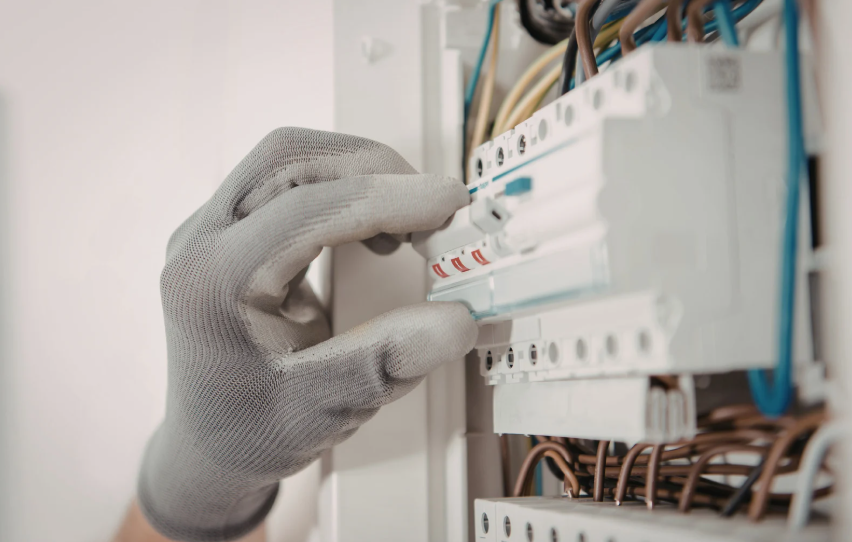
A tripped circuit breaker is one of the most common reasons an AC system stops running in Southern California homes. Air conditioners draw significant electrical current, especially during peak cooling season when outdoor temperatures are extreme. The combination of a heavy load and summer heat can push the breaker to its limit.
Locate your home’s electrical panel, which is typically in a garage, hallway, or utility room. Look for the breaker labeled for your air conditioner or air handler. A tripped breaker will sit in the middle position between “On” and “Off” rather than fully to one side. To reset it, push it firmly to the “Off” position first, then flip it back to “On.”
If the breaker trips again shortly after resetting, do not continue resetting it. A breaker that trips repeatedly is signaling an electrical fault or a failing component in the AC system. This requires diagnosis by a licensed HVAC technician. Repeated resets can cause electrical damage or create a fire hazard.
Inspect and Replace Your Air Filter
When an air filter becomes heavily clogged, airflow through the system is severely restricted. The evaporator coil cannot draw in enough warm air to function properly, which leads to the coil freezing over. A frozen evaporator coil will cause the system to blow warm air or stop cooling entirely. In severe cases, the restricted airflow can cause the compressor to overheat.
Check your air filter by pulling it from the return air vent or air handler cabinet. Hold it up to light. If you cannot see light through it, it needs to be replaced. Most homes in Southern California should replace filters every 30 to 60 days during peak AC season, and higher-MERV filters may need even more frequent attention. After replacing the filter, give the system 30 minutes to see if cooling resumes.
Look for a Frozen Evaporator Coil
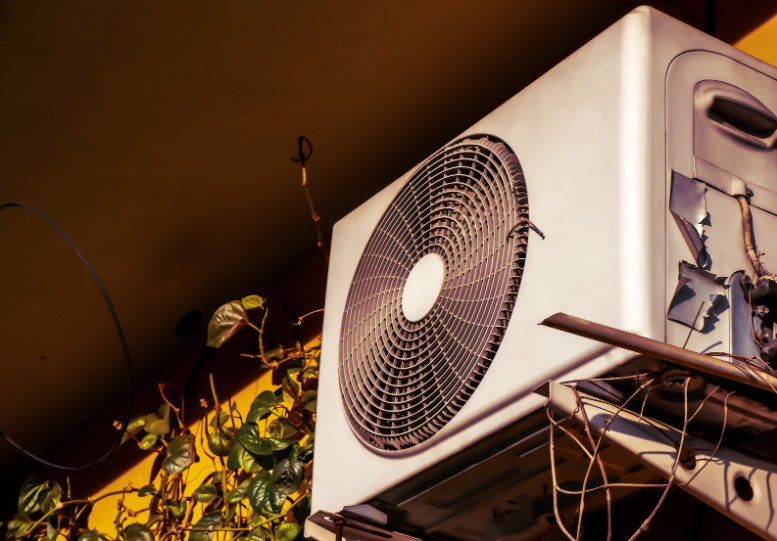
A frozen evaporator coil is a common cause of an air conditioner that runs but does not cool the home, or stops running altogether. The evaporator coil is the indoor component that absorbs heat from the air in your home. When airflow across the coil is insufficient or refrigerant levels are low, the coil can drop below freezing and develop a layer of ice.
Signs of a frozen evaporator coil include warm air coming from the vents even when the system is running, a noticeable reduction in airflow at the vents, ice visible on the refrigerant lines running to the indoor air handler, or water dripping near the indoor unit as ice melts. If you suspect a frozen coil, turn the system off and set the thermostat to “Fan Only” mode. This will allow the coil to thaw over one to three hours without causing compressor damage.
Once the coil has thawed, address the root cause before running the system again. If the cause was a dirty air filter, replace it. If the coil refreezes after replacing the filter, the issue is likely low refrigerant, which requires a licensed HVAC technician to diagnose and correct. Refrigerant leaks cannot be fixed by simply recharging the system without finding and repairing the source of the leak.
Check the Outdoor Condenser Unit
The outdoor condenser unit is the part of your AC system that releases heat from your home to the outside air. In Southern California, where summers are long and outdoor temperatures are extreme, the condenser works harder than in most other regions. A condenser that is dirty, blocked, or failing will reduce the system’s cooling capacity.
Start by visually inspecting the condenser for debris. Leaves, dirt, cottonwood seeds, and other material can build up on the condenser coil fins and restrict airflow. Turn the system off at the thermostat before getting close to the unit. You can use a garden hose to gently rinse the coils from the inside out, or from top to bottom on the exterior fins, to clear surface debris. Avoid using a pressure washer, which can bend the delicate aluminum fins.
Make sure there is adequate clearance around the condenser. HVAC manufacturers typically recommend at least 18 to 24 inches of clear space on all sides of the unit. Overgrown shrubs, fencing, storage items, or nearby structures that block airflow around the condenser will reduce its efficiency and can cause the system to overheat and shut down on a high-pressure safety cutoff.
Low Refrigerant and Refrigerant Leaks
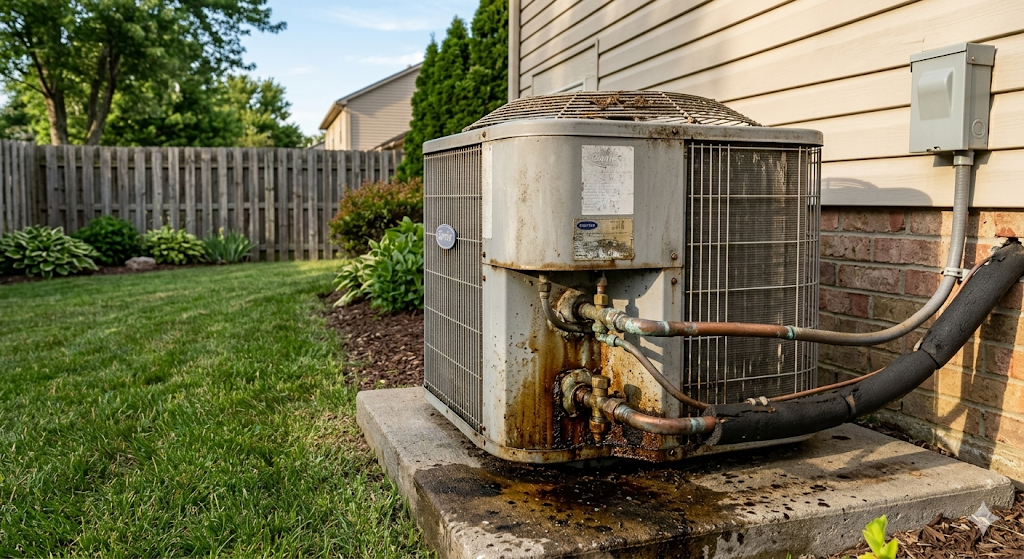
Signs of low refrigerant include an AC system that runs continuously but struggles to reach the set temperature, warm or lukewarm air from the vents, ice forming on the refrigerant lines near the indoor unit, and a hissing or bubbling sound near the air handler or condenser. The system’s cooling performance will decline progressively as refrigerant levels drop.
Refrigerant handling requires EPA Section 608 certification. Homeowners cannot legally purchase or add refrigerant to their own systems. If you suspect a refrigerant leak, contact a licensed HVAC technician to perform a leak detection, locate and repair the source of the leak, and properly recharge the system. In Southern California homes, refrigerant leaks are more likely to cause complete AC failure during the hottest weeks of the year when the system is running hardest.
Capacitor or Compressor Failure
The capacitor is an electrical component that helps the compressor and fan motors start and run. Over time and with repeated heat exposure, capacitors weaken and eventually fail. In Southern California, where outdoor temperatures routinely exceed 100 degrees, capacitors in condenser units are subjected to extreme heat stress and tend to fail more frequently than in cooler climates.
A failing capacitor will often cause the outdoor unit to make a humming sound without the compressor or fan starting. In some cases, the unit will start but then stop after a few minutes. If the fan is not spinning when you hear the compressor trying to run, a failed start capacitor is a common cause. Capacitor replacement is one of the more affordable HVAC repairs and can restore normal operation quickly.
Compressor failure is a more serious issue. The compressor is the heart of the AC system, and a failed compressor typically means a significant repair or system replacement, depending on the age and overall condition of the equipment. Signs of a failing compressor include the outdoor unit not starting despite the thermostat calling for cooling, tripping the breaker repeatedly, or a loud clicking or grinding noise from the condenser. If your system is more than 10 to 15 years old and the compressor has failed, system replacement is often more economical than compressor replacement.
Frequently Asked Questions
Why is my AC running but not cooling my Southern California home?
The most common reasons an AC runs without cooling include a clogged air filter restricting airflow, a frozen evaporator coil, low refrigerant due to a leak, a dirty condenser coil blocking heat transfer, or a failing capacitor. Start by checking the air filter and verifying that the condenser unit has adequate airflow. If those steps do not resolve the issue, a licensed HVAC technician can diagnose the system.
What should I check first when my AC stops working?
Begin with the simplest possible causes before assuming a major failure. Check the thermostat settings and batteries, then check the circuit breaker panel for a tripped breaker. Inspect the air filter and replace it if it is dirty. Look at the outdoor condenser unit to make sure the fan is running and there are no obvious obstructions. These checks address the majority of no-cooling calls.
How often should I change my AC filter in Murrieta or Temecula?
Most homes in Murrieta, Temecula, and the broader Inland Empire should replace standard 1-inch air filters every 30 to 45 days during the summer cooling season. The dry, dusty conditions, combined with elevated wildfire smoke during fire season, load filters faster than in more temperate regions. If you have pets or a high-MERV filter, check monthly and replace when restricted.
Is it safe to run my AC if the evaporator coil is frozen?
No. Running an air conditioner with a frozen evaporator coil can damage the compressor. If you suspect the coil is frozen, turn the system off at the thermostat and set the fan to run-only mode to thaw the coil. Once thawed, replace the air filter and restart the system to see if normal cooling returns. If the coil refreezes, there is an underlying issue such as low refrigerant that requires professional service.
When should I replace my AC system instead of repairing it?
A general rule is to compare the repair cost against ten percent of the cost of a new system times the system’s age. If repair costs exceed that threshold, replacement is often the better value. For Southern California homeowners, systems older than 12 to 15 years that require a compressor replacement or refrigerant recharge of an R-22 system are typically better candidates for replacement than continued repair. Newer systems also operate significantly more efficiently in extreme heat.
About We Care Plumbing, Heating and Air
We Care Plumbing, Heating and Air has been serving Southern California homeowners with trusted plumbing, heating, and air conditioning services for over 25 years. Our licensed technicians serve Murrieta, Temecula, San Marcos, Orange County, and communities throughout San Diego County and the Inland Empire.
Call We Care at (760) 309-3474 or visit wecareteam.com to schedule HVAC service today.