


A high water bill that shows up without any change in your routine is one of the clearest signs that something in your home is using water you cannot see. In Murrieta, the usual suspects are running toilets, dripping fixtures, irrigation problems, failing water heaters and hidden leaks under the slab or along the main water line.
At We Care Plumbing, Heating and Air, we help homeowners across Southwest Riverside County track down where the extra water is going and fix the source. Below, you will learn how to read the warning signs, run a few simple checks yourself and know when it is time to bring in a licensed plumber.
Seeing a jump on your bill and not sure why? Let a licensed plumber find the leak before it causes damage.
Key Takeaways
- A sudden spike in water use with no change in habits usually points to a leak, a running toilet or an irrigation problem.
- Your water meter is the fastest way to confirm whether water is moving when every fixture in the house is off.
- Toilets and outdoor sprinkler systems are frequent sources of silent water loss in Murrieta tract homes.
- Warm spots on the floor, the sound of running water and damp drywall can signal a slab leak or hidden pipe leak.
- Hard water and aging plumbing wear out valves, flappers and water heater parts faster, which can raise usage over time.
- Professional leak detection finds hidden leaks without tearing open walls and floors to search for them.
How to Tell If Your Water Bill Is Really Too High
Before you start hunting for leaks, it helps to confirm that the increase is real and not just a seasonal change. Water use in Murrieta naturally rises in the summer, when hot, dry afternoons push lawns and landscaping to drink more.
Compare the Same Month Last Year
Pull up your past statements and compare the current bill with the same billing period from the year before. Looking at usage in units, rather than the dollar amount, gives you a clearer picture, because rates and tiers can change even when your usage does not.
If your usage is noticeably higher than last year and your household, landscaping and habits have stayed about the same, something has likely changed in your plumbing or irrigation.
Think About Recent Changes at Home
Sometimes the cause is simple. A new pool fill, house guests, a new lawn being established or a teenager taking longer showers can all add up. Rule out these everyday explanations first so you can focus on the plumbing.
Watch for Steady Increases Over Several Months
A gradual climb over several billing cycles often points to a slow leak that is getting worse, such as a toilet flapper that is wearing out or a pinhole leak in a copper line. A sharp, one-time jump is more likely to be a broken sprinkler, a burst pipe or a stuck fill valve.
Use Your Water Meter to Check for Leaks
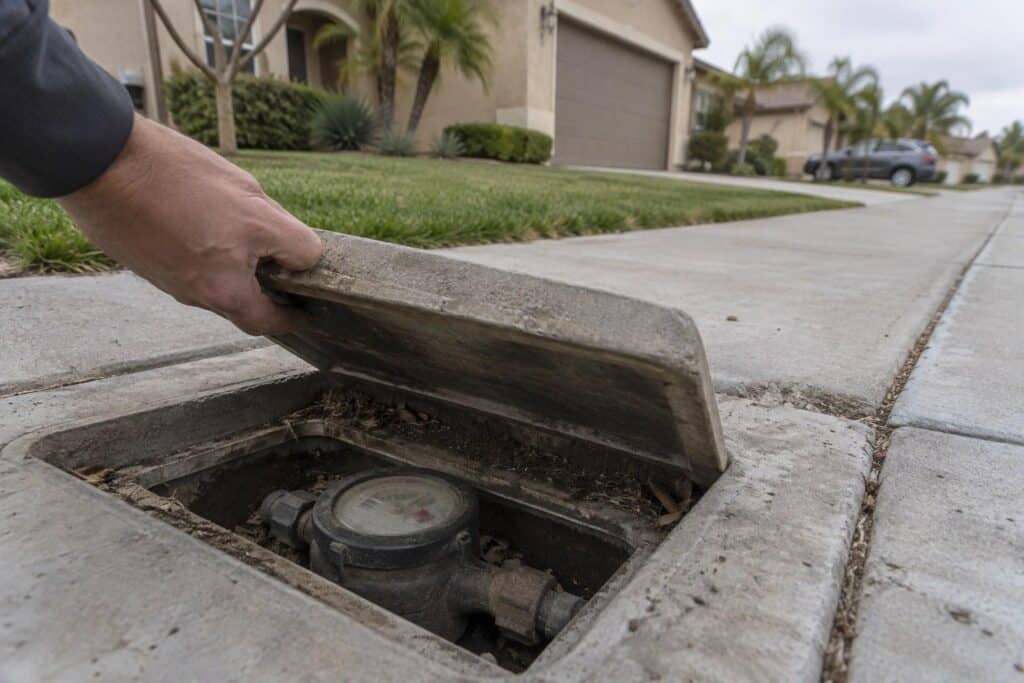
Your water meter is the best tool you have for confirming a leak. In most Murrieta neighborhoods, the meter sits in a concrete box near the curb or the edge of the front yard.
Run a Simple Meter Test
- Turn off every faucet, shower, appliance and the irrigation controller inside and outside the home.
- Open the meter box lid carefully and look at the dial. Many meters have a small triangle or star called a leak indicator.
- If the leak indicator is spinning, water is moving through the meter even though nothing should be running.
- Write down the reading, wait one to two hours without using any water and check again.
If the reading has changed, you have a leak somewhere between the meter and your fixtures.
Narrow Down Indoor Versus Outdoor Leaks
Next, close the main shutoff valve to the house. In many local homes, it is located in the garage, near the front hose bib or on the side of the house where the water line enters. If the meter still moves with the house valve closed, the leak is likely in the underground line between the meter and the home, or in the irrigation system. If it stops, the leak is inside the house.
The U.S. Environmental Protection Agency offers more household leak-checking tips through its WaterSense Fix a Leak Week resources.
Meter still moving and you cannot find the source? Talk with a licensed plumber about leak detection.
Indoor Plumbing Problems That Drive Up a High Water Bill
Inside the home, a handful of fixtures account for a large share of wasted water. Many of these leaks are quiet, so you might not notice them until the bill arrives.
Running or Leaking Toilets
A toilet that runs on and off by itself, or keeps refilling long after a flush, can waste a surprising amount of water. Worn flappers, a fill valve set too high or a chain that catches under the flapper are frequent causes.
To check, add a few drops of food coloring to the tank, wait about fifteen minutes without flushing and look in the bowl. If color shows up, water is leaking from the tank into the bowl. Older toilets wear out over time, and you can learn more in our post on how long an average toilet lasts.
Dripping Faucets and Showerheads
A slow drip may seem harmless, but it runs all day and all night. Worn cartridges, washers and O-rings are usually to blame. Hard water in the Inland Empire speeds up that wear, because mineral deposits make it harder for parts to seal. Fixtures that have worked loose can also leak at the base, which is covered in our post on why plumbing fixtures become loose over time.
Water Heater Leaks and Relief Valve Discharge
A tank water heater that leaks from the bottom, or a temperature and pressure relief valve that keeps discharging, can send water down a drain line or out the side of the garage without you noticing. Sediment and hard water buildup can also cause the tank to work harder and wear out sooner. If you see water around the base, call for water heater repair rather than trying to fix the valve yourself.
Water Softeners Stuck in Regeneration
Many Murrieta homes use a water softener to handle hard water. A softener with a faulty control valve can get stuck in its regeneration cycle and send water to the drain for hours. If you hear water running near the softener at odd times, it is worth scheduling a check.
Appliance Supply Lines and Under-Sink Connections
Washing machine hoses, refrigerator ice maker lines and dishwasher connections can develop slow leaks that drip behind or beneath the appliance. Under-sink supply lines and shutoff valves can also seep at the fittings. Pull out appliances when you can and look for water stains, swollen cabinet floors or a musty smell.
Braided supply lines and hoses do not last forever. If yours look cracked, bulging or rusted at the ends, replacing them before they fail is a smart move. A burst washer hose in a garage laundry area can release a lot of water quickly.
Hidden Leaks Under the Slab and Along the Water Line
Most homes in Murrieta, Temecula and Menifee are built on concrete slab foundations, with water lines running beneath or through the slab. When one of those pipes develops a leak, the water can disappear into the soil for weeks before you see any signs.
Signs of a Slab Leak
- A warm or hot spot on a tile or hard floor, which can mean a hot water line is leaking below.
- The sound of running water when everything in the home is turned off.
- Damp carpet, warped flooring or new cracks in the floor.
- A water heater that seems to run constantly.
- Mildew odors or moisture along baseboards.
If you notice any of these, avoid ignoring them. Our slab leak detection service uses specialized equipment to locate the leak so the repair can be targeted.
Leaks in the Main Water Line
The main line between the meter and the house can crack because of shifting soil, tree roots, corrosion or age. Signs include soggy patches in the yard that never dry out, unusually green strips of grass, low water pressure and the meter moving with the house shutoff closed. Our team handles water line repair for these situations.
Why Hidden Leaks Get Worse
Water under pressure keeps escaping as long as the leak is open. Over time, it can wash out soil, damage flooring and drywall and create conditions for mold. Catching a hidden leak early keeps both the repair and the damage more manageable.
What Professional Leak Detection Involves
When the meter test confirms a leak but you cannot see it, a licensed plumber uses specialized tools to find it. Acoustic listening equipment can pick up the sound of water escaping from a pressurized pipe, while thermal imaging can reveal temperature differences caused by a leaking hot water line. Pressure testing helps isolate which part of the system is losing water.
The goal is to pinpoint the leak so only a small, targeted area needs to be opened for the repair. Once the source is found, your plumber can explain the options, which may include a spot repair, rerouting a line or, for homes with repeated failures, repiping.
Outdoor Water Use and Irrigation Problems
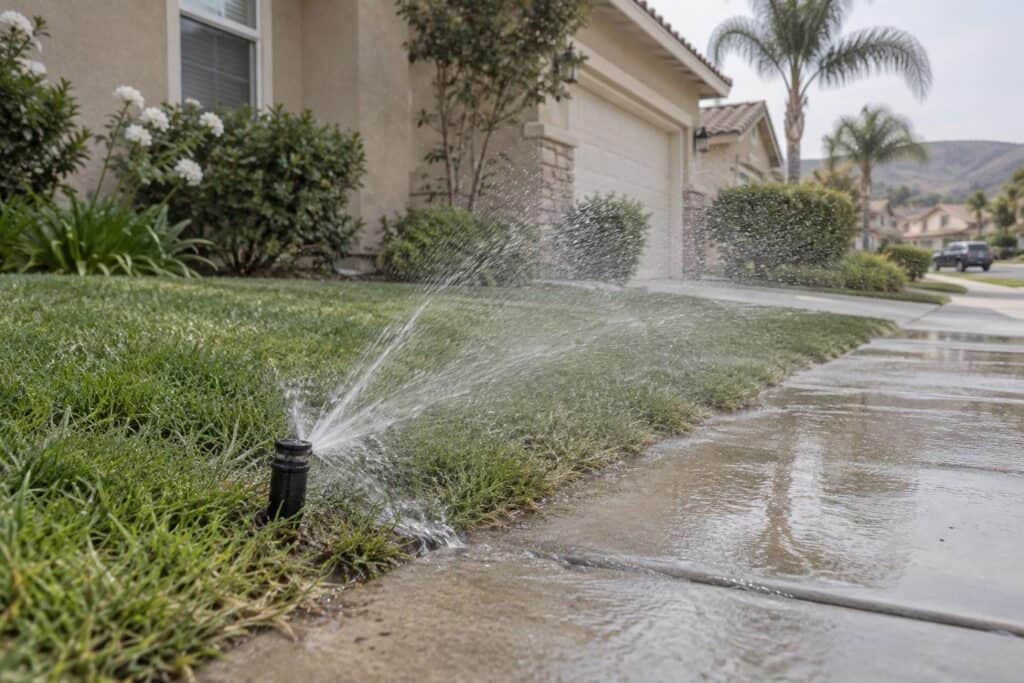
In a climate with long, hot, dry summers, outdoor watering is often the largest single use of water at a Murrieta home. Small irrigation problems can lead to big bills.
Broken Sprinkler Heads and Lines
Lawn mowers, foot traffic and shifting soil can break sprinkler heads or crack underground lines. A broken head can spray water into the street, while an underground break can soak one area of the yard. Walk your yard while each zone runs and look for geysers, pooling water or heads that do not pop up.
Controller Settings That Are Off
After a power outage, some irrigation controllers reset to default programs. Others may still be on a summer schedule well into the cooler months. Check your run times and watering days each season and adjust them as the weather changes. Santa Ana wind events can dry out landscaping quickly, but watering during strong winds also wastes water to drift.
Hose Bibs, Pools and Spas
A leaky hose bib or a hose left trickling can waste water around the clock. Pools and spas with automatic fill valves can also hide a leak, because the fill valve keeps topping off the water you are losing.
| Possible Cause | Common Sign | What to Do |
|---|---|---|
| Running toilet | Tank refills by itself or dye shows in bowl | Replace flapper or call a plumber |
| Dripping faucet | Constant drip or water at the base | Schedule fixture repair |
| Slab leak | Warm floor spots or sound of running water | Schedule professional leak detection |
| Main water line leak | Soggy yard and meter moving with house valve off | Call for water line repair |
| Irrigation break | Pooling water or broken sprinkler heads | Shut off the zone and repair the line |
| Water heater leak | Water around the tank or relief valve discharge | Turn off the water supply and call for repair |
Aging Pipes, Hard Water and High Pressure
Some causes of rising water use are not a single leak but the overall condition of your plumbing system.
Aging Pipes and Pinhole Leaks
Older copper and galvanized pipes can corrode over time, especially with hard water. Pinhole leaks may appear in walls, ceilings or under the slab. If you have had more than one leak in a short time, a plumbing inspection can help you understand the condition of the system and whether repiping makes sense.
High Water Pressure
Water pressure that is too high puts extra stress on pipes, valves, toilets and appliance hoses. It can cause running toilets, dripping faucets and burst supply lines. Many homes have a pressure regulator near the main shutoff, and these regulators can wear out. A plumber can test your pressure and replace a failing regulator.
Hard Water Wear and Tear
Mineral buildup from hard water shortens the life of washers, cartridges, flappers and water heater parts. Treating the water can help your fixtures seal properly for longer. You can learn more in our post on how a water softener system works.
Protect Your Home When You Are Away
If you travel during the summer or holidays, turning off the main water supply can prevent a small leak from becoming a big problem while the house is empty. Before you leave, make sure you know where your shutoff valve is and that it turns freely.
Want a clear answer on where your water is going? Book a leak detection visit with our licensed plumbers.
Frequently Asked Questions
Why is my water bill so high when nothing has changed?
When your routine has not changed, the most likely causes are a running toilet, a dripping fixture, an irrigation problem or a hidden leak under the slab or in the yard. Start by checking your water meter with every fixture off. If the leak indicator moves, water is escaping somewhere and it is time to narrow down the source or call a plumber.
How can I check for a leak using my water meter?
Turn off all water inside and outside the home, including the irrigation controller. Look at the meter and note the reading and the small leak indicator. Wait one to two hours without using water, then check again. Any movement means water is flowing somewhere. Closing the house shutoff can help you tell whether the leak is indoors or outdoors.
Can a running toilet really raise my water bill?
Yes. A toilet that keeps running or refilling can waste water around the clock, and because the sound is often faint, it can go unnoticed for weeks. A simple food coloring test in the tank can show whether water is leaking into the bowl. Worn flappers and fill valves are common culprits and are usually straightforward for a plumber to replace.
What are the signs of a slab leak?
Common signs include warm spots on floors, the sound of running water when everything is off, damp or warped flooring, mildew odors and a water heater that seems to run constantly. A rising water bill with no obvious explanation is another clue. Because slab leaks are hidden in the foundation, professional leak detection is the best way to pinpoint them accurately.
Can irrigation problems cause a high water bill?
Irrigation is a major source of water use in Murrieta, especially during hot summers. Broken sprinkler heads, cracked underground lines and controllers stuck on the wrong schedule can all waste water. Walk your yard while each zone runs to look for spraying, pooling or soggy areas, and review your controller settings each season as the weather changes.
When should I call a plumber about my water bill?
Call a plumber if your meter shows movement with everything off, if you notice warm floors, damp walls or a soggy yard, or if your bill keeps climbing after you have fixed obvious problems. A licensed plumber can use leak detection tools to find hidden leaks without unnecessary demolition and recommend the right repair for your home.
Ready to Get Started with We Care Plumbing, Heating and Air?
A high water bill is often the first warning of a leak that is costing you water and could be damaging your home. We Care Plumbing, Heating and Air (CA License #779604) provides leak detection and plumbing repair for homeowners in Murrieta, Temecula, Menifee, Wildomar, Lake Elsinore and Canyon Lake. Call (951) 277-6848 or stop by our office at 41085 Golden Gate Cir, Murrieta, CA 92562. Ask about our VIP Club maintenance plan to keep your plumbing in good shape year round.