

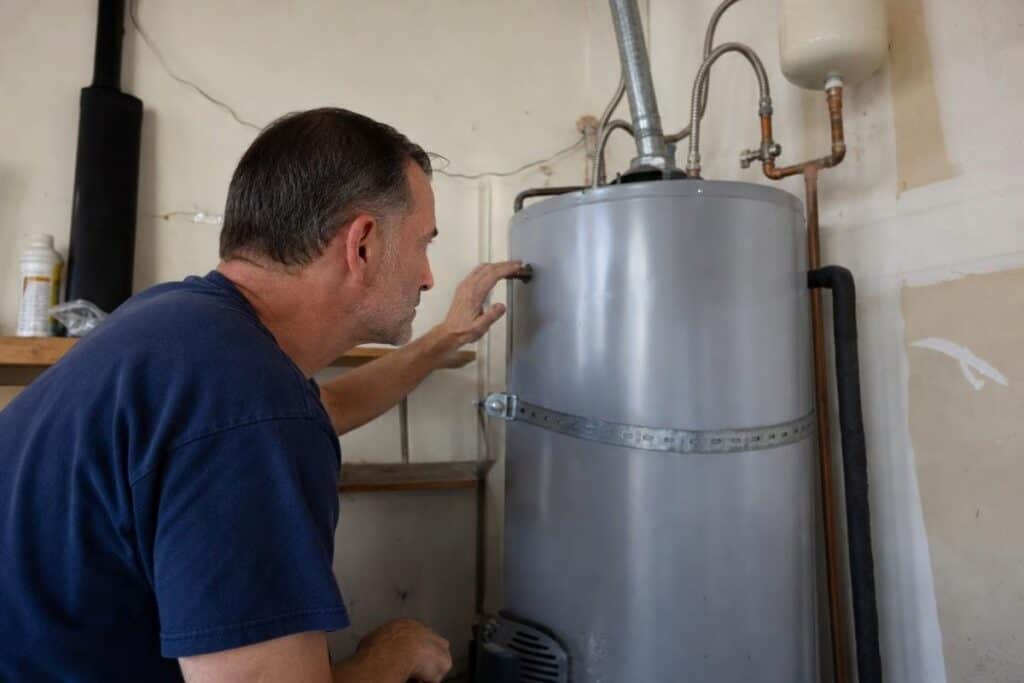
If you are wondering how long water heaters last in Orange, CA, the short answer is 8 to 12 years for a traditional tank unit and 15 to 20 years for a tankless model. But the mineral-heavy water that flows through most Orange homes can shorten that lifespan faster than many owners expect. We Care Plumbing, Heating and Air has been diagnosing and replacing water heaters since 2000, and we know exactly what local water quality does to these systems over time.
Not sure if your water heater is due for a repair or a full replacement? We can help you figure it out.
Key Takeaways
- Traditional tank water heaters typically last 8 to 12 years, while tankless units can last 15 to 20 years or more.
- Orange, CA water carries enough calcium and magnesium to accelerate mineral buildup and shorten water heater lifespan.
- Knowing how long water heaters last in Orange CA helps you plan a replacement before an emergency forces your hand.
- Annual maintenance, including flushing sediment and checking the anode rod, can add years to your unit’s life.
- Rusty water, inconsistent hot water, and rising energy bills are the clearest signs your water heater is failing.
How Long Does a Water Heater Typically Last?
The lifespan ranges above assume average water quality and basic upkeep. In Orange, the local water supply means your unit is often working harder than average from day one. The section below breaks down what drives those numbers and what changes them.
Tank Water Heaters
Standard residential tank units, whether 30, 40, 50, or 75 gallons, hold water constantly. That standing water corrodes the steel tank from the inside out. The part slowing that process down is the sacrificial anode rod, a magnesium or aluminum rod that corrodes in place of the tank wall. Once that rod is fully depleted, the steel shell starts to rust. Most homeowners never check it.
When the anode rod goes unserviced, a tank that could have lasted 12 years often fails at 8 or 9. Staying current on our water heater maintenance service is the single biggest factor in reaching the top of that lifespan range.
Tankless Water Heaters
Tankless units heat water on demand. No standing water means the heat exchanger does not face the same corrosion risk a tank does. That is the core reason the tank vs. tankless water heater lifespan gap is so wide.
The primary failure mode for tankless units is scale buildup inside the narrow heat exchanger passages. Calcium and magnesium deposits restrict flow, force the unit to work harder, and eventually cause it to shut down or crack. If you notice reduced hot water output or error codes, our tankless water heater repair service should be your next call before the damage gets worse.
How Maintenance Changes the Math
Annual maintenance, including a tank flush, anode rod inspection, and pressure-relief valve test, can push a tank unit well past the 12-year mark. On the flip side, a neglected tankless unit can fail in as little as 10 years. Orange County’s high mineral content accelerates scale buildup in both types, which is why the local water quality picture matters so much. The next section covers that in full detail.
Why Orange, CA Hard Water Shortens Water Heater Life
The City of Orange draws its water from a mix of local groundwater managed by the Orange County Water District and imported supply from the Metropolitan Water District. Both sources run on the harder end of the scale, with mineral concentrations that commonly test in the hard-to-very-hard range. Generic national guides skip this detail entirely, but it is one of the biggest factors affecting water heater lifespan in Southern California.
What Hard Water Does to a Tank Unit
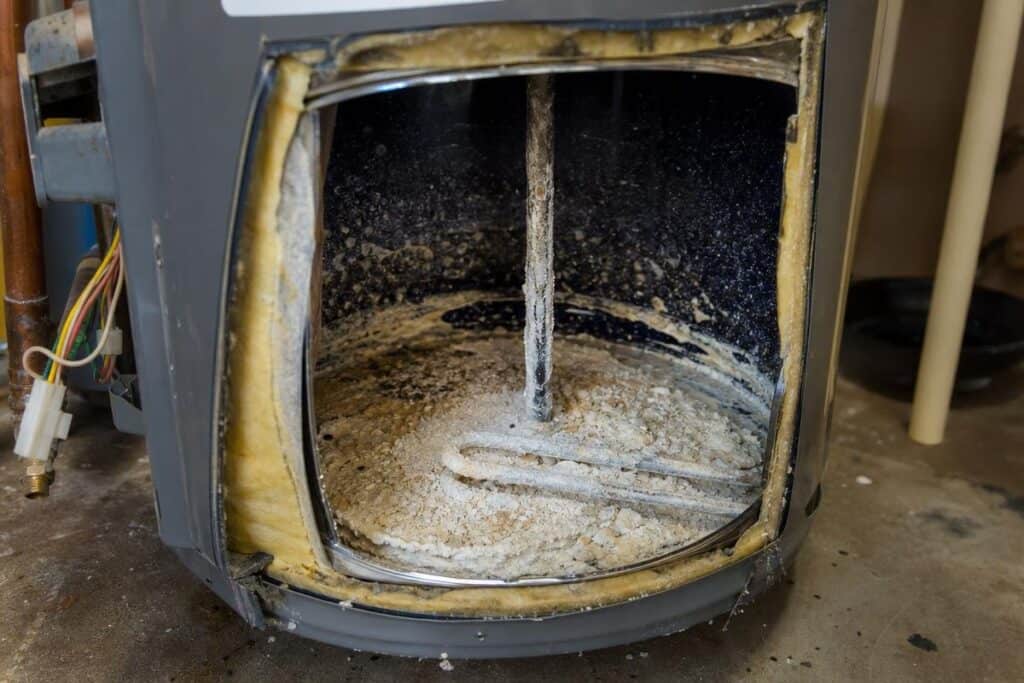
Scale deposits settle on the tank bottom and coat the heating element over time. That mineral layer acts like insulation between the burner and the water, forcing the unit to run longer and hotter to hit your set temperature. Your energy bill creeps up, and the tank wears out faster.
That popping or rumbling sound coming from your garage? That is scale cracking and shifting on the tank floor. It is not just annoying. It means the damage is already happening. A scale-heavy water supply can cut two to three years off a tank unit’s lifespan compared with homes in low-mineral areas. Good annual water heater maintenance, including flushing, slows that process down.
What Hard Water Does to a Tankless Unit
Tankless units have narrow heat exchanger passages that clog with mineral buildup faster than a tank’s open interior. Once those passages restrict flow, the unit overheats, error codes appear, and hot water output drops. Annual descaling with food-grade citric acid keeps things clear. Our team offers Flo-Tech descaling service specifically for this problem.
The most effective long-term fix for any water heater type is a whole-home water softener installed upstream of the unit. Our water quality treatment service can help protect your investment before the calcium and magnesium do their damage.
7 Warning Signs Your Water Heater Is Nearing the End
Your water heater will tell you when it is struggling. You just need to know what to look for. These seven signs mean it is time to think seriously about water heater repair before a small problem turns into a flooded garage.
1. It’s Past Its Prime Age
To find your unit’s age, look at the serial number on the rating plate attached to the side of the tank. Many manufacturers encode the manufacture date in the first few characters, but the format is not universal. A.O. Smith, Rheem, and Bradford White all use different encoding systems, so a code that means June 2026 on one brand means something entirely different on another. Check your brand’s specific format, or call us and we can help you decode it. If your tank is over 10 years old, start planning now.
2. Orange or Rusty Hot Water
Orange or rust-colored water from the hot tap only is a classic sign the tank is corroding from the inside. It is not just an aesthetic problem. Rust in your water supply means the tank lining has failed and sediment is migrating into your pipes. This is one of the most common calls we get from Orange homeowners with older units.
3. Rumbling or Popping Sounds
That banging noise is scale cracking off the bottom of the tank as it heats up. Orange County’s high mineral content makes this happen faster than in softer-water regions. Once the sediment layer is thick enough to cause noise, the heating element is working much harder than it should.
4. Water Pooling Around the Base
A puddle under your water heater is never normal. Small fractures in the tank shell cause slow leaks that get worse with every heating cycle. If you spot moisture, check our guide on 10 ways to detect plumbing leaks in your home and call us right away.
5. Inconsistent Water Temperature
If your shower goes cold mid-rinse or takes forever to heat up, the thermostat or heating element is failing. Mineral buildup on the element makes it harder to maintain the set temperature. This is a repair that sometimes makes sense, but only if the unit is under 8 years old.
6. Rising Energy Bills With No Clear Cause
A degraded water heater runs longer cycles to reach temperature. That means higher gas or electric bills every month. In the inland heat of an Orange summer, garage-installed units already work harder than average. A struggling unit makes that worse.
7. Frequent Repairs Over the Past Two Years
One repair is normal. Two or three repairs in two years is a pattern. If your total repair costs are approaching 50% of what a new unit would cost, replacement is the smarter financial move. Our blog post on when to DIY vs when to call pros breaks down exactly how to run those numbers.
Should You Repair or Replace Your Water Heater?
This is the question we hear most often from Orange homeowners, especially those in Old Towne Orange bungalows and the tract homes that filled out the city and the Anaheim Hills border areas through the 1980s and 1990s. Many of those water heaters are hitting or passing the 10 to 12 year mark right now. The good news is there is a straightforward way to think through the decision before you spend a dollar on either option.
The 50% Rule
If your estimated repair cost is more than 50% of what a new unit would cost installed, replacement almost always makes more financial sense. Repair costs vary depending on the issue and the unit. As a general rule, if the repair estimate approaches half of what a new unit would cost installed, replacement is usually the smarter financial move. At that point, you are putting serious money into a unit that is already near the end of its life. For water heater repair questions, our team can give you a straight cost comparison before you commit to anything.
Quick Decision Checklist
Run through these six questions. Answer yes or no for each one.
- Is your unit 10 years old or older?
- Have you needed two or more repairs in the last 24 months?
- Is your hot water rusty or discolored?
- Do you hear rumbling or popping from the tank?
- Is there water leaking at the base of the unit?
- Has your energy bill gone up noticeably without a clear reason?
Scoring: 0 to 1 yes answers means repair is likely fine. 2 to 3 means get a professional opinion. 4 or more means start planning for water heater replacement now, not later.
A professional plumbing inspection can confirm what the checklist points to. We can check the anode rod, look for internal corrosion, and tell you exactly what you are dealing with, so there is no guessing.
Not sure if your water heater needs a repair or a full replacement? Call us at (951) 277-6848 and we’ll give you a straight answer.
How to Extend Your Water Heater’s Lifespan
A little maintenance goes a long way, especially in Orange where high mineral content is the norm. Local water carries enough calcium and magnesium to build up inside your tank faster than the national average. The good news is that a few simple tasks each year can add real years to your water heater’s life.
Annual Maintenance Tasks
Here are the core tasks every Orange homeowner should put on the calendar:
- Flush the tank: Connect a garden hose to the drain valve and flush 2 to 3 gallons to clear sediment. Once a year is the national baseline, but twice a year is smarter here given the local water conditions.
- Check the anode rod: Pull it every 3 to 4 years. If it is less than half an inch thick or heavily corroded, replace it. A new rod is an inexpensive part and can add several years to your tank’s life.
- Test the pressure-relief valve: Lift the lever briefly. It should open and reseat cleanly. If it drips afterward or will not open, it needs replacement.
- Inspect the expansion tank: Homes with a backflow preventer on the main water line need an expansion tank. A failed expansion tank puts extra stress on your water heater and shortens its life.
- Descale tankless units annually: Mineral buildup inside a tankless unit cuts efficiency fast. Our team offers Flo-Tech descaling service to clear that buildup before it causes damage.
Scheduling annual water heater maintenance covers most of these tasks in a single visit.
What You Can Do Yourself vs. What Needs a Licensed Plumber
Flushing the tank and doing a visual check on the anode rod are reasonable DIY tasks. Most homeowners can handle those safely with basic tools.
Replacing the anode rod is a different story here. Scale minerals can fuse the rod to the tank fitting over time, making it nearly impossible to remove without the right tools. Attempting it yourself risks cracking the fitting or damaging the tank. Pressure-relief valve replacement and tankless descaling also fall into the call-a-plumber category. The cost of a professional visit is far less than an early replacement.
Tank vs. Tankless: Which Lasts Longer for Orange Homes?
Tankless water heaters typically outlast traditional tank units by a wide margin. That gap is the starting point for the tank vs. tankless water heater lifespan conversation, but the full picture depends on your household, your budget, and how long you plan to stay in your home.
Upfront Cost vs. Long-Term Value
Costs vary based on unit type, size, and installation specifics. Contact our team for an accurate estimate for your home. A tank keeps 50 gallons hot around the clock, even at 2 a.m. when nobody is showering. Tankless units heat water on demand, cutting energy use by 20 to 30 percent.
Spread those savings across 15 years in a larger Orange County home with high hot-water demand, and the math shifts. You also avoid one full tank replacement cycle during that window. For homeowners planning to stay put for a decade or more, the premium is easier to justify.
Hybrid heat pump water heaters, covered under our heat pump installation service, are a third option worth knowing about. These units are gaining traction across Southern California because of state energy rebates that can significantly offset the purchase price. Ask our team whether your garage or utility space qualifies.
Which Type Makes Sense for Your Home
A tank unit still makes sense if your budget is tight, your existing gas line and venting are already sized for a tank, or your household hot-water use is modest. Tankless fits larger households, anyone replacing a scale-damaged unit, or homeowners who want to stop replacing equipment every decade.
Our team handles plumbing installation for both types and can tell you which one fits your home before you commit to anything.
Water Heater Lifespan in Orange: What Local Conditions Mean for Your Home
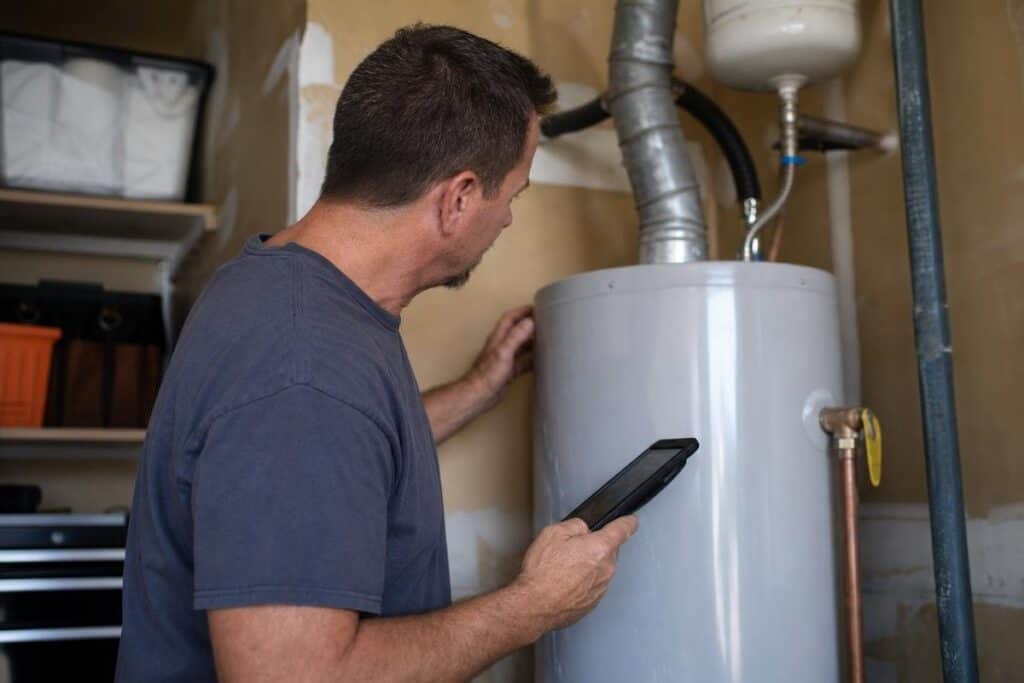
Orange has a wide mix of housing stock, from the historic homes of Old Towne Orange to newer neighborhoods near the Anaheim Hills line. Older properties often still run their original or early-replacement water heaters, which means many units around town are already well past their expected lifespan. Local conditions make that even more urgent.
Garage Installations Take a Beating Here
A large share of Orange homes have the water heater sitting in an attached garage. On hot inland days, garage temperatures in this part of Orange County can climb well past 100°F. That kind of heat stresses tank insulation and thermostat components far more than a climate-controlled utility closet would. It shortens the effective water heater lifespan in Southern California homes faster than most national guides account for. You can read more about spotting plumbing issues in older homes as systems age in these conditions.
Local Experience Makes a Real Difference
Our team has been serving Orange County homeowners since 2000. We have pulled water heaters out of garages across the region for over two decades, so we know the failure patterns specific to local housing stock and water conditions. That experience shows up in every water heater maintenance visit we run. With thousands of customer reviews and a strong average rating, homeowners across the area trust our team to give them straight answers, not upsells. Our full range of plumbing, heating, and central air services is available when you are ready to take the next step.
Frequently Asked Questions
How do I find out how old my water heater is?
Check the rating plate on the side of the tank. The manufacture date is encoded in the serial number, but the format varies by brand. Bradford White, Rheem, and A.O. Smith each use different letter and number combinations. Search “[your brand] serial number date decoder” to find the exact key for your unit, or call us and we can decode it for you.
Can a tank water heater really last 20 years?
It happens, but it is uncommon. You need ideal water quality, consistent annual maintenance, and a quality unit from the start. In Orange County, reaching 20 years with a tank unit is rare without a water softener. A tankless unit hitting 20 years is more realistic, especially with regular descaling.
What does water heater replacement cost in Orange, CA?
Costs vary based on unit type, size, and installation specifics. An accurate number requires a site visit, so call us for a proper estimate before budgeting.
Why is my hot water orange or rusty?
Orange or brown water from the hot tap only almost always means rust inside the tank. The lining has failed. It is not immediately dangerous in small amounts, but it signals the tank needs to go soon. If both hot and cold taps run discolored, the problem is in your supply line and you need plumbing repair right away.
How often should I flush my water heater in Southern California?
Once a year is the national recommendation. In Orange and the surrounding communities, twice a year is smarter given the high mineral content in local water. Without a water softener, scale builds fast. A full flush takes about 20 minutes and protects the equipment you rely on. Our water heater maintenance service can handle it for you.
When does the warranty matter for replacement timing?
Most tank units carry 6- or 12-year tank warranties. Tankless units often carry 10- to 15-year heat exchanger warranties. Treat warranty expiration as a planning trigger, not a hard deadline. A unit can fail before the warranty ends or run fine past it, depending on maintenance and water quality.
What happens if I wait too long to replace a failing water heater?
A rupturing tank can release 40 to 75 gallons into a garage in minutes. Many Orange homes have water heaters in attached garages, where a slow leak behind drywall can go unnoticed for weeks and promote mold growth. Read our guide on emergency plumbing and what to do before the plumber arrives so you are prepared. Proactive replacement is almost always less expensive than a new unit plus water damage repair.
Ready to Get Started with We Care Plumbing, Heating and Air?
Call (951) 277-6848 to speak with our team directly. We’re ready to answer your questions, walk you through your options, and help you find the right solution for your needs. Whether you’re just starting to plan or ready to move forward, we’ll make the process simple and stress-free.
Reach out today and let’s talk about how we can help.