

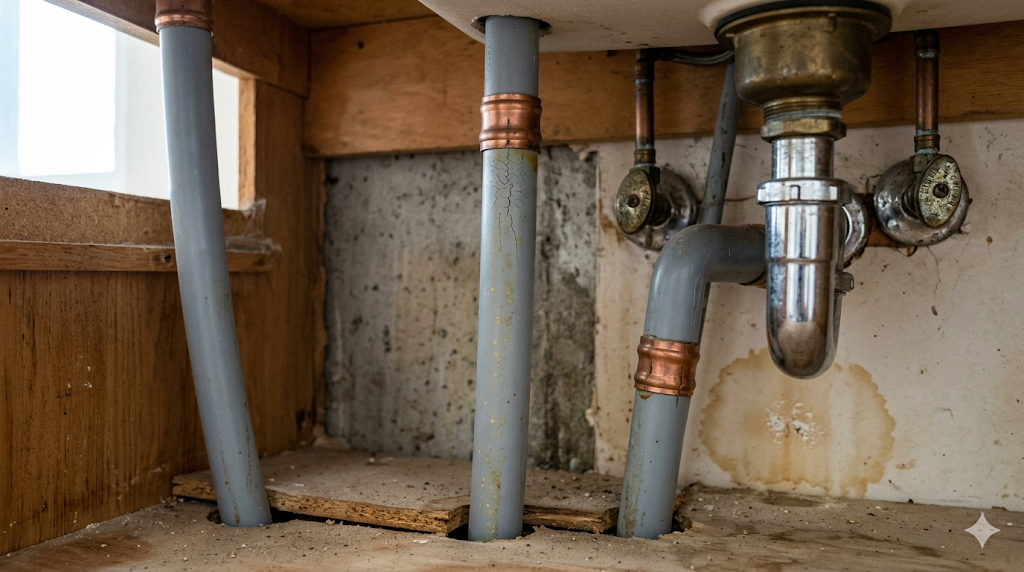
If your Southern California home was built between 1978 and 1995, there is a significant chance your plumbing system contains polybutylene pipes. Once marketed as the “pipe of the future,” this gray plastic material was installed in an estimated 6 to 10 million homes across the United States, with particularly high concentrations in Sun Belt states like California, Texas, and Florida.
Unfortunately, polybutylene has proven to be anything but future-proof. Widespread failures, a major class-action lawsuit, and removal from building codes have made these pipes a serious concern for homeowners, insurers, and buyers alike. Understanding the risks, recognizing the warning signs, and knowing your replacement options can help you avoid costly water damage and protect your home’s value.
What Are Polybutylene Pipes and Why Are They a Problem?
Polybutylene (often abbreviated as “poly B” or “PB”) is a flexible plastic resin that was used extensively for residential water supply lines from the late 1970s through the mid-1990s. Builders favored it because it was inexpensive, easy to install, and resistant to freezing. Brand names like Quest, Vanguard, and Dura-Pex were common during this period.
The problem is that polybutylene reacts with chlorine and other oxidants found in municipal water supplies. Over time, these chemicals cause the pipe material to degrade from the inside out. Microscopic fractures form within the pipe walls, gradually weakening the structural integrity until the pipe fails. Because this degradation happens internally, a polybutylene pipe can appear perfectly fine on the outside right up until the moment it ruptures.
This unpredictable failure pattern led to a class-action lawsuit in the 1990s and the eventual removal of polybutylene from all U.S. building codes. No manufacturer produces it today, and no jurisdiction allows it in new construction or remodeling projects. If your home has polybutylene plumbing, it is operating with a material that has been rejected by the entire plumbing industry.
How to Identify Polybutylene Pipes in Your Home
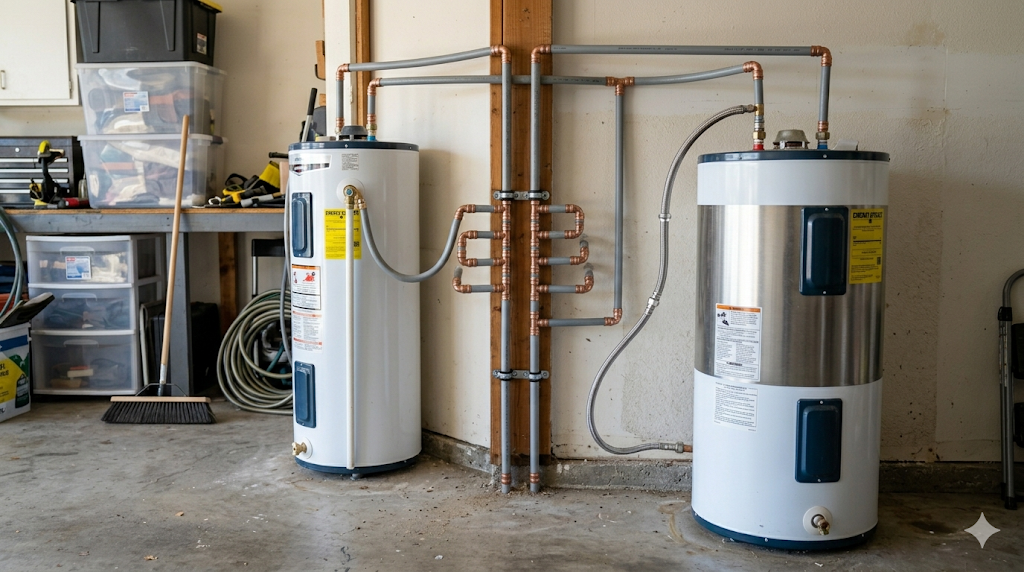
Polybutylene pipes are typically gray in color, though they can also be blue, black, or silver depending on the manufacturer and application. The pipes are usually half-inch to one inch in diameter and have a dull, slightly flexible feel compared to rigid PVC or copper.
To confirm you have polybutylene, look for printed markings stamped along the pipe every two to three feet. The code “PB2110” is a strong indicator. You may also see brand names or manufacturing information. Check these common locations:
- Under sinks: Look at the supply lines connecting to your faucets. If you see gray plastic tubing rather than copper or braided stainless steel, it may be polybutylene.
- Near the water heater: Supply and distribution lines in this area are often visible and accessible.
- In the attic or crawl space: Main distribution lines often run through these areas.
- At the main water shut-off: The pipe entering your home from the street may be visible near the shut-off valve.
Polybutylene fittings are another identifying feature. These pipes typically connect using copper or brass crimp rings that are squeezed around the pipe with a special tool. If you see metal rings pinched around gray plastic pipe joints, that is consistent with polybutylene construction.
If you are unsure about your plumbing material, a plumbing inspection by a licensed plumber can confirm what type of pipes you have and assess their current condition.
Warning Signs Your Polybutylene Pipes Are Failing
Polybutylene failures can occur with little or no warning, but some signs may indicate that your pipes are deteriorating:
- Water stains on ceilings, walls, or flooring: Discoloration or bubbling paint can indicate hidden leaks within your walls or above your ceilings. By the time you see water stains, the leak may have been active for some time.
- Unexplained drop in water pressure: Internal corrosion and flaking can restrict water flow, causing noticeable pressure loss at faucets and showerheads.
- Discolored or cloudy water: Pipe degradation can release particles into your water supply, affecting clarity and quality.
- Visible leaks at fittings: The crimp fittings used with polybutylene are particularly vulnerable to failure. Small drips at connection points often indicate larger problems developing throughout the system.
- Higher-than-normal water bills: Hidden leaks waste water continuously, and the cost shows up on your monthly bill.
- Musty odors: Persistent moisture from slow leaks can cause mold growth behind walls, producing a characteristic musty smell.
If you notice any of these signs, slab leak detection and a thorough plumbing evaluation can help locate the source before more extensive damage occurs.
Why Spot Repairs Do Not Work for Polybutylene
Some homeowners hope to address polybutylene problems by repairing individual leaks as they occur. Unfortunately, this approach rarely provides lasting results.
The chemical degradation that causes polybutylene to fail affects the entire plumbing system, not just isolated sections. If one pipe has deteriorated to the point of leaking, the rest of the system has likely experienced similar degradation. Patching one section does not address the weakened pipes behind your walls, under your floors, or in your attic.
Repeated plumbing repair calls add up quickly, and you remain at risk of a catastrophic failure between repairs. A single burst pipe can cause tens of thousands of dollars in water damage, far exceeding the cost of proactive replacement. Most plumbing professionals recommend full system replacement rather than ongoing repairs for homes with polybutylene.
Replacement Options: PEX vs. Copper Piping
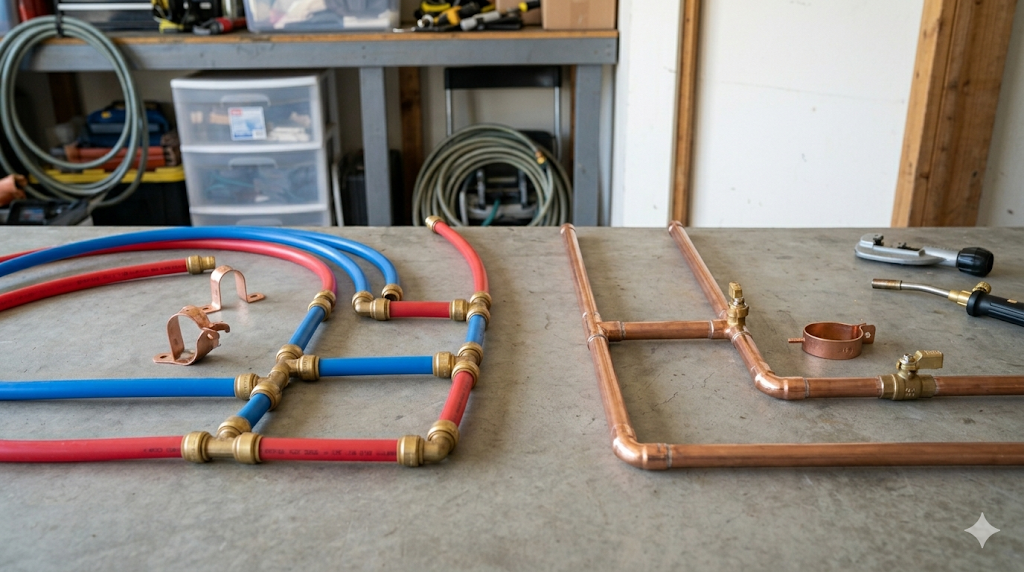
When you replace polybutylene pipes, you will typically choose between two modern materials: PEX (cross-linked polyethylene) and copper. Both offer significant advantages over the failed polybutylene system.
PEX Piping is the most popular choice for residential repiping today. This flexible plastic tubing resists corrosion, tolerates temperature fluctuations, and does not react with chlorine the way polybutylene does. PEX can be routed through walls with minimal cutting because of its flexibility, reducing installation time and drywall repairs. Material costs typically range from $0.40 to $2.00 per linear foot.
Copper Piping offers exceptional durability and has been the standard for residential plumbing for decades. Copper naturally resists bacteria, provides long-term reliability, and can last 50 to 100 years when properly installed. However, copper is more expensive, with material costs ranging from $2.00 to $10.00 per linear foot, and installation requires more skilled labor.
For most Southern California homeowners, PEX provides the best balance of reliability, cost, and ease of installation. A qualified plumber can help you evaluate both options based on your home’s specific requirements and your long-term goals.
What to Expect During a Whole-Home Repipe
A complete repiping installation replaces all polybutylene water supply lines with new PEX or copper piping. Here is what the process typically involves:
- Initial assessment: A licensed plumber inspects your plumbing system to confirm the presence of polybutylene, assess its condition, and provide a detailed estimate based on your home’s size and layout.
- Access point creation: Because pipes run through walls, ceilings, and sometimes floors, the installer will need to create access points to remove old pipes and install new ones. Experienced repiping specialists minimize disruption by planning efficient routes.
- Pipe installation: New water line installation is routed throughout the home, connecting to all fixtures, appliances, and the main water supply. Fittings, valves, and connections are upgraded to meet current code requirements.
- Pressure testing and inspection: The new system is pressure-tested to verify there are no leaks before walls are closed. A final inspection ensures code compliance.
- Drywall and finish repair: Access points are patched, and affected areas are restored. Some plumbing companies include basic patching in their service; others coordinate with drywall contractors for a complete finish.
A typical residential repipe takes two to five days depending on the home’s size, the number of bathrooms, and accessibility of existing pipes. Water service is interrupted during active work but is typically restored at the end of each workday.
Polybutylene Pipe Replacement Costs in Southern California
The cost to replace polybutylene pipes varies based on home size, number of fixtures, material choice, and accessibility. Here are general ranges for Southern California:
A two-bedroom, one-bathroom home typically costs $4,000 to $6,000 for a full PEX repipe. A larger three- or four-bedroom home with multiple bathrooms may range from $6,000 to $12,000. Homes with complex layouts, difficult access points, or extensive drywall repair needs can reach $15,000 or more.
Copper repiping costs approximately 20 to 40 percent more than PEX due to higher material and labor expenses.
While these costs represent a significant investment, consider that a single polybutylene failure can cause water damage repairs costing $10,000 to $30,000 or more. Proactive replacement eliminates this risk entirely and provides predictable, budgetable expenses rather than emergency repairs.
Insurance and Real Estate Implications
Polybutylene pipes create complications beyond the physical risk of failure. Insurance companies and real estate buyers are well aware of the material’s problems.
- Insurance concerns: Many homeowners insurance providers charge higher premiums, require specific exclusions, or refuse coverage entirely for homes with polybutylene plumbing. Some homeowners have had policies canceled with little notice after the insurer discovered the pipe material. If you are having difficulty obtaining or maintaining coverage, polybutylene may be the reason.
- Real estate disclosure: Sellers are legally required to disclose known defects, including polybutylene plumbing. Buyers frequently negotiate price reductions to account for replacement costs, or they may pass on the property entirely. Home inspectors routinely flag polybutylene, and the finding can stall transactions.
- Mortgage lending: Some lenders require polybutylene replacement before approving a loan, particularly for FHA or VA financing. If you are selling a home with these pipes, the buyer’s financing options may be limited.
Repiping before listing your home can improve marketability, attract more buyers, and support a higher sale price. The investment often pays for itself through a smoother transaction and stronger offers.
Schedule Your Plumbing Inspection Today!
If your home was built between 1978 and 1995 and you have not confirmed your pipe material, a plumbing inspection is a smart precaution. Our team can identify polybutylene, assess your system’s condition, and provide a detailed estimate for replacement if needed. For emergency plumbing services or to schedule an inspection, call (951) 574-3134 or visit our contact page to book an appointment.
Frequently Asked Questions
How do I know if my home has polybutylene pipes?
Look for gray, blue, or black flexible plastic pipes under sinks, near your water heater, or in accessible areas like the attic or crawl space. The marking “PB2110” printed on the pipe confirms polybutylene. If you are uncertain, a professional plumbing inspection can identify your pipe material.
Can polybutylene pipes be repaired instead of replaced?
Repairs are temporary at best. Because the entire system has been exposed to the same chemical degradation, fixing one leak does not address weakened pipes elsewhere. Plumbing professionals recommend full replacement rather than ongoing repairs.
Does homeowners insurance cover polybutylene pipe failures?
Most policies exclude damage from “wear and tear” or “inherently defective” materials, which typically includes polybutylene. Some insurers may cover sudden water damage if you were unaware of the pipes, but this is rare and often disputed. Coverage for the pipes themselves or the cost of replacement is generally not included.
How long does a whole-home repipe take?
Most residential repiping projects take two to five days, depending on home size, number of bathrooms, and accessibility. Water service is typically restored each evening, and the home remains livable throughout the process.
What is the best replacement material for polybutylene pipes?
PEX is the most common choice due to its durability, flexibility, and cost-effectiveness. Copper offers longer lifespan and antimicrobial properties but costs more. Both materials are significant upgrades over polybutylene and can last decades with proper installation.
How much does it cost to replace polybutylene pipes in a 3-bedroom home?
Costs typically range from $6,000 to $12,000 for a PEX repipe in a three-bedroom home, depending on the number of bathrooms, accessibility, and local labor rates. Copper repiping costs approximately 20 to 40 percent more.
About We Care Plumbing, Heating & Air
We Care Plumbing, Heating & Air has helped thousands of Southern California homeowners address polybutylene and other aging plumbing systems. Our licensed plumbers specialize in whole-home repiping with PEX and copper, providing efficient installations that minimize disruption to your daily life. Serving Riverside, San Bernardino, Orange, and San Diego counties, we deliver the quality workmanship and transparent pricing that has made us the trusted choice for over two decades.