

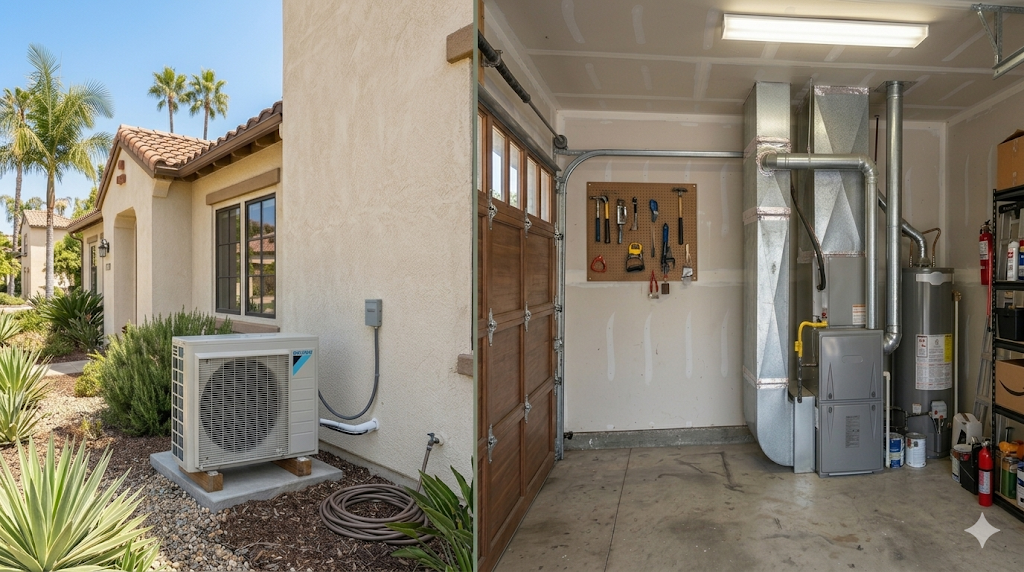
If you are replacing your heating system or installing HVAC in a new home, you have likely come across the heat pump vs. furnace debate. Both systems can keep your home comfortable during cooler months, but they work in fundamentally different ways. For homeowners in Riverside, San Bernardino, Orange, and San Diego counties, Southern California’s mild climate creates unique considerations that can make one option clearly better than the other.
This guide breaks down the differences between heat pumps and furnaces, including efficiency, operating costs, upfront investment, and long-term value. By the end, you will have a clear understanding of which system makes the most sense for your home and budget.
How Heat Pumps and Furnaces Work Differently
The core difference between these systems comes down to how they produce heat. A furnace generates heat by burning natural gas or using electric resistance elements. The combustion or electrical process creates hot air, which a blower distributes through your ductwork. Furnaces are dedicated heating appliances; you need a separate air conditioner to cool your home in summer.
A heat pump transfers heat rather than creating it. Even when outdoor temperatures feel cool, there is still thermal energy in the air. A heat pump uses refrigerant and a compressor to absorb that heat from outside and move it indoors. In summer, the process reverses: the system pulls heat from inside your home and releases it outdoors, functioning exactly like an air conditioner.
This dual functionality is a significant advantage. A single heat pump installation replaces both your furnace and your air conditioner, simplifying your HVAC system into one unit with one maintenance schedule.
Why Southern California’s Climate Favors Heat Pumps

Climate is the single biggest factor in the heat pump vs. furnace decision, and Southern California’s weather gives heat pumps a major advantage. Heat pump efficiency depends on outdoor temperature: the milder the climate, the more efficiently the system operates.
In Riverside and San Bernardino counties, winter nights rarely dip below 35 to 40 degrees Fahrenheit. Even in the coolest months, daytime temperatures often reach the 60s and 70s. This is exactly the range where heat pumps perform at peak efficiency. Modern cold-climate heat pumps from manufacturers like Lennox, Mitsubishi, and Carrier maintain full heating capacity down to 5 to 17 degrees Fahrenheit, far colder than Southern California ever experiences.
The old concern that heat pumps “don’t work in cold weather” applied to older technology from decades ago. Today’s heat pumps are engineered to handle temperatures well below freezing, making them more than capable of handling even the coldest Inland Empire nights.
Because Southern California is a cooling-dominant climate, most homeowners run their HVAC systems far more in summer than winter. A heat pump handles both seasons with one piece of equipment, maximizing your investment throughout the entire year.
Comparing Energy Efficiency and Operating Costs
Because heat pumps move heat rather than generate it, they can deliver two to three times more heat energy than the electricity they consume. This is measured as the coefficient of performance (COP). A heat pump with a COP of 3.0 provides three units of heat for every one unit of electricity used, making it effectively 300 percent efficient.
Furnace efficiency is measured differently, using Annual Fuel Utilization Efficiency (AFUE). A standard furnace operates at about 80 percent AFUE, meaning 80 percent of the fuel becomes usable heat while 20 percent is lost as exhaust. High-efficiency furnaces can reach 95 to 98 percent AFUE, but even at peak efficiency, a furnace cannot match the heat-per-dollar performance of a heat pump in a mild climate.
Operating costs also depend on local utility rates. In Southern California Edison (SCE) and San Diego Gas & Electric (SDG&E) territories, electricity rates have risen significantly in recent years. However, natural gas prices have also increased. When you factor in that a heat pump replaces both your heating and cooling systems, the year-round operating costs often favor heat pumps, particularly when you consider that your AC runs far more hours than your heater in this region.
A furnace-and-AC combination requires operating two separate systems with two different energy sources. The heat pump’s all-electric operation can also be advantageous for homeowners with solar panels, allowing you to offset more of your energy costs with on-site generation.
Upfront Costs and Installation Considerations
The initial investment for a heating system depends on multiple factors, including system size, efficiency rating, brand, and the complexity of your installation. Here is how the two options generally compare.
A heat pump replaces two systems. If you are currently replacing both a furnace and an air conditioner, a heat pump may cost less than buying two separate units. The installation is also simpler because there is only one outdoor unit and one set of refrigerant lines to connect.
A furnace-and-AC combination involves two separate purchases and potentially two installations. If your existing AC is still in good condition, replacing only the furnace could be more cost-effective in the short term. However, you will eventually need to replace the AC as well, and mismatched system ages can reduce overall efficiency.
For homes without existing natural gas lines, a heat pump avoids the expense of running new gas piping. This can represent significant savings, particularly in newer developments or additions where gas infrastructure is not already in place.
Both systems require compliance with California’s Title 24 energy standards, which mandate specific efficiency ratings and may require a HERS (Home Energy Rating System) inspection. A qualified heating installation contractor will handle the permitting process and ensure your system meets all code requirements.
Lifespan, Maintenance, and Reliability
Both heat pumps and furnaces are reliable when properly maintained, but their lifespans differ due to usage patterns.
A gas furnace typically lasts 15 to 20 years. Because it only runs during the heating season, the equipment experiences less wear over time. Regular furnace maintenance, including annual inspections and filter changes, helps maximize this lifespan.
A heat pump generally lasts 12 to 15 years. The shorter lifespan reflects the fact that the system operates year-round, handling both heating and cooling duties. However, this also means you are getting continuous use from a single piece of equipment rather than maintaining two separate systems.
When it comes to maintenance, heat pumps require a single annual tune-up that covers both heating and cooling functions. A furnace-and-AC combination requires separate maintenance visits for each system. For homeowners who value simplicity, the heat pump’s consolidated service schedule is an advantage.
If your heat pump ever needs service, heat pump repair is typically comparable in cost to AC or furnace repairs. The systems use similar components, and experienced HVAC technicians are familiar with all major brands.
Available Rebates and Incentives for Southern California Homeowners
California offers several programs that can reduce the cost of heat pump installation, making them even more attractive compared to furnaces.
The federal Section 25C Energy Efficient Home Improvement Credit, which provided up to $2,000 in tax credits for heat pump installations, expired on December 31, 2025. However, California’s state-administered programs continue to offer significant savings. The TECH Clean California program and HEEHRA (High-Efficiency Electric Home Rebate Act) provide rebates ranging from $3,000 to $8,000 for qualifying heat pump installations, with higher amounts available for income-qualified households and homes switching from gas heating.
Local utilities including SCE, SDG&E, and Riverside Public Utilities also offer their own rebate programs that can be stacked with state incentives. Visit our utility rebates page for current offers in your area.
Gas furnaces generally do not qualify for the same level of incentives, as California’s energy policy increasingly favors electrification. This policy direction also suggests that future rebate programs will continue to support heat pump adoption.
When a Furnace Still Makes Sense
While heat pumps are the better choice for most Southern California homes, there are situations where a furnace may be more appropriate.
Mountain or high-desert communities that regularly experience temperatures below 25 degrees Fahrenheit may benefit from a gas furnace’s ability to generate intense heat regardless of outdoor conditions. Communities like Big Bear, Lake Arrowhead, or parts of the high desert fall into this category.
Homes with recent AC replacement may find it more cost-effective to install only a new furnace installation rather than replacing the entire system. If your air conditioner is less than five years old and functioning well, keeping it and adding a new furnace could make financial sense.
Dual-fuel systems offer a hybrid approach, pairing a heat pump with a gas furnace backup. The heat pump handles most heating duties, but the furnace kicks in during the coldest periods. This configuration maximizes efficiency while providing peace of mind in colder microclimates. However, for most Inland Empire and coastal homeowners, the added complexity and cost of dual-fuel is unnecessary given how rarely temperatures drop to levels that challenge modern heat pumps.
Making the Right Choice for Your Home

Choosing between a heat pump and a furnace involves evaluating your specific situation. Consider these questions:
- Do you have existing ductwork? If yes, a ducted heat pump or furnace-and-AC system can both connect to your existing ducts. If not, a ductless mini-split heat pump may be the most practical solution.
- Is natural gas already connected? If your home has gas service, both options are available. If not, a heat pump eliminates the expense of running new gas lines.
- Are you also replacing your air conditioner? If you need both heating and air conditioning installation, a heat pump provides both in one system and is almost always the smarter investment.
- What are your long-term goals? If you plan to add solar panels or want to reduce your carbon footprint, a heat pump aligns with those objectives. California’s clean-energy policies also suggest that electric systems will continue to receive more support than gas appliances.
A proper load calculation is essential regardless of which system you choose. This assessment determines the exact heating and cooling capacity your home requires based on square footage, insulation levels, window quality, and other factors. Oversized or undersized equipment operates inefficiently and wears out faster, so accurate sizing protects your investment.
Schedule Your Heating Consultation Today!
Not sure whether a heat pump or furnace is right for your home? Our comfort advisors can evaluate your current system, discuss your goals, and provide a detailed comparison of your options. Call (951) 574-3134 or visit our contact page to schedule a free in-home consultation.
Frequently Asked Questions
Do heat pumps work in cold weather?
Yes. Modern heat pumps maintain full heating capacity at temperatures far below what Southern California experiences. Cold-climate models from major manufacturers operate efficiently down to 5 to 17 degrees Fahrenheit. For our region, cold weather performance is not a concern.
Is a heat pump or furnace cheaper to operate in Southern California?
For most homeowners, heat pumps cost less to operate on a year-round basis. Their superior efficiency during heating and their dual function as air conditioners mean you get more value from every dollar spent on energy. The exact savings depend on your utility rates and usage patterns.
Can I replace just my furnace without replacing my AC?
Yes, though mismatched system ages can reduce efficiency. If your AC is still relatively new and functioning well, replacing only the furnace is reasonable. However, if both systems are aging, replacing them together, or switching to a heat pump, typically provides better long-term value.
How long does a heat pump last compared to a furnace?
Furnaces typically last 15 to 20 years because they only operate during heating season. Heat pumps last 12 to 15 years due to year-round operation. However, a heat pump replaces both your furnace and AC, so you are consolidating two systems into one.
What size heat pump do I need for my home?
Sizing depends on your home’s square footage, insulation, windows, orientation, and local climate zone. A professional load calculation, performed by a qualified HVAC contractor, determines the exact capacity required. Avoid rules of thumb; accurate sizing is essential for efficiency and comfort.
Are there rebates available for heat pump installation in California?
Yes. California offers state rebates through TECH Clean California and HEEHRA programs, with amounts ranging from $3,000 to $8,000 depending on income eligibility and system specifications. Local utility rebates can also be stacked with state programs for additional savings.
About We Care Plumbing, Heating & Air
We Care Plumbing, Heating & Air has served Riverside, San Bernardino, Orange, and San Diego counties for over 20 years. Our NATE-certified technicians are trained on all major heat pump and furnace brands, including Lennox, Mitsubishi, Trane, and Carrier. We provide honest assessments, transparent pricing, and professional installations backed by our commitment to go the extra mile for every customer.