

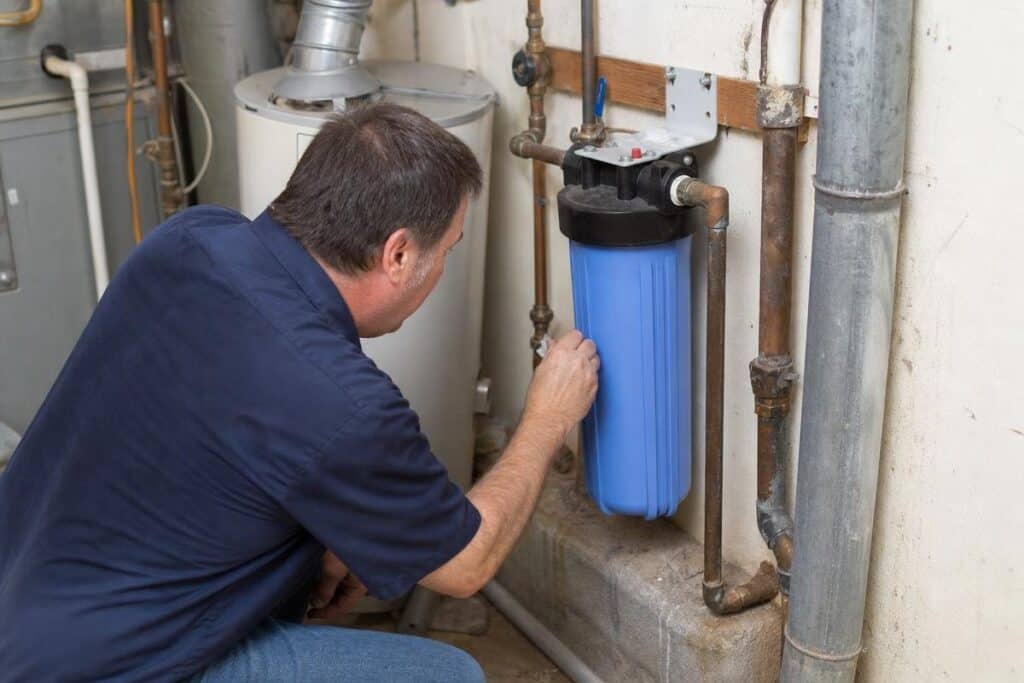
Orange homeowners often ask, “what does a whole-home water filter remove?” A properly selected whole-home water filter can reduce sediment, chlorine, odors, and certain particles before water reaches fixtures throughout the house. The exact results depend on the treatment media, system capacity, and the contaminants the product is specifically rated to reduce. We Care Plumbing, Heating and Air has served Southern California since 2000 and can help evaluate water concerns, household demand, and installation conditions.
Get clear answers about whole-home water filtration for your Orange home.
Key Takeaways
- Whole-home filters can reduce sediment, chlorine, odors, and other unwanted particles in household water.
- What a whole-home water filter removes depends on the filter media, flow rating, and independently verified product claims.
- Some systems target lead, heavy metals, cysts, and chemicals, while others focus mainly on sediment or chlorine.
- Water softeners address calcium and magnesium minerals, which basic carbon filters usually do not remove.
What Does a Whole-Home Water Filter Remove?
A whole-home water filter may reduce sediment, chlorine, chlorine-related odor, rust particles, and certain metals, chemicals, or cysts when it uses media specifically designed and certified for those contaminants. It does not automatically remove every water concern. Review the system’s performance data and match the equipment to your water test results or documented water-quality concern.
A point-of-entry filter treats incoming water before it reaches showers, kitchen fixtures, laundry connections, water heaters, and other downstream plumbing. This guide explains common water concerns, filter types, testing, household demand, and the difference between filtration and softening.
Orange residents can begin by reviewing their water provider’s current Consumer Confidence Report, which summarizes source-water monitoring and treatment information. That report is useful for understanding municipal supply conditions, but a concern inside one home, such as rusty water at one fixture, may be related to aging plumbing rather than the incoming supply. For help sorting out those differences, our water quality treatment team can help identify practical options.
What Can a Whole-Home Water Filter Reduce?
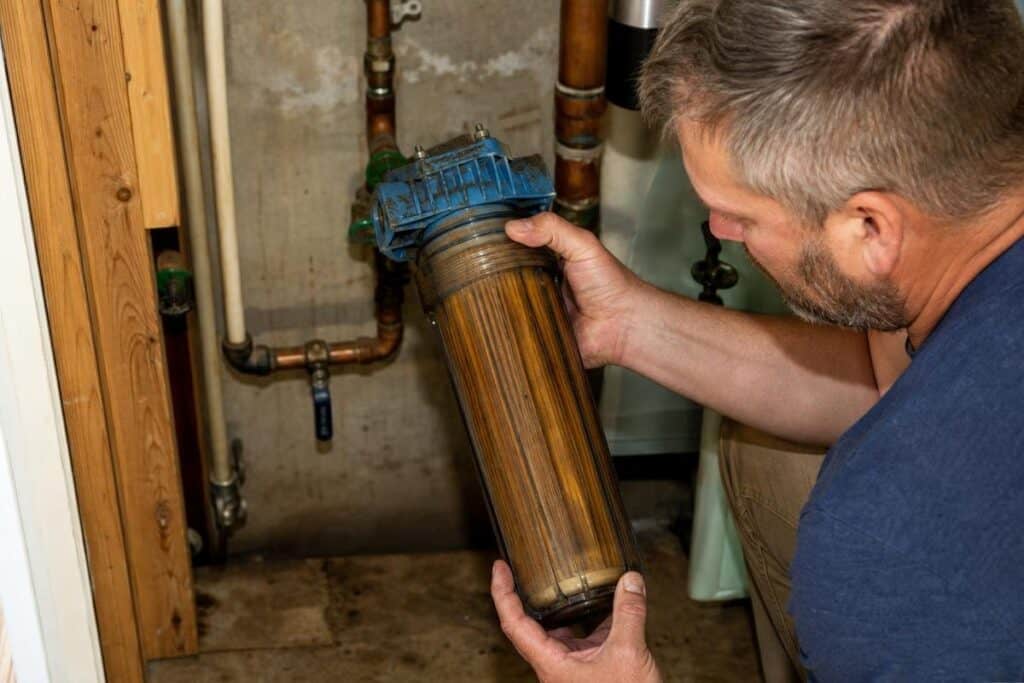
A whole-home water filter can reduce different contaminants only when its media is rated for them. For Orange homeowners, the answer depends on the system’s cartridges or treatment tank, the water entering the property, and the issue you want addressed.
Sediment, Sand, Rust, and Pipe Debris
A whole-home filter can remove rust and sediment when it includes a sediment prefilter. Spun polypropylene filters, pleated cartridges, and graded-density cartridges can catch sand, silt, rust flakes, and debris before water reaches fixtures and water-using equipment.
These filters may help protect fixture screens, valves, and appliances from particles. If discolored water appears only at one faucet, or only when hot water runs, a plumbing inspection can help determine whether the source is the supply line, interior piping, or the water heater.
Chlorine-Related Taste and Odor
Activated carbon can reduce chlorine taste and odor. Granular activated carbon and carbon block media are common choices for this purpose.
Results depend on contact time, flow rate, cartridge capacity, and the manufacturer’s documented claims. A properly sized carbon stage may improve chlorine-related smell at showers and sinks. Our water quality treatment service can help match the treatment media to the concern you notice.
Metals, Cysts, and Claims That Require Verification
Lead, other heavy metals, and cysts require specialized media or a system with a specific reduction claim. Review the product performance data sheet and look for applicable NSF or ANSI certification before selecting a filter.
Do not assume every filter removes lead, bacteria, viruses, PFAS, or dissolved minerals. Visible particles, chlorine odor, staining, and a laboratory result can each point to different treatment needs. Drinking-water contaminant reduction claims should always be tied to the specific product’s independently verified performance data.
How Whole-Home Filtration Systems Work at Every Faucet
A whole-home water filter treats water before it travels through the home’s plumbing. Filtered water can then serve showers, sinks, laundry equipment, water heaters, and other fixtures connected downstream from the installation point.
Point-of-Entry Treatment at the Main Water Line
A whole-house water filter installation goes on the main water line, usually near the main shutoff or where the supply enters the house. Every indoor fixture connected after that point receives treated water.
The system should handle simultaneous demand, such as a shower running while laundry and kitchen fixtures are in use. A two-bathroom home may need enough flow for two showers plus intermittent appliance demand, rather than a small cartridge setup selected only for one sink. We evaluate installation space, available pressure, peak demand, and the target concern before recommending equipment. Our water filtration installation service helps homeowners choose a properly sized setup.
Common Filter Stages and Their Jobs
Many whole-home systems use more than one stage. Each stage handles a different part of the job:
- A sediment prefilter catches sand, rust, dirt, and other visible particles.
- A carbon or specialty-media tank can reduce concerns such as chlorine, odor, and certain chemicals, depending on the media.
- An optional post-filter catches finer particles before water continues through the home.
Filter capability depends on the system, its media, and the condition of the incoming water. Reducing sediment and chlorine does not replace routine water heater maintenance, especially when scale or sediment has already accumulated in water-heating equipment.
Why Flow Rate and Maintenance Matter
Flow rate is the amount of water a filtration system can treat while fixtures are running. An undersized unit can create a noticeable pressure drop during busy periods, especially in homes with multiple bathrooms.
Filter cartridges need replacement on schedule. As a cartridge collects sediment, less water can pass through it, which may reduce flow. Media life, household water use, incoming sediment load, and supply pressure all affect performance.
Choose equipment based on a home’s actual plumbing layout and water use, not a generic online recommendation. A professional evaluation can help confirm the needed service flow, installation access, bypass arrangement, and maintenance requirements.
Whole-Home Filters and Water Softeners Solve Different Problems
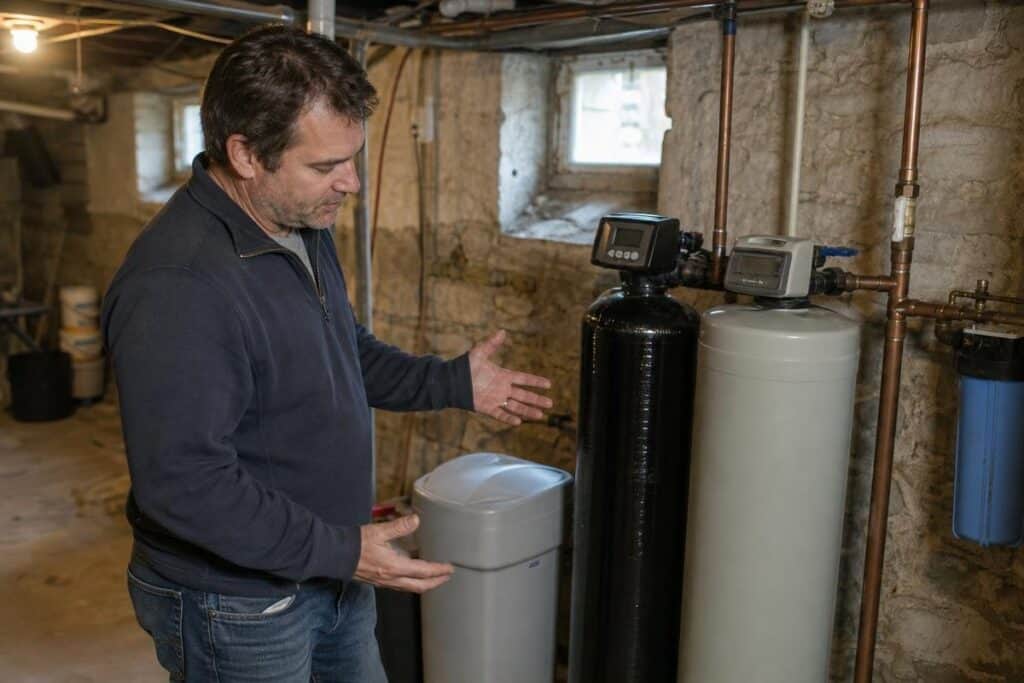
A whole-home water filter is not the same as a water softener. Basic sediment and carbon filters generally do not remove dissolved calcium and magnesium, the minerals associated with hard-water concerns.
Filtration Reduces Selected Contaminants
A whole-home water filter uses physical barriers or treatment media to reduce substances in incoming water. A sediment filter can catch grit and particles. Carbon media can reduce chlorine and odor.
Some systems are rated to reduce specific contaminants, including certain heavy metals or cysts. Check the system rating before assuming it reduces a particular chemical. Our water quality treatment service can help compare equipment based on the concerns identified at your home.
| Concern | Whole-Home Filtration | Water Softening |
|---|---|---|
| Sediment, chlorine, and odor | Can reduce these concerns with the right filter media | Does not target them |
| Calcium and magnesium | Basic sediment and carbon filters do not remove them | Targets hardness minerals |
| Scale buildup and water feel | May not change either issue | Helps reduce scale and creates a softer feel |
Softening Targets Hardness Minerals
A water softener targets calcium and magnesium through ion exchange. The system trades those hardness minerals for sodium or potassium ions. This can help reduce scale on fixtures and inside water-using equipment.
White buildup on fixtures, scale around showerheads, and recurring mineral deposits may point to hardness rather than a filtration problem. Regular water heater maintenance can also help identify scale-related issues early.
When a Combined Setup Makes Sense
A home can use both a filter and a softener. A common layout places sediment filtration before the softener to help protect its components. Another treatment stage may be added for chlorine, odor, or other documented concerns.
The right setup depends on test results, household demand, and available main-line space. Start by identifying whether the main concern is water feel and scale, or sediment, chlorine, and odor.
Which Whole-Home Filter Type Fits Your Water Concerns?
The right whole-home water filter starts with the water concern, not the largest or most expensive equipment. For homeowners in Orange, selection should account for what you want reduced, peak household demand, incoming pressure, and space near the main water line.
Sediment and Carbon Systems
Sediment and carbon systems are common choices for visible particles, chlorine-related taste, and unpleasant odors. A sediment filter catches grit, rust, and other particles. Carbon media can reduce chlorine and certain chemicals, depending on the media, contact time, and system rating.
This setup may fit homeowners who notice cloudy water or a pool-like smell at the tap. Review the product performance data sheet before a water filtration installation, since filters do not all remove the same contaminants.
Ceramic Filtration for Fine Particles
Ceramic filtration uses a fine-pore material to catch very small particles. Some ceramic products may also reduce cysts, but only if that exact product is designed and certified for the job.
These filters need regular cleaning and must provide enough flow for showers, laundry, and kitchen use. Check NSF or ANSI claims, which identify what a specific filter has been tested to reduce.
Whole-House Reverse Osmosis Requires Careful Design
Whole-house reverse osmosis can reduce a broader range of dissolved substances than basic filters. It is not necessary for every home, and it requires careful planning for pressure, drainage, storage, equipment space, and ongoing service.
A properly designed system must keep up with family water use without restricting flow. Our water quality treatment service can help compare options based on the concern you want addressed, rather than guessing at a system type.
Need help sorting through water test results and filter options for an Orange home?
What Should Orange Homeowners Check Before Choosing a System?

Choose a whole-home water filter around the actual water concern, household demand, and plumbing layout. A broad online contaminant list cannot identify what one property needs. The most useful next step is to separate municipal supply information from conditions that may be developing inside the home.
Start With the Actual Water Concern
Identify what you notice before buying equipment. That may be visible sediment, chlorine taste or odor, scale, staining, or a specific water-test result. Review the Consumer Confidence Report from your water provider for municipal supply information, then compare it with what is happening at your fixtures.
A basic sediment and chlorine concern may be addressed with appropriately sized sediment and carbon treatment. A laboratory test is more important when there is a private well, a specific contaminant concern, unexplained staining, possible lead exposure, or a need to verify a contaminant before choosing specialized media. Carbon filters can address chlorine and odor, while sediment filters catch particles. Scale concerns may call for separate treatment, since a basic filter does not remove hardness minerals.
Size the System for Household Demand
Size a whole-house water filter installation for peak use, not just daily water use. Count bathrooms and consider times when showers, laundry, dishwashing, and outdoor faucets run together.
We check incoming water pressure, needed flow rate, and filter pressure drop. Pressure drop is the reduction in water flow that can happen as filters collect debris. A system that is too small can leave a household with weak flow during busy parts of the day.
Check the Main-Line Installation Area
Inspect the area near the main shutoff before choosing equipment. A proper setup needs room for the filter, a bypass valve, shutoff access, and clearance for cartridge changes or media service. Some systems also need a drain connection.
Fix leaks, corroded fittings, damaged piping, or hard-to-reach shutoffs before installation. A plumbing inspection can identify those issues first. We Care Plumbing, Heating and Air is located at 1144 W Shelley Ct, Orange, CA 92868, and can be reached at (951) 277-6848.
Get Help Choosing a Whole-Home Water Filter
Our plumbing team can help match a whole-home filter to your water concern, household demand, and main-line space. Bring any water test results, concerns about taste or buildup, and details about how many people use water in your home.
We can review equipment options, installation access, and related treatment needs. A properly sized system helps maintain water flow while treating water throughout the house.
For whole-house water filter installation or Orange water treatment guidance, contact We Care Plumbing, Heating and Air at (951) 277-6848.
Frequently Asked Questions
These answers help homeowners compare treatment options before installing a whole-home water filtration system.
Does a Whole-Home Filter Treat Water at Every Faucet?
Yes, a point-of-entry filter treats water downstream from its installation point. Outdoor faucets, bypassed lines, and separately supplied fixtures may not receive filtered water.
Does a Whole-Home Filter Remove Hard-Water Minerals?
No, standard sediment and carbon filters generally do not remove dissolved calcium and magnesium. That is a key difference in a water filter vs. water softener decision. A softener may be needed for hardness concerns.
Can a Whole-Home Filter Improve Taste and Odor?
Yes, properly sized activated carbon filters can reduce chlorine-related taste and odor. Filters need regular replacement to keep working as intended.
Will a Whole-Home Filter Remove Lead?
Some systems can reduce lead, but only if they are certified for lead reduction. Check product documentation for the specific certification and contaminant claim before installation.
How Often Does a Whole-Home Filter Need Maintenance?
Maintenance depends on filter type, water use, and sediment levels. Reduced water flow, odor returning, or visible buildup can signal a needed filter change. Our water quality treatment can help identify the right schedule.
Should I Test My Water Before Choosing a System?
Yes, testing identifies the concern so you do not buy treatment equipment that misses it. If you are considering a whole-home water filter in Orange, call We Care Plumbing, Heating and Air at (951) 277-6848. Our team can review your water concern, main-line installation space, household demand, and treatment options that fit your home.
Ready to Get Started with We Care Plumbing, Heating and Air?
Call (951) 277-6848 to speak with our team directly. We’re ready to answer your questions, walk you through your options, and help you find the right solution for your needs. Whether you’re just starting to plan or ready to move forward, we’ll make the process simple and stress-free.
Reach out today and let’s talk about how we can help.