


Murrieta homeowners often notice more indoor dust and allergy irritation during dry inland conditions, seasonal pollen periods, Santa Ana wind events, or wildfire-smoke days. We Care Plumbing, Heating and Air can explain how whole-home air purifiers ease allergies in Murrieta by treating air as it circulates through a central HVAC system. The right setup can reduce airborne particles moving through conditioned rooms, while maintaining the airflow your heating and cooling equipment needs.
Get clear answers about cleaner air, filter compatibility, and HVAC purification options for your home.
Key Takeaways
- Whole-home air treatment works through your return-air and duct system while the HVAC blower is operating.
- Mechanical media filters address airborne particles, while activated carbon is generally needed for many odors and gases.
- A higher MERV filter is not automatically the best choice, because excessive resistance can affect airflow and equipment performance.
- Filtration can reduce particles that pass through the system, but it does not solve moisture problems, visible mold growth, or every allergen source.
Whole-home allergy air filtration is different from placing a portable unit in one room. An HVAC-connected solution is designed around the home’s existing return ducts, filter cabinet, blower capacity, and daily runtime. It can complement regular cleaning and a properly fitted HVAC filter, but it cannot prevent outdoor air, pets, shoes, fabrics, or an active moisture issue from introducing contaminants indoors.
Read on to learn how HVAC air purification for pollen and dust works, how it differs from a standard filter, and what to check before selecting equipment. An indoor air quality assessment can help identify whether filter upgrades, carbon media, airflow repairs, or source control should come first.
How Does a Whole-Home Air Purifier Work with Your HVAC System?
A whole-home air purifier is installed in or near the HVAC air path, often at the return duct or air handler cabinet. It only treats air that passes through the system, so performance depends on system runtime, duct condition, filter fit, and whether air is returning properly from the rooms where people spend time.
The Air Path Through Your Home
Air enters through return grilles and travels through return ducts to the filter area or purification cabinet. The blower moves that air across the heating or cooling equipment, then supply ducts distribute it back to the rooms. A mechanical filter or purifier can only capture particles that reach this path and pass through it.
Particulate matter includes tiny airborne solids or droplets, such as dust fragments, pollen, pet dander, smoke particles, and some mold spores. Filtration can reduce recirculating particles, but it does not remove dust already settled on surfaces or repair a source of contamination.
Whole-Home Coverage Compared With a Portable Unit
A portable unit can be useful for a bedroom, nursery, or one isolated concern. A central system supports treatment across connected, conditioned rooms when the blower runs. For broader coverage, homeowners should also consider how often their fan operates and whether bedrooms have adequate return-air pathways.
Coverage varies with duct layout, home leakage, doors closed between rooms, and outdoor conditions. During smoke events or windy, dusty weather, keeping windows and exterior doors closed when practical can reduce the amount of outdoor particulate matter entering the home. Read our guidance on how open windows can increase indoor air pollution if outdoor air is part of your concern.
Why Equipment Selection Matters
Not every air-treatment product works the same way. Media cabinets use physical filter material to capture particles. Carbon media can adsorb some odors and gases, although performance depends heavily on the amount and type of carbon, contact time, and the pollutant involved. UV products are generally intended for equipment surfaces or microbial growth control in specific applications, not broad particle removal. Electronic or ionization products should be evaluated by their documented performance, maintenance requirements, and any manufacturer guidance.
Before recommending equipment, our team can review the filter location, cabinet dimensions, blower operation, return-air capacity, and your primary concern. We can also discuss air scrubber installation as one possible HVAC air-quality option, based on the product currently available and appropriate for your system.
Which Allergy Triggers Can Whole-Home Air Treatment Address?
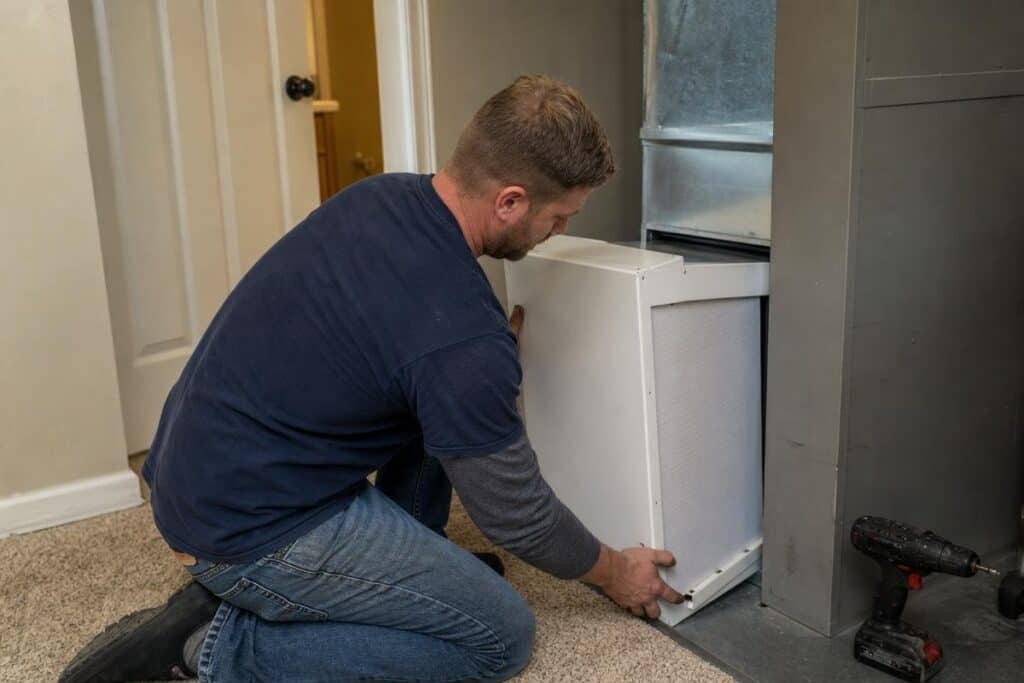
Whole-home air treatment may reduce airborne triggers that travel through the return-air system, especially when paired with a correctly fitted filter and adequate blower runtime. It should be viewed as a comfort and air-management tool, not an allergy treatment or replacement for medical advice.
Particles Such as Dust, Pollen, and Dander
Mechanical filter media is designed to capture particles moving through the HVAC system. Depending on the filter and system design, that may include household dust, pollen, pet dander, smoke particles, and some airborne mold spores. A system does not eliminate exposure from outdoor air or direct sources inside the home, but it can reduce recirculation.
Particle and gas control require different media and system designs.
| Particles | Gases and Odors |
|---|---|
| Dust, pollen, pet dander, smoke particles, and airborne mold spores can be captured by mechanical filter media as air passes through it. | VOCs and many household odors generally require activated carbon or another adsorbent media, with results varying by carbon quantity, airflow, and pollutant type. |
True HEPA filters are commonly rated to capture at least 99.97% of particles measuring 0.3 microns under test conditions. Not every central HVAC system can accept true HEPA media without a purpose-built cabinet or separate equipment because dense media can create substantial static pressure. Our team can help compare practical options during an indoor air quality assessment.
Gases, VOCs, and Household Odors
VOCs, or volatile organic compounds, are gases released from products such as cleaners, paint, fragrances, and some furnishings. Standard particle filters do not reliably remove gases. Activated carbon can help with some odor and gas concerns, but a thin carbon layer may have limited capacity and can become saturated.
Cooking odors, pet odors, and musty smells should be evaluated at the source first. A musty odor can point to damp materials, a plumbing leak, condensate issue, or microbial growth that requires correction. An air scrubber installation may be worth discussing after the underlying source and HVAC compatibility have been reviewed.
What Air Treatment Cannot Replace
Air treatment does not replace cleaning, source control, moisture management, or medical guidance for allergies. Vacuum regularly, wash bedding, manage pet areas, and address water leaks or damp materials promptly.
Filtration captures particles that are airborne and pass through the equipment. It does not remove visible mold from building materials, correct hidden moisture, or make a home safe after water damage. Mold remediation and moisture correction are the primary steps when growth is present.
Not sure whether your concern is dust, odors, smoke, airflow, or a moisture issue?
Whole-Home Filter Vs. Air Purifier: What Is the Difference?
A whole-home filter and a purifier can work together, but they serve different roles. A filter is the first line of defense for particles moving through the return air. An added purifier may provide supplemental particle treatment, odor support, or another function depending on its technology and media.
Side-by-Side Comparison
Comparison of common central HVAC filtration and air-treatment approaches.
| Feature | Whole-Home Filter | Whole-House Air Purification System |
|---|---|---|
| Installation location | Return-air path | Return duct or HVAC cabinet |
| Primary purpose | Captures particles before they reach equipment and living spaces | Adds treatment based on installed media or technology |
| Particle capture | Depends on MERV rating, fit, surface area, and airflow | May add particle treatment, depending on design |
| Gas and odor support | Limited | Possible with carbon or other odor-control media |
| Maintenance | Scheduled filter changes | Filter changes and model-specific service |
| Common use | HVAC air filtration for allergies | Supplemental treatment for defined indoor air concerns |
A purifier does not replace regular filter changes. A clogged, poorly fitted, or overly restrictive filter can reduce airflow, raise static pressure, and make heating and cooling equipment work harder.
What MERV Ratings Mean for Your HVAC System
MERV means Minimum Efficiency Reporting Value. It indicates how efficiently a filter captures particles within defined size ranges. In many homes, a properly fitted pleated filter at a compatible MERV rating is a sensible starting point for everyday particle control.
Higher MERV media can create more resistance, particularly when the filter cabinet is undersized, the return system is limited, or the blower is not designed for the added pressure drop. A technician should check static pressure, return-air capacity, filter size, and manufacturer requirements before recommending an upgrade or air scrubber installation.
Choosing the Right Starting Point
Start with the problem you are trying to solve. For seasonal pollen, household dust, or pet dander, a correctly sized media cabinet and compatible filter may be the most practical first step. For persistent odors, evaluate the source and ask whether substantial carbon media is appropriate. For smoke readiness, particle filtration and a plan to limit outdoor-air entry can matter more than fragrance-based odor masking.
Humidity is a separate comfort and building-health issue. If you notice condensation, water staining, musty odors, or uneven airflow, an indoor air quality assessment can help identify the right next step.
Need help choosing between a filter, carbon media, or whole-home purifier?
Why Dust Can Be Persistent in Murrieta Homes
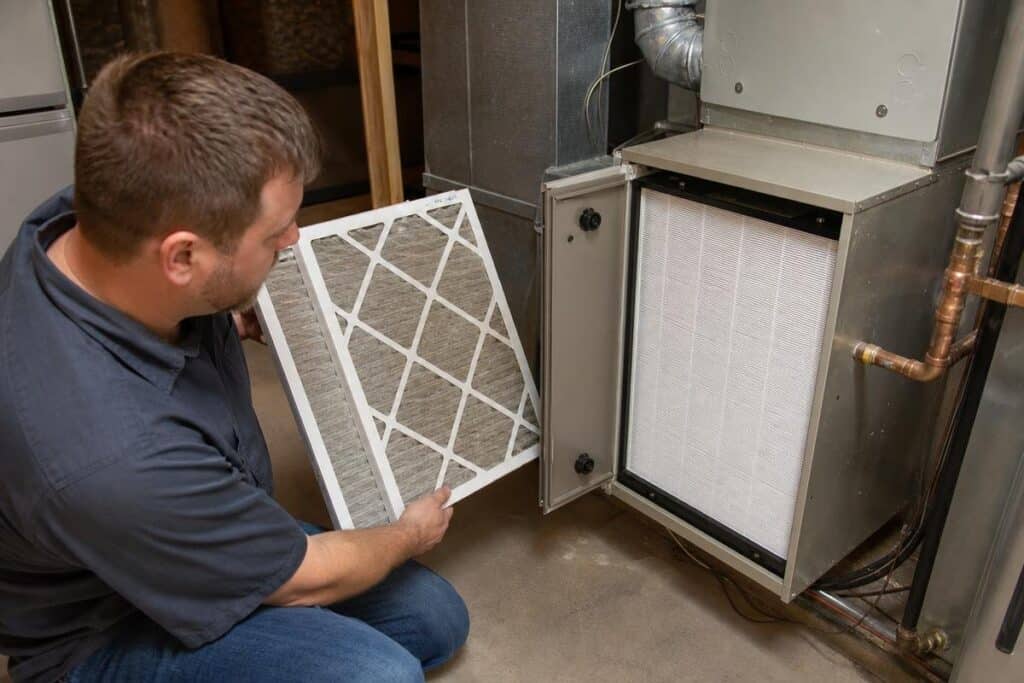
Inland valley dryness, windblown debris, open-window weather, foot traffic, pets, and ordinary fabric fibers can all contribute to recurring dust indoors. During Santa Ana wind conditions, fine outdoor particles can enter through gaps, open doors, and windows, then settle after the HVAC system stops running.
Why Fine Dust Stays Airborne
Fine particles can remain suspended long enough to circulate through living areas before settling on furniture, floors, and shelves. A properly selected central air-treatment system may capture a portion of those particles during repeated passes through the return air, but it cannot capture material that never reaches the HVAC system.
Dust can include outdoor soil, pollen, pet dander, skin flakes, and fibers from clothing or upholstery. Filter maintenance and correct system sizing matter as much as the type of purifier selected.
Common Ways Dust Gets Inside
Windows opened during windy or high-pollen periods can bring particles indoors. Shoes, pets, fabric surfaces, gaps around doors, and nearby construction can also contribute. An overdue HVAC filter may allow more recirculation, while an overly restrictive filter can reduce the airflow needed for effective whole-home treatment.
- Replace filters according to the manufacturer’s recommendation and inspect them more often during dusty conditions.
- Keep return grilles clear of furniture, rugs, and storage.
- Vacuum carpets and upholstery with suitable equipment.
- Have a technician check duct leakage, return-air pathways, and airflow concerns.
During an indoor air quality assessment, our team can review whether your current filter setup supports cleaner circulating air without creating an unnecessary airflow restriction.
Airborne Dust and Settled Dust Need Different Solutions
An air purifier does not remove dust that has already settled on a table or floor. You still need regular dusting and vacuuming. Filtration and purification systems help reduce the amount of new airborne material that continues circulating through the HVAC system.
Air sealing and insulation may improve comfort and reduce HVAC workload, but they are not air-purification methods. If recurring dust persists despite regular cleaning, we can inspect your HVAC setup and discuss options such as an air scrubber installation. We Care Plumbing, Heating and Air serves local homeowners from 41085 Golden Gate Cir, Murrieta, CA 92562.
Five Signs Your Household May Benefit from Whole-Home Air Treatment
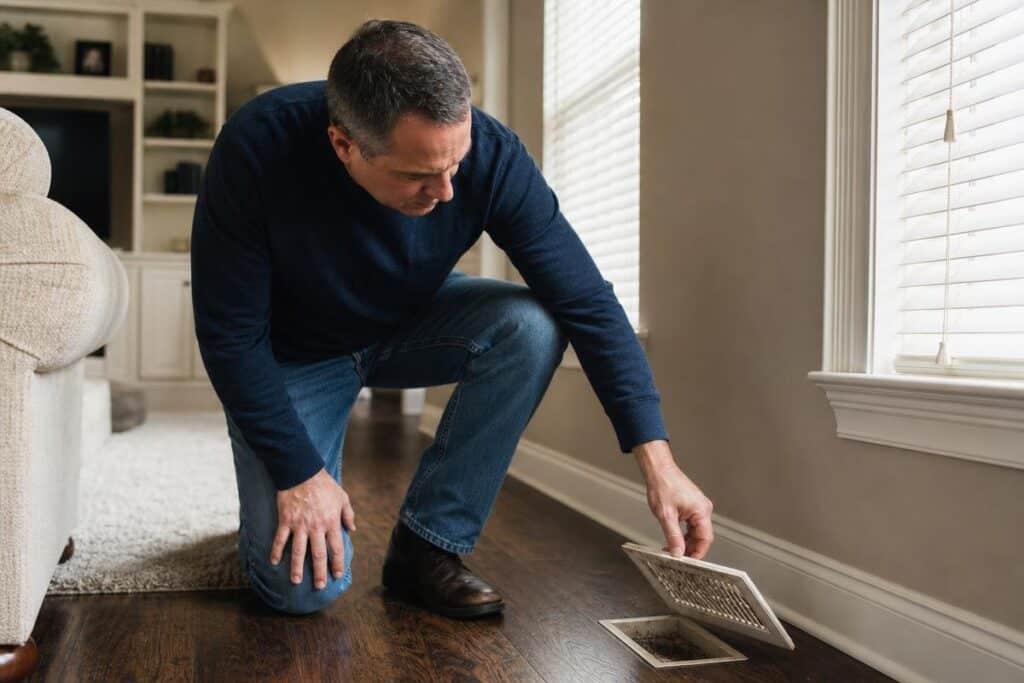
Recurring particles, lingering odors, and uneven room comfort can signal that your existing HVAC air-management setup deserves a closer look. These signs do not diagnose a health concern, but they can help you decide whether a filter, airflow review, or supplemental treatment is worth discussing.
1. Dust Returns Soon After You Clean
Dust that returns quickly may reflect a high airborne particle load, a poorly fitted filter, return-air problems, duct leaks, or normal household sources. Check that your filter fits snugly and is changed on schedule. An indoor air quality assessment can identify where particles may be entering or recirculating.
2. Pollen and Pet Dander Seem to Travel Through the House
Open windows, pets, and shared living areas can move pollen and dander from room to room. Central HVAC air purification may reduce airborne triggers as the system runs, especially when the filter and blower settings are appropriate. Allergy symptoms have many causes, so speak with a healthcare professional for medical guidance.
3. Odors Linger Longer Than Expected
Cooking, pets, cleaning products, and outdoor smells can hang around after their source is gone. Persistent odors may call for carbon-based media or compatible purification equipment, but check for moisture, a plumbing leak, or another source first. Treatment equipment cannot fix an active leak, spill, or mold problem.
4. One Room Feels Better Than the Rest of the Home
A bedroom that feels stuffier than the main living space can signal uneven return airflow, duct issues, closed vents, or poor circulation. Start by keeping supply vents open and furniture away from returns. Airflow should be reviewed before adding equipment intended to treat the entire home.
5. Your Current HVAC Filter Setup Raises Questions
A professional review can check return-air capacity, filter cabinet sizing, duct condition, blower operation, static pressure, and your household’s pollutant concerns. Our technicians can explain whether a better filter, carbon media, an air scrubber, or another approach fits your system. Read about air scrubber installation if you need help comparing whole-home treatment choices.
Get a practical recommendation based on your HVAC system, not a one-size-fits-all product pitch.
Frequently Asked Questions
These answers can help you choose equipment that fits your home and your concerns.
Can a Whole-Home Air Purifier Help With Allergies?
Yes, a whole-house air purification system may reduce airborne pollen, pet dander, dust, and mold spores that can trigger allergy symptoms. It does not cure allergies or replace medical care, but it can reduce what circulates through your home.
Will a Whole-Home System Get Rid of Dust?
No system removes every bit of settled dust, but it can capture dust while it is moving through your system. Across Murrieta and the Temecula Valley, fine dust and pollen can enter when windows are open. Results depend on blower runtime, duct design, airflow, and proper equipment selection.
Is a Portable Air Purifier Better Than a Whole-Home System?
A portable purifier can be a good choice for one bedroom or a single problem area. An HVAC-connected purifier supports conditioned rooms while the blower runs. The whole-home filter vs air purifier decision depends on your coverage needs, filter setup, and household concerns.
Can a Whole-Home Air Purifier Help With Odors and VOCs?
Some systems can help with odors and VOCs, which are gases released by products like cleaners, paint, and furnishings. Particle filters alone do not handle gases well. We can explain options such as an air scrubber installation based on what you notice indoors.
Can I Use a Stronger HVAC Filter Instead?
Maybe, but a stronger filter is not always the right fit. A filter with too much resistance can restrict airflow and strain equipment. Our team can check filter compatibility and explain how HVAC filters affect indoor air.
How Often Does Whole-Home Air Treatment Equipment Need Maintenance?
Maintenance varies by equipment type, filter type, pets, household conditions, and manufacturer instructions. Filters need regular checks, while some purification systems have parts that require scheduled replacement.
If dust, pollen, pet dander, or lingering odors are making your Murrieta home less comfortable, schedule an indoor air quality evaluation with We Care Plumbing, Heating and Air. Our team can inspect your return-air setup, filter compatibility, airflow, and available treatment options. Call (951) 277-6848 or visit us at 41085 Golden Gate Cir, Murrieta, CA 92562.
Ready to Get Started with We Care Plumbing, Heating and Air?
Call (951) 277-6848 to speak with our team directly. We’re ready to answer your questions, walk you through your options, and help you find the right solution for your needs. Whether you’re just starting to plan or ready to move forward, we’ll make the process simple and stress-free.
Reach out today and let’s talk about how we can help.