

A burst pipe or failed fixture can flood an Orange, CA home fast. Knowing how to shut off water before our team arrives can save your floors, drywall, and wallet. We Care Plumbing, Heating and Air has served Orange homeowners since 2000, and we see water damage every week that could have been reduced with one quick valve turn. Here is exactly where your shutoff valves are and how to use them. Water spraying right now? Call We Care at (951) 277-6848 for 24/7 emergency service across Orange, CA.
Key Takeaways
- Every Orange, CA home has at least two shutoff points: one inside the home and one at the street-side meter box.
- To shut off water at any valve, turn it clockwise until it stops moving.
- Hard water in the region can corrode older valves, making them stiff or impossible to turn by hand.
- Fixture-specific shutoff valves under sinks and behind toilets let you isolate one area without cutting water to the whole house.
- If you cannot find or turn your main shutoff, call a licensed plumber right away to prevent further damage.
It’s 10 p.m. and water is spraying from a burst supply line under your kitchen sink. Every second counts. Knowing how to shut off water fast can mean the difference between a quick repair and a flooded cabinet, warped floors, and a major insurance claim.
Below you will find exactly where to find every shutoff valve in an Orange, CA home, how to turn each one off, and what to do before the plumber arrives. We serve Orange, Anaheim, Santa Ana, and the surrounding communities of Orange County. We wrote this so you can act fast, right now.
Why Knowing How to Shut Off Water Can Save Your Home
A burst supply line doesn’t give you time to search YouTube. Water flows at 4 to 8 gallons per minute under normal household pressure. Wait just 10 minutes and you’re looking at 40 to 80 gallons soaking into drywall, subfloor, and insulation. Locating your emergency water shutoff before something goes wrong is one of the most practical things you can do as a homeowner.
Water damage restoration in Southern California routinely runs into the thousands of dollars. Every minute you spend searching for the valve adds to that number. A quick turn of the right valve stops the damage cold.
If water is flowing now, call We Care at (951) 277-6848. We answer 24/7 and dispatch across Orange and Orange County.
How Fast Water Damage Spreads
Water moves fast and it moves everywhere. Within minutes, it travels under flooring, into wall cavities, and down into the subfloor. Drywall starts absorbing immediately. Insulation holds moisture for days, which creates mold conditions quickly in warm Southern California climates. The difference between a repair and a full restoration often comes down to how fast you act.
If your home has older supply lines, the risk is even higher. Homes built in Orange before 1995 may still have polybutylene or original galvanized supply lines, and both are especially vulnerable. Polybutylene shows up as gray, blue, or black flexible plastic pipe about half an inch across, often at the water heater or entering the walls near the garage. Those materials corrode and become brittle from the inside out, and failure can happen without much warning. It pays to detect plumbing leaks early before a slow drip becomes a flood.
The Most Common Emergencies in Southern California Homes
These are the situations where knowing how to shut off water makes a real difference:
- Burst supply lines: sudden pressure spikes or pipe corrosion cause immediate high-volume leaks
- Failed washing machine hoses: rubber hoses degrade over time and can rupture without warning
- Toilet fill valve failures: a stuck fill valve can overflow a tank continuously
- Slab leaks: common in older Orange and Anaheim homes with aging copper lines embedded in concrete
- Water heater tank ruptures: a failed tank can dump 40 to 80 gallons onto your garage or utility room floor
Many of the plumbing issues in older homes we see trace back to years of hard water scale on valves and fittings that were never serviced. A professional plumbing inspection can catch these problems before they become emergencies.
Where Are the Water Shutoff Valves in Your Home?
Your home has three types of shutoff valves. Knowing where each one is before a pipe bursts is the difference between a quick fix and a flooded floor. Here is exactly where to look.
The Main Shutoff Valve at the Street (Meter Box)
Look for a small rectangular concrete lid set flush into the sidewalk or parkway strip near the curb. That is your water meter box. Inside, you will see two valves. The one on the street side belongs to your water provider. In Orange and the surrounding area, that is typically the City of Orange Water Division or Mesa Water District. Do not touch that valve. It requires a special meter key and is the provider’s property.
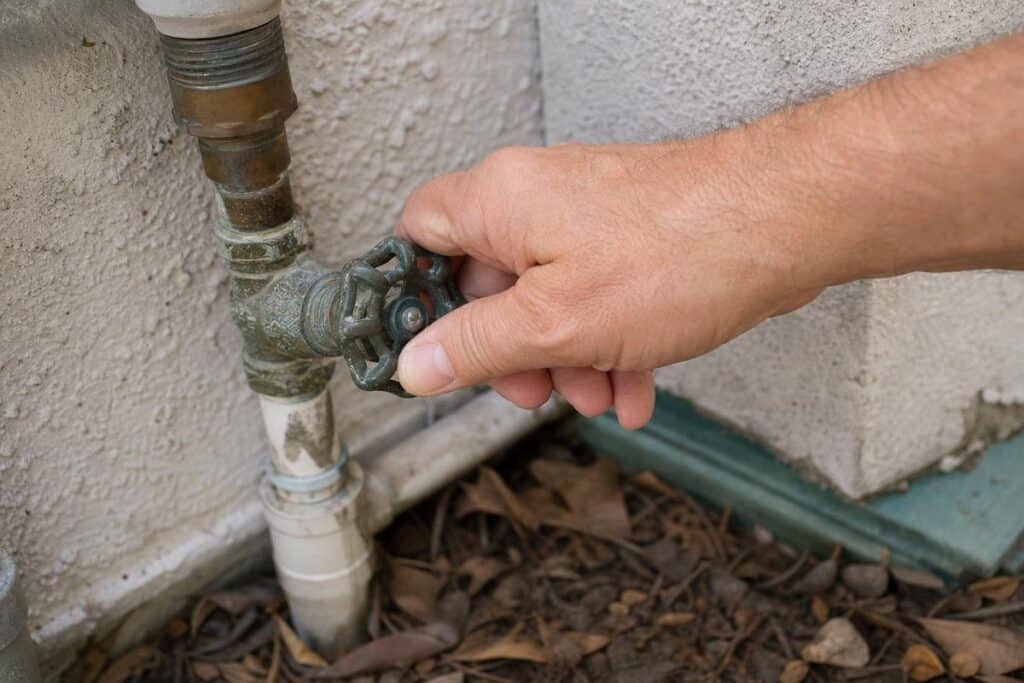
The valve on the house side of the meter is yours. That is your curb stop. You can operate it. Turn it clockwise to shut off water to the house. Across our wider service area, meter boxes sometimes sit near the front foundation wall rather than at the curb, so check both spots if you do not find it right away.
The Main Shutoff Valve Inside Your Home
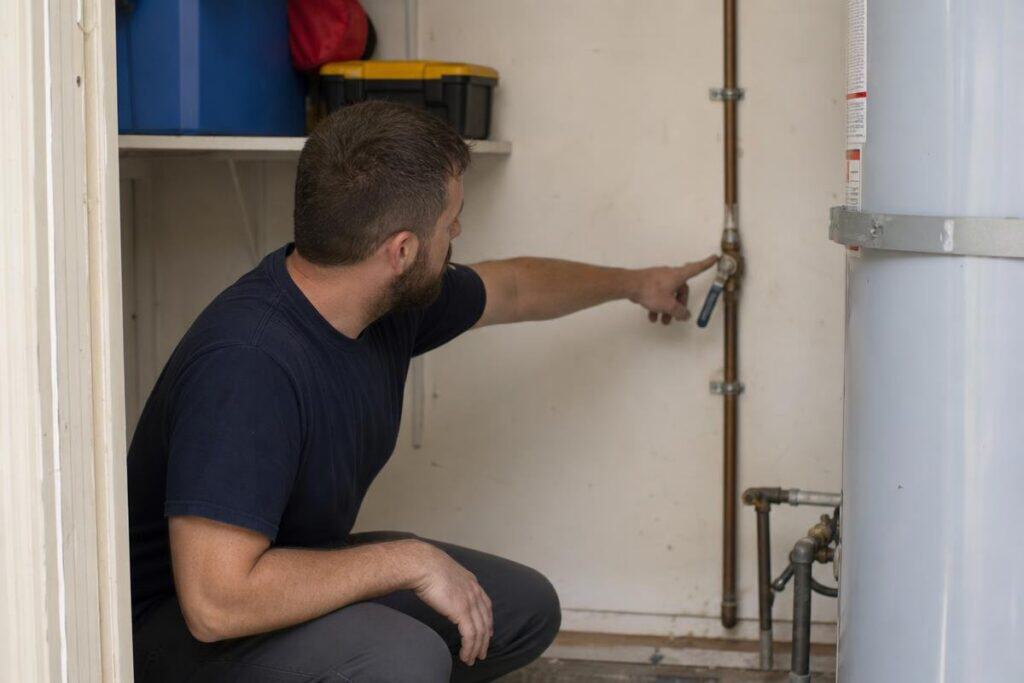
This is the valve you want to find right now, before any emergency happens. In Orange, CA homes built after the mid-1990s, you will almost always find a ball valve. It has a lever handle. Turn it a quarter-turn clockwise and water to the whole house stops. That is it. One motion.
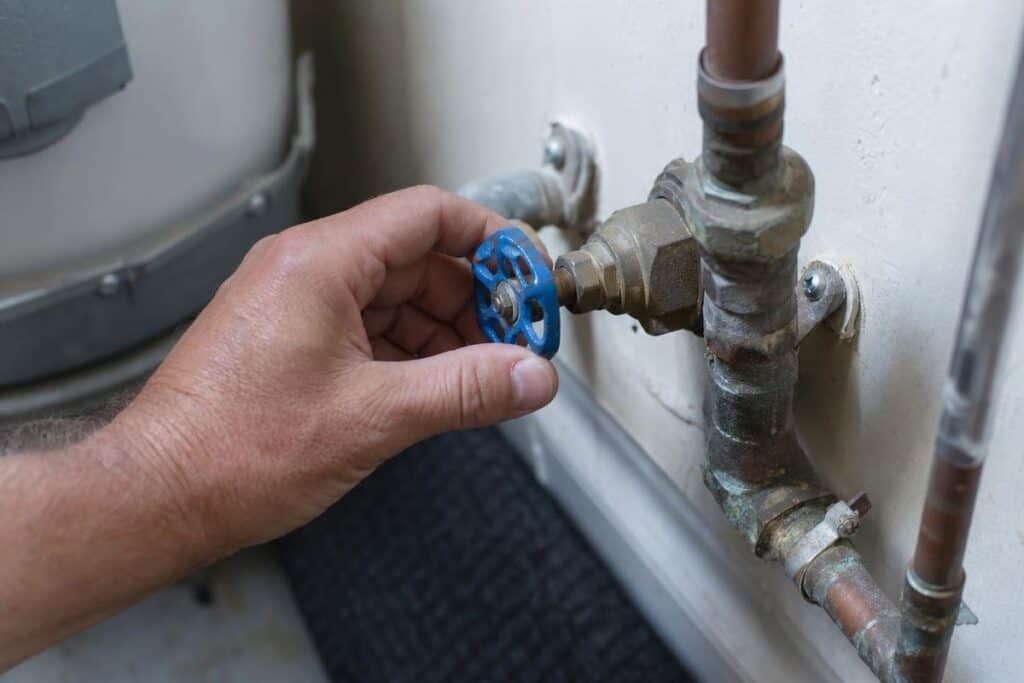
Look in the garage first, usually near the water heater or along the front interior wall. Older homes may have a gate valve instead. That is the round wheel handle. It takes four to eight full clockwise rotations to close. Remember: righty-tighty. If your valve feels stiff or corroded, that is a sign hard water scale has built up inside it. A stuck or seized shutoff valve needs attention before the next emergency. Our plumbing repair service can replace a failing valve before it fails you when it counts.
Can’t turn your main shutoff? We offer 24/7 emergency service in Orange, CA. Schedule a licensed plumber at (951) 277-6848.
Individual Fixture Shutoff Valves
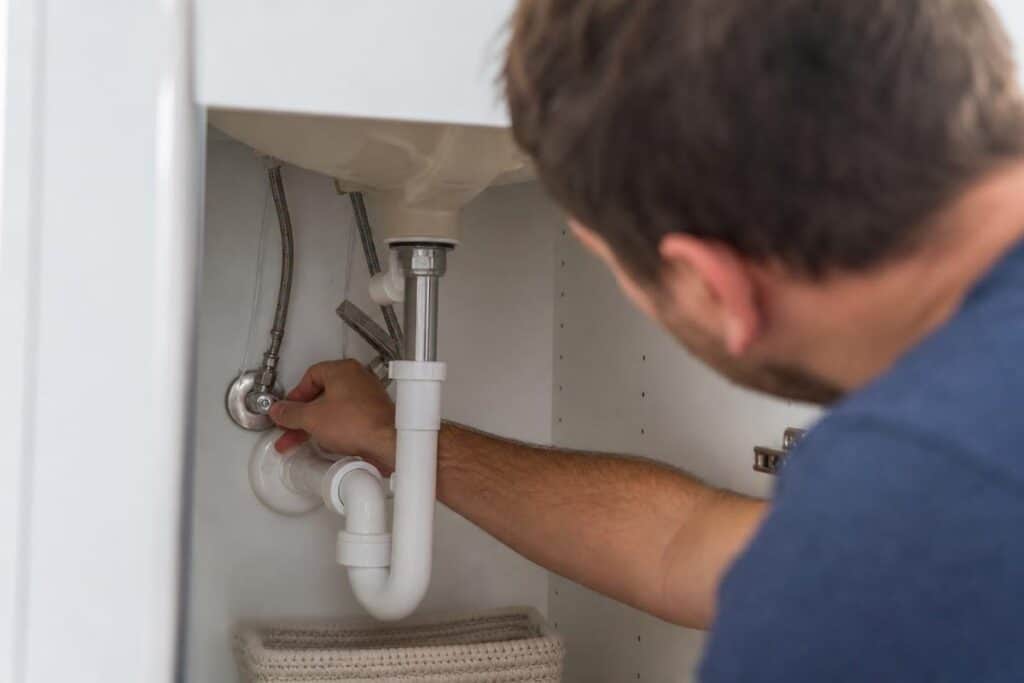
Not every leak requires shutting off the whole house. If the problem is isolated, use the fixture valve first. These are the oval handles found under sinks, at the base of toilets, and behind washing machines. Turn them clockwise to close.
A dripping kitchen faucet or running toilet does not need the main shutoff. Use the individual valve and save yourself the hassle of resetting water pressure throughout the house.
How to Turn Off Your Water Supply: Step-by-Step
Water is spreading fast. You need to act now. Here are the three ways to shut it off, starting with the easiest and working toward the last resort.
Shutting Off a Fixture Valve
If the problem is isolated to one sink, toilet, or appliance, start here. This stops water to just that fixture without cutting the whole house.
- Look under the sink or behind the toilet for an oval or football-shaped handle on the supply line.
- Turn it clockwise until it stops. Do not force it.
- Run the faucet or flush the toilet to confirm flow has stopped.
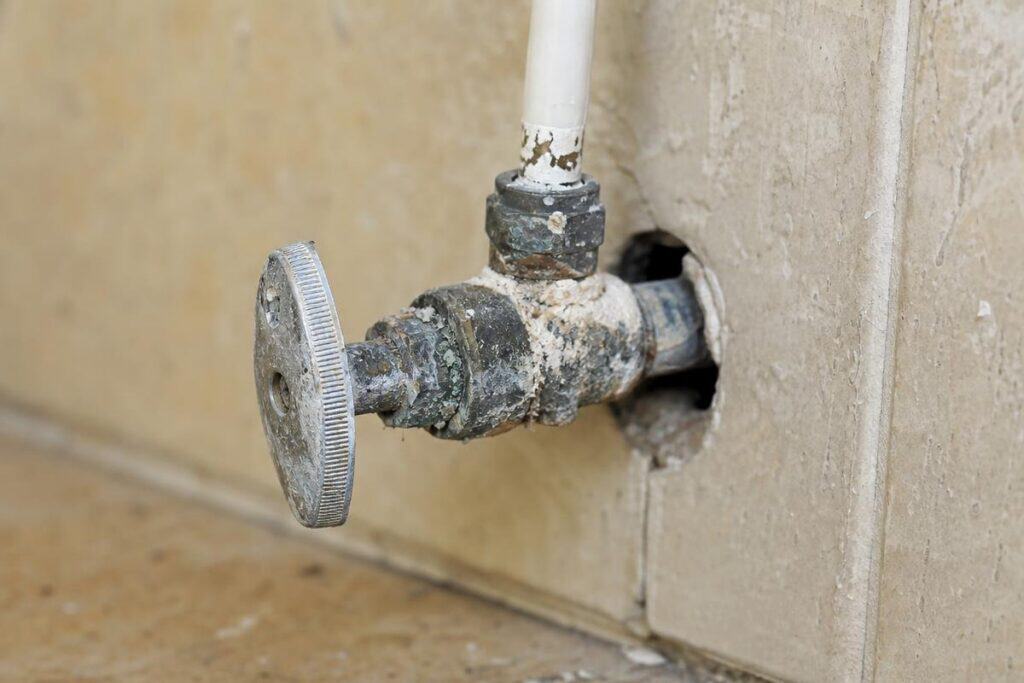
One warning: older angle-stop valves in pre-2000 tract homes throughout Orange and Anaheim can crack if you force them. Years of mineral scale leave these valves stiff. If it feels stuck, stop. Move to the interior main instead. A cracked valve makes the situation worse, not better.
Shutting Off the Interior Main Valve
This cuts water to the entire house. Find it near your water heater, in a utility closet, or in the garage. Most homes have one of two types.
- Ball valve (lever handle): Rotate the lever 90 degrees clockwise until it sits perpendicular to the pipe. Water stops immediately.
- Gate valve (round wheel handle): Turn clockwise, counting full rotations. Most take 4 to 8 full turns to close completely.
- Open a faucet on the lowest floor of your home. This drains residual pressure from the lines before you call a plumber.
Once the interior main is closed, review the steps to take before the plumber arrives so you are ready when our team gets there.
Using the Street Meter Box as a Last Resort
If the interior main valve is stuck, broken, or missing, go to the meter box at the curb.
- Lift the rectangular lid using a flat screwdriver or meter key.
- Locate the two valves inside. The one closest to your house is yours to operate.
- Turn that valve clockwise with a meter key or adjustable pliers until it stops.
Do not touch the valve on the provider side of the meter. In most of our service area, that valve belongs to the City of Orange Water Division or Mesa Water District. Tampering with it can result in fines. If you need emergency plumbing repair and cannot operate any valve safely, call us right away.
Valve stuck or water still running? Call us now at (951) 277-6848. We are available for plumbing emergencies across our service area.
What to Do After You Shut Off the Water
The water is off. Good. Now move fast. The next 10 minutes matter a lot for limiting damage to your floors, walls, and subfloor.
Immediate Steps to Limit Damage
- Open a low faucet. Find the lowest hose bib or utility sink in the home. Open it to drain residual pressure from the lines. This reduces stress on the damaged section.
- Turn off the water heater. Gas unit? Turn the dial to pilot mode. Electric unit? Flip the breaker. Running a heater with no incoming water will burn out the element or crack the tank lining. Check our water heater maintenance tips to understand what to inspect after an emergency.
- Mop up standing water now. Every minute water sits, it soaks deeper into drywall and subfloor. Use towels, a mop, or a wet vac. Before you clean up, take photos of everything. You will need them for your insurance claim.
- Check the electrical panel. If water is anywhere near outlets, switches, or your main panel, do not re-enter that area. Call an electrician before anyone goes back in.
When to Call Our Team Right Away
Some situations cannot wait until morning. Call us immediately if you see any of these:
- Water seeping up through the slab or visible slab cracks (common in older Orange and Anaheim homes with aging copper lines)
- A sewage smell combined with water backup
- Water near your electrical panel or outlets
- A shutoff valve that would not fully close
- A water heater tank that is visibly leaking or ruptured
These are not wait-and-see situations. Our team is available Monday through Friday 7 a.m. to 8 p.m. and Saturday through Sunday 8 a.m. to 5 p.m. Call us at (951) 277-6848. After the emergency is handled, we recommend scheduling a professional plumbing inspection to find any underlying issues before they cause the next one.
Plumbing Conditions Specific to Orange, CA and Orange County Homes
Orange County has some of the hardest water in Southern California. If you live in Villa Park, Olive Hills, or Friendly Hills, or in older neighborhoods near Chapman Avenue, your shutoff valves face conditions that most homeowners never think about until a pipe bursts. As a locally based team, we service these Orange County communities every week.
Hard Water and Valve Corrosion in Orange County
The City of Orange Water Division and Mesa Water District supply treated water across the area. Water hardness in Orange County commonly reads 200 to 400 mg/L calcium carbonate, which qualifies as very hard water. Over years, that mineral load deposits scale inside angle-stop valves, gate valves, and the main shutoff under the sink or at the meter.
The result? You turn the valve clockwise in an emergency and it will not budge. We see this constantly in tract builds from the 1990s and early 2000s across Villa Park and Olive Hills. Older properties near Chapman Avenue have angle-stop valves that have never been touched since installation.
The single best preventive step costs you nothing. Once a year, turn each shutoff valve off and then back on. That small exercise breaks up early scale deposits before they lock the valve solid. If you want a longer-term fix, ask us about water quality treatment for hard water that reduces mineral buildup at the source.
Slab Leak Risk in Older Tracts
Fast action matters even more if your property sits on a slab foundation with copper supply lines buried in concrete. Copper and hard water are a bad combination over time. Pinhole corrosion develops from the inside out, and by the time you notice it, the pipe has been leaking for a while.
Watch for these warning signs in Villa Park and similar 1990s-era communities: a warm spot on a tile floor, a water bill that jumped without explanation, or the sound of running water when every fixture in the place is off. Shutting off the main buys you time. It does not fix the pipe. Properties built during the same building boom throughout Anaheim and Santa Ana share the same copper pipe and hard water profile.
If any of those signs sound familiar, a professional plumbing inspection can locate the problem before it gets worse. For properties with widespread corrosion, repiping installation for aging copper lines is often the most cost-effective path forward.
Frequently Asked Questions
How do I know which direction to turn my shutoff valve?
Turn the valve clockwise to close it. That applies to both gate valves and ball valves. Think “righty-tighty, lefty-loosey” and you will not go wrong. For a ball valve, the lever tells you everything: parallel to the pipe means open, perpendicular means closed.
What if my shutoff valve is stuck and won’t turn?
Do not force it. A stuck valve can snap the stem and make things worse. Hard water scale is the most common cause in Orange County, where mineral hardness regularly runs 200 to 400 mg/L. If a fixture valve is stuck, move to the interior main. If the interior main is also seized, head to the street meter box. Our water quality treatment service can address the scale buildup that causes valves to freeze over time.
Where is the main water shutoff valve in a typical Orange, CA home?
In post-1990 builds, check the garage wall closest to the street, often near the water heater. Slab-foundation properties without a garage should check the utility closet or the front exterior wall near the hose bib. If you are not sure, a professional plumbing inspection can locate and document every shutoff point in your Orange, CA property before an emergency happens.
Can I shut off the water at the street meter myself?
Yes, but only the homeowner’s curb stop on the property side of the meter box. Do not touch the provider-side valve. A standard meter key from any hardware store fits the curb stop in most communities across our service area. The City of Orange Water Division and Mesa Water District both reserve the provider-side valve for their crews only.
How long can I leave the water off before it causes problems?
A few hours to a full day is fine. Longer shutoffs can affect water heater anode rods and drain trap seals, but those are minor issues compared to active water damage. Plan for a same-day plumber assessment so you are not leaving the supply off longer than necessary.
Should I shut off my water heater when I turn off the main supply?
Yes. Turn your water heater to “pilot” or shut off the gas and power before the tank runs dry. Heating an empty tank damages the unit. Check out our guide on when to DIY vs. call a pro for water heater issues for more detail. Our water heater maintenance service can also confirm your unit is in good shape after a shutoff event.
If the valve would not close, the damage is already done, or you want a licensed plumber to assess what happened, call We Care Plumbing, Heating and Air at (951) 277-6848. Our team is available Monday through Friday 7 a.m. to 8 p.m. and Saturday through Sunday 8 a.m. to 5 p.m. We serve Orange, Anaheim, Santa Ana, and the surrounding Orange County communities. Visit us at 1144 W Shelley Ct, Orange, CA 92868 . Reach out online at our contact page.
Ready to Get Started with We Care Plumbing, Heating and Air?
Call (951) 277-6848 to speak with our team directly. We’re ready to answer your questions, walk you through your options, and help you find the right solution for your needs. Whether you’re just starting to plan or ready to move forward, we’ll make the process simple and stress-free.
Reach out today and let’s talk about how we can help.