


Low water pressure is one of the most common complaints we hear from homeowners in San Marcos. A weak shower, a slow-filling dishwasher, a faucet that barely trickles, it’s frustrating, and it usually has a fixable cause. Below you’ll find step-by-step instructions for how to increase water pressure at home, from checking your pressure regulator to clearing mineral buildup in your pipes.
We Care Plumbing, Heating and Air has served San Marcos, Murrieta, and the surrounding region since 2000, and our licensed plumbers (CSLB License #700811) know exactly what causes pressure problems in homes around here. Need a pro to diagnose your pressure problem? We’re local and ready to help.
Key Takeaways
- Most low water pressure problems in San Marcos homes trace back to a misadjusted pressure regulator, mineral scale, or a partially closed shutoff valve.
- You can increase water pressure at home by adjusting the PRV screw, a simple DIY step that takes about 10 minutes.
- Hard water from Rancho California Water District causes scale buildup inside pipes and fixtures, which gradually restricts flow.
- Homes built in the 1990s and early 2000s may have aging supply lines that need inspection or replacement to restore full pressure.
- If DIY steps don’t fix the problem, a licensed plumber can pinpoint the cause before it turns into a bigger repair.
Part of the problem is regional. San Marcos, Murrieta, Temecula, Wildomar, and Menifee share the same hard, mineral-heavy water supply that deposits calcium and magnesium scale inside pipes and fixtures over time. That buildup quietly restricts flow, year after year. The steps below cover diagnosing the cause, DIY fixes you can try today, and the signs that point to a licensed plumber. Our full plumbing services cover everything from a quick PRV adjustment to a whole-home repipe.
What Causes Low Water Pressure in San Marcos Homes?
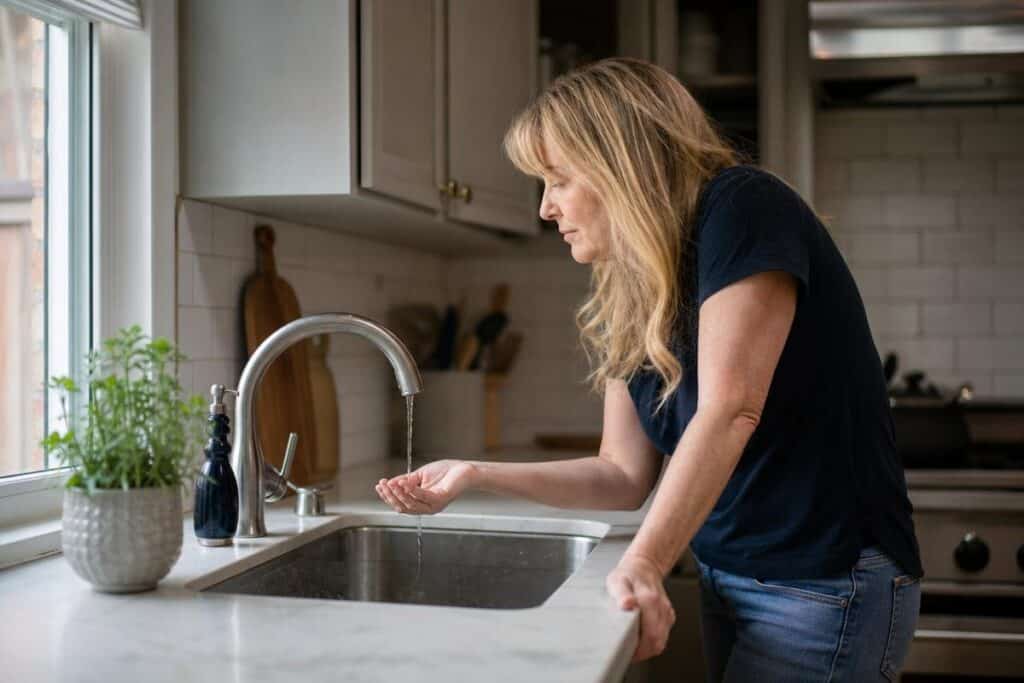
Low water pressure in your home is rarely one single problem. It usually comes from one of four root causes: mineral scale, a valve that got left partially closed, a failing pressure reducing valve, or a hidden leak. Knowing which one you have tells you exactly where to start.
Mineral Scale from Hard Water

Both Rancho California Water District (RCWD) and Eastern Municipal Water District (EMWD) supply hard water to homes across this region. Hardness commonly runs 15 to 25 grains per gallon in parts of Riverside County. That calcium and magnesium slowly coats the inside of your pipes, narrowing the bore and choking flow over time.
Aerators and showerheads clog the fastest because water slows down there. If you notice low pressure at one or two fixtures first, scale is often the culprit. Our whole-home water quality treatment options can stop scale from building back up after you clear it.
Partially Closed Shutoff Valves
Your home has two main shutoff valves. The meter shutoff sits at the street. The house main shutoff is usually near the front of the home or in a utility area. Both need to be fully open to deliver full pressure throughout the house.
After any repair, a plumber or homeowner sometimes forgets to turn the valve all the way back. A gate valve that is even a quarter-turn closed can drop pressure noticeably at every fixture. Check both valves first. It takes two minutes and costs nothing.
A Worn or Misadjusted Pressure Reducing Valve
Most homes built after the mid-1980s have a pressure reducing valve (PRV) on the main supply line. California Title 24 requires one wherever street pressure exceeds 80 PSI. The PRV is factory-set between 50 and 80 PSI, but these valves wear out after 7 to 12 years. A failing PRV can let pressure drop to 30 PSI or below.
Homes in hillier parts of Murrieta and Wildomar can see PRV problems compounded by elevation changes on the supply line. If you have water pressure too low throughout the whole house and not just one fixture, a worn PRV is a strong suspect. A licensed plumber can test it and handle PRV replacement or pressure valve repair quickly.
Leaks and Aging Pipes
A slab leak or pinhole leak bleeds pressure before water ever reaches your fixtures. Homes in San Marcos near older tract developments in ZIP codes 92069 and 92078 may still have original galvanized steel supply lines from the 1990s tract-home builds. Galvanized pipe corrodes from the inside out, restricting flow and developing pinhole leaks over time.
If your water bill is climbing but your usage has not changed, a leak is likely stealing your pressure. Learn how to detect plumbing leaks in your home before they cause bigger damage. You can also review common plumbing issues in older homes to see if your pipe age puts you at risk.
Not sure whether your PRV is the problem? Get a free pressure test from our licensed plumbers before you start turning any screws.
Step 1: Check and Adjust Your Pressure Reducing Valve
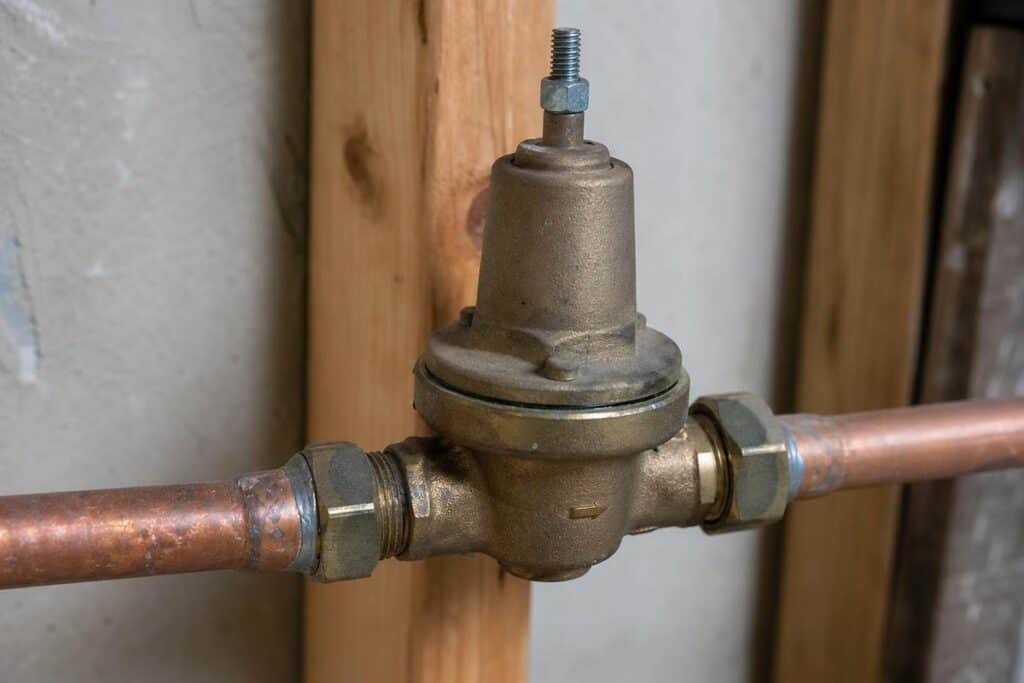
Your pressure reducing valve (PRV) is the first place to check when water pressure drops throughout the whole house. This fix takes about 20 minutes and only needs a wrench and a pressure gauge.
Find Your PRV
The PRV is a bell-shaped brass fitting on your main water supply line. In most homes across our service area, you will find it in one of three spots:
- In the garage, near the water meter or water heater
- Inside a utility closet on the ground floor
- Just inside the front exterior wall where the main line enters the house
Look for a cone-shaped brass valve with a threaded bolt on top. That bolt is your adjustment screw, and it sits under a locknut. If you see that, you found it.
Test Your Current Water Pressure
Before you touch anything, check your actual pressure. Thread a pressure test gauge onto an outdoor hose bib or your washing machine connection. These gauges cost under $15 at any hardware store. Turn on the water and read the dial.
- 45 to 75 PSI: Normal range
- Below 45 PSI: Low pressure, adjustment needed
- Above 80 PSI: Too high, risks pipe and appliance damage
Homes on older municipal loops in parts of Menifee can see wider pressure swings depending on time of day. Always test before adjusting so you have a real baseline to work from.
Adjust the PRV Screw
Once you know your starting pressure, here is how to adjust the PRV:
- Loosen the locknut with an adjustable wrench. Turn it counterclockwise.
- Turn the adjustment screw clockwise to increase pressure. One quarter-turn typically raises PSI by 5 to 10 points.
- Recheck the gauge after each quarter-turn. Do not exceed 75 PSI.
- Tighten the locknut back down once you reach your target pressure.
If the PRV does not respond to adjustment, or if it leaks after you tighten it back up, the internal diaphragm is worn out. At that point, the valve needs full replacement. That is a job for a licensed plumber. Our team handles professional PRV replacement across our service area, with upfront pricing and no guesswork.
Step 2: Clean or Replace Clogged Aerators and Showerheads
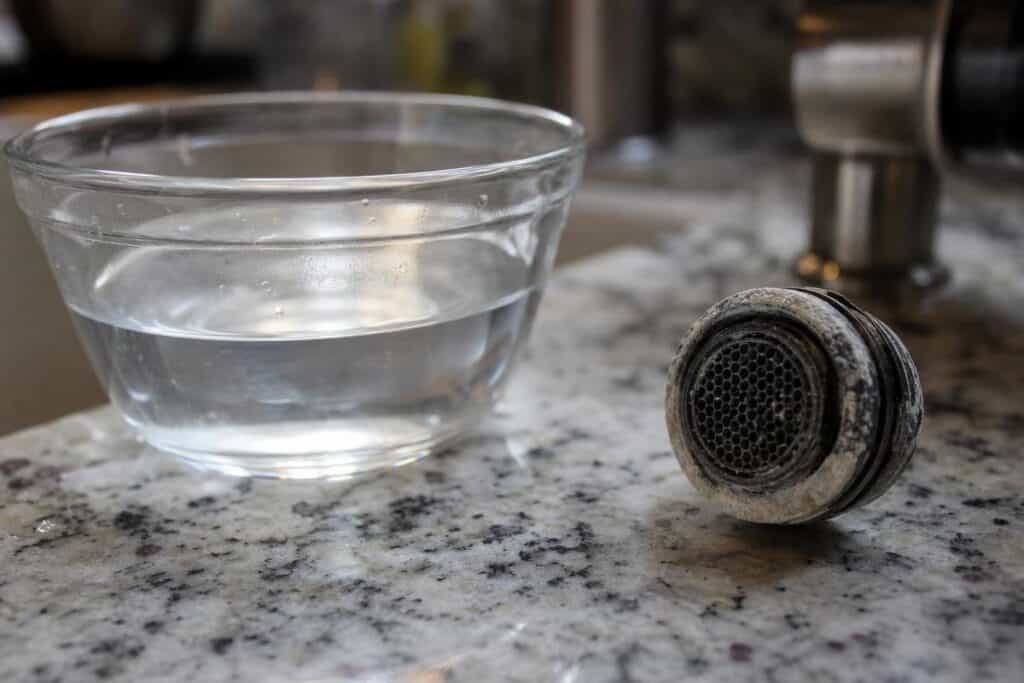
This is the easiest fix in the whole guide. If you have low pressure at one faucet or one shower but not everywhere, a clogged aerator or showerhead is almost certainly the culprit. Hard water from RCWD and EMWD supplies in this region leaves calcium deposits inside these small fixtures fast. Homeowners in San Marcos, Temecula, and Wildomar deal with the same issue. You can fix this before lunch, no plumber needed.
Cleaning Faucet Aerators
The aerator is the small mesh screen screwed onto the tip of your faucet spout. Calcium builds up inside that screen and chokes the flow. You will know it is the problem if water sprays sideways or comes out weak from just that one faucet.
Here is how to clean it:
- Turn off the faucet.
- Unscrew the aerator counterclockwise by hand. Use cloth-wrapped pliers if it is stuck tight.
- Soak it overnight in white vinegar. Vinegar dissolves calcium scale effectively. This is not a myth.
- Scrub with an old toothbrush, then rinse well.
- Tighten it back on clockwise by hand. Do not overtighten.
If the screen is cracked or the housing is corroded, replace it. A new aerator runs $3 to $8 at any hardware store. In hard-water areas like San Marcos, Murrieta, and Menifee, plan to clean aerators twice a year rather than once. If scale keeps coming back fast, our whole-home water quality treatment can slow the buildup at the source.
Cleaning or Replacing Your Showerhead
Want to increase shower water pressure without calling anyone? Start here. Unscrew the showerhead counterclockwise from the wall arm. Submerge it in white vinegar for two to four hours, or overnight for heavy buildup. Use a toothpick or thin wire to clear individual nozzle holes that are still blocked after soaking. When reinstalling, wrap the threads with fresh plumber’s tape first. Check out our guide on how to use plumbing tape if you have not done this before.
If your showerhead is more than eight to ten years old, replacement beats cleaning. California Title 24 requires showerheads rated at 2.0 GPM or less. Look for a WaterSense-labeled model that still delivers a strong spray pattern within that limit. They work well and meet state code.
Cleared the fixtures and still fighting weak flow? Ask about whole-home water treatment to stop scale at the source.
Step 3: Inspect Your Water Heater and Main Shutoff Valves
Before you call anyone about low water pressure in your house, check these two things first. Both take less than five minutes. A partially closed shutoff valve or a water heater supply issue causes more pressure problems than most homeowners realize. These are quick checks that often solve the problem on the spot.
Check Both Main Shutoff Valves
You have two main shutoff valves to check. The first is at the street. Look for a covered box near the curb in front of your home. Open the lid and check the valve position. A ball valve should sit parallel to the pipe. A gate valve should be turned fully counterclockwise. If either valve is even slightly closed, that alone can cut your water pressure by 30 to 50 percent.
The second valve is your house main. In most Temecula and Wildomar homes, you will find it in the garage or a utility room near the front of the house. Turn it fully counterclockwise to open. This valve is often bumped partially closed during a repair or DIY project and forgotten. Check it every time you troubleshoot low water pressure at home.
Diagnose Water Heater Supply Issues
If your cold water pressure is fine but your hot water is weak, the water heater is almost always the cause. Start at the cold-water inlet valve on top of the tank. It must be fully open. Turn it counterclockwise until it stops.
Tanks older than 8 to 10 years also accumulate sediment that restricts the outlet. This is especially common in Inland Southern California homes supplied by hard water districts. Annual flushing helps. Our water heater maintenance service covers this flush and a full supply-line inspection.
Have a tankless unit? The inline filter screen on the cold-water inlet can clog with debris and restrict flow. Our tankless water heater service includes screen cleaning and a full inlet check. Not sure if your issue needs a pro? Read our guide on when to DIY vs. call a pro for water heater issues before you go further.
Valves open, heater checked, and still dealing with weak flow? Our team is ready to help. Call us at (760) 858-3830 to schedule a visit.
When DIY Fixes Are Not Enough: Signs You Need a Licensed Plumber
You’ve checked the PRV, cleaned the aerators, and confirmed both shutoff valves are fully open. The pressure is still low. At that point, the problem is deeper than a DIY fix can reach. Here are three clear signals that it’s time to call a licensed plumber.
Pressure That Drops at Certain Times of Day
Good pressure in the morning but weak pressure by mid-afternoon is a specific pattern. It usually points to municipal supply fluctuation or a shared-line demand issue. Tract neighborhoods in the Inland Valley see this regularly, especially during peak usage hours when dozens of homes draw from the same distribution line.
A booster pump is often the right fix here. Sizing it correctly matters. Too small and it won’t solve the problem. Too large and you risk over-pressurizing your fixtures. That sizing and booster pump installation should be handled by a licensed plumber, not guessed at.
Low Pressure at Every Fixture Simultaneously
If water pressure is too low at every tap in the house at the same time, and your PRV and shutoff valves check out fine, the issue is likely at the main supply line or meter. A partially collapsed pipe, a corroded galvanized line, or a leak between the meter and the foundation can all cause this. Homes in older sections of San Marcos ZIP codes 92069 and 92078 are more likely to have original galvanized supply lines approaching 25 to 35 years of age.
This is not a screw-and-tighten situation. It may require whole-home repiping to restore proper flow throughout the house.
Rust-Colored Water, Warm Floor Spots, or Running Water Sounds
These three signs each point to something serious. Brown or rust-colored water means pipe corrosion is active inside your supply lines. A warm spot on a tile or concrete floor, a spike in your water bill, or the sound of running water when every fixture is off are classic slab leak indicators.
Slab leak detection requires specialized equipment. It is not a job for guesswork. We Care Plumbing, Heating and Air has served this community since 2000, and slab leaks are one of the more common calls our licensed plumbers get from homes in the Inland Valley’s older tract developments. Read why regular plumbing inspections matter for catching these issues early, or schedule a professional plumbing inspection if you’re seeing any of these warning signs now.
Why San Marcos, Murrieta, Temecula, Wildomar, and Menifee Homes Face Unique Water Pressure Challenges

Water pressure problems in San Marcos and Southwest Riverside County are not random. The region’s water sources, housing stock, and pipe age all work against you. Homes served by RCWD and Eastern Municipal Water District share one thing in common: hard water with high calcium and magnesium content. That mineral load builds up inside pipes over time and quietly restricts your pressure.
Hard Water from Regional Utilities
Southwest Riverside County water ranks among the harder municipal supplies in the region. RCWD blends local groundwater with imported Colorado River and State Water Project supplies, both of which carry a heavy mineral load. EMWD, which serves Menifee and parts of the surrounding area, faces similar conditions.
Scale narrows your pipe diameter gradually. You may not notice it for years until pressure drops noticeably. The short-term fix is cleaning aerators and showerheads. The permanent fix is addressed below.
Tract Home Infrastructure and Pipe Sizing
Much of the housing stock across Southwest Riverside County was built in the 1990s and 2000s as large tract developments. Builders sized supply lines to code minimums at the time. As families added bathrooms, irrigation zones, and whole-house filters, those original lines became a bottleneck.
That is why your neighbor on the same street can have solid pressure while yours is weak. Their fixture load may simply be lower. Older neighborhoods with 1970s-era galvanized lines corrode from the inside, compounding the problem. Our team handles whole-home repiping installation when pipe sizing or corrosion is the root cause.
Long-Term Solutions: Descaling and Water Softening
Cleaning a showerhead buys you time. It does not fix the pipe. Our pipe descaling service removes mineral buildup from inside your supply lines without tearing out walls. For ongoing protection, a whole-home softener or treatment system stops scale from forming in the first place.
Our team offers both water softener service and whole-home water treatment to match the right solution to your home’s specific water profile. If you are in the San Marcos or Temecula area, see our local services page for options specific to your area.
Frequently Asked Questions
What PSI is considered normal for a home in our service area?
Normal residential water pressure runs between 45 and 80 PSI. The sweet spot is 55 to 65 PSI. Below 45 PSI, your shower feels weak, appliances take longer to fill, and irrigation heads barely pop up. Above 80 PSI, you stress pipe joints and supply lines, which shortens their life.
Can hard water actually reduce my water pressure?
Yes, and it is more common than most homeowners realize. Calcium and magnesium deposits narrow the inside of your pipes over time. In areas served by Eastern Municipal Water District, high mineral content can cut effective flow at fixtures by 20 to 40 percent over several years. Our pipe descaling service removes that buildup, and a whole-home water softener addresses the root cause going forward.
How much does it cost to fix low water pressure professionally?
DIY fixes cost almost nothing beyond a $15 pressure gauge and some white vinegar. Pricing varies depending on the unit and complexity. We provide a clear upfront quote before any work begins. A corroded section requiring repiping runs higher depending on access and pipe length. We give you a clear price before any work starts.
When should I stop DIYing and call a plumber?
Stop troubleshooting and call if you have checked the PRV, opened all shutoff valves, and cleaned your aerators, but pressure is still below 45 PSI. Also call if you see rust-colored water, hear running water with all fixtures off, or notice a warm spot on the floor. Those are signs of a bigger problem that needs a licensed eye.
Our team serves homeowners across San Marcos, Murrieta, Wildomar, Menifee, Lake Elsinore, and the surrounding region. Still dealing with weak pressure after working through these steps? Call us at (760) 858-3830, Monday through Friday 7 AM to 8 PM or weekends 8 AM to 5 PM, or request a quote online. Visit us at 445 Ryan Dr # 101 San Marcos, CA 92078 . We will diagnose the problem, give you a clear price upfront, and get your pressure back where it belongs.
Ready to Get Started with We Care Plumbing, Heating and Air?
Call (760) 858-3830 to speak with our team directly. We’re ready to answer your questions, walk you through your options, and help you find the right solution for your needs. Whether you’re just starting to plan or ready to move forward, we’ll make the process simple and stress-free.
Reach out today and let’s talk about how we can help.