

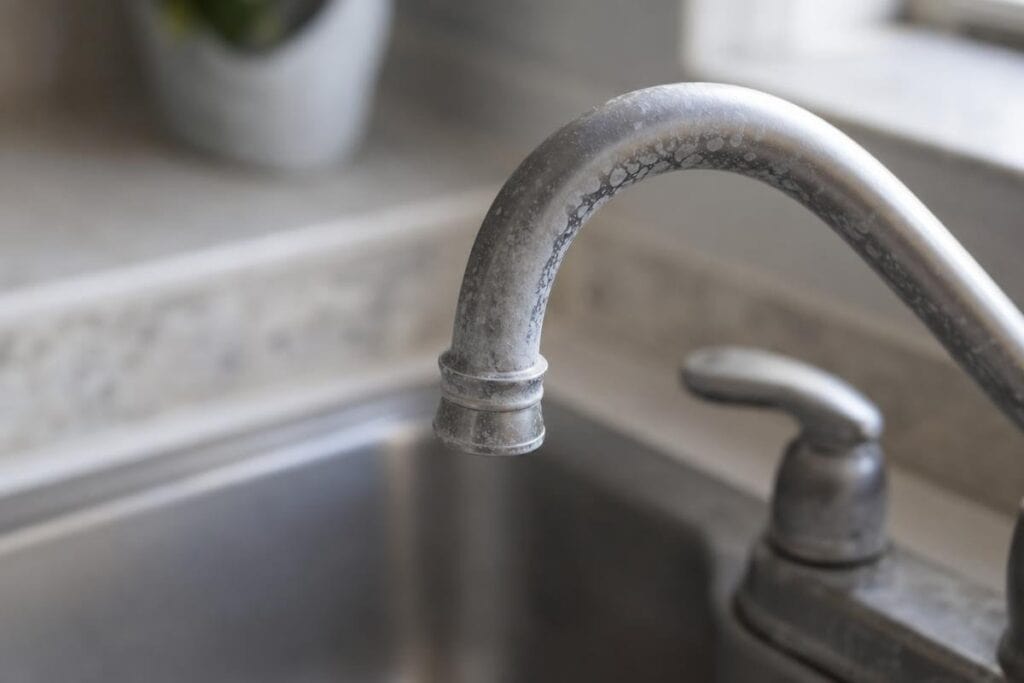
San Marcos tap water regularly tests at 15 to 25 grains per gallon, putting it firmly in the “very hard” range. That mineral load, mostly dissolved calcium and magnesium from Colorado River water, is quietly damaging pipes, water heaters, and appliances in homes across the city every single day. We Care Plumbing, Heating and Air has been serving San Marcos homeowners since 2000, and hard water treatment is one of the most common problems we diagnose right here in our own community. Find out if hard water is costing you money. Schedule a water quality check today.
Key Takeaways
- San Marcos tap water tests at 15 to 25 grains per gallon, well above the “hard” threshold of 7 GPG.
- Hard water treatment options include salt-based softeners, salt-free conditioners, and whole-home filtration systems.
- Scale buildup inside water heaters can cut efficiency by up to 30 percent and shorten equipment life significantly.
- Temecula, San Marcos, and Orange face the same mineral hardness issues due to shared Colorado River water sourcing.
- Homes in San Marcos’s older neighborhoods often have decades of mineral deposits already lining their supply lines.
Protecting Your Pipes, Appliances, and Fixtures From Mineral Buildup
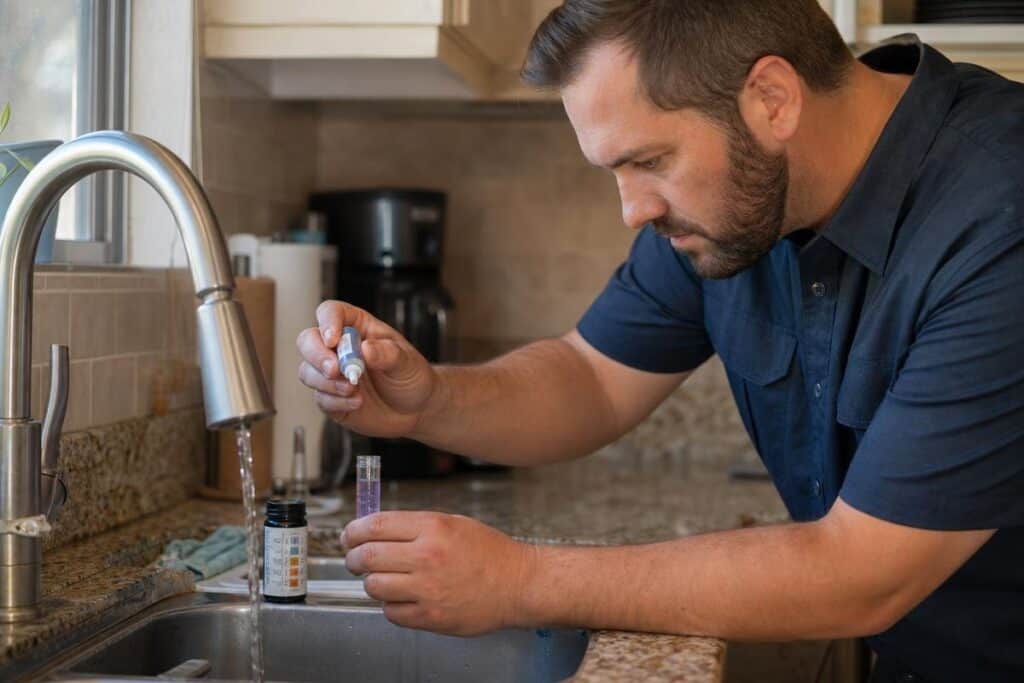
Hard water treatment means removing excess dissolved minerals before they damage your pipes, appliances, and fixtures. In Southwest Riverside County, tap water regularly tests at 15 to 25 or more grains per gallon, well into the “very hard” range. The two main approaches are salt-based ion-exchange softeners and whole-house filtration systems. Both protect your home from scale-forming minerals in the water supply.
Temecula, San Marcos, and Orange all draw from the same Colorado River-sourced supply. That means the limescale building up in your water heater and faucets is a regional issue, not just a local quirk. Our water quality treatment services address it directly.
The sections below cover how to spot hard water, what it actually costs you, and which treatment options work best in Southern California. We Care Plumbing, Heating and Air has served this area since 2000. We know what is in your water.
What Makes San Marcos’s Water So Hard?
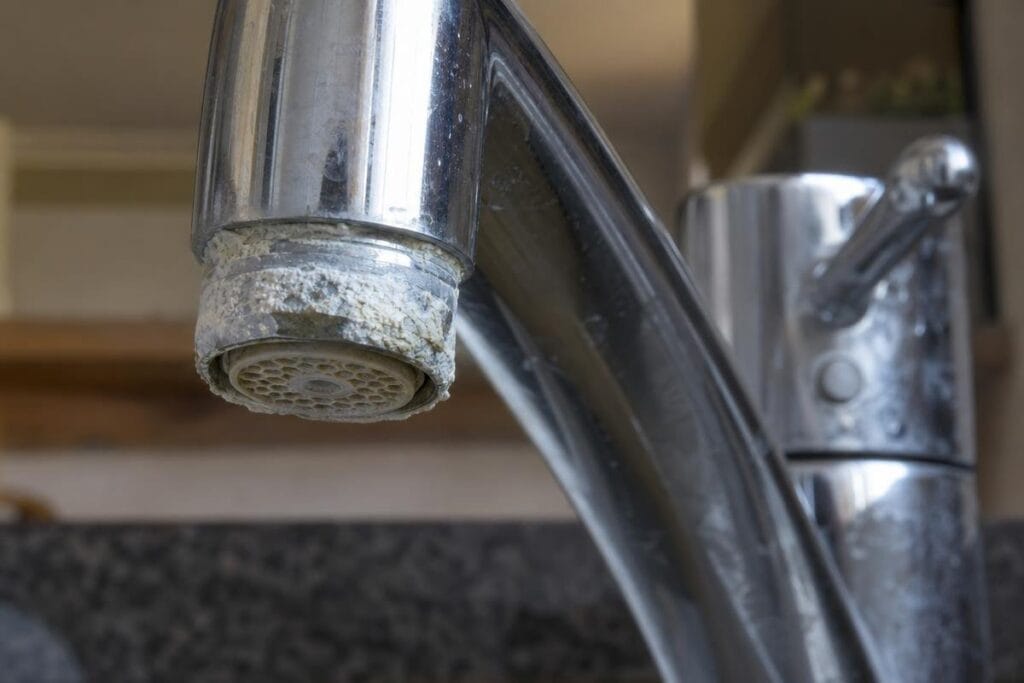
Your tap water in Southwest Riverside County is some of the hardest in California. That white crust on your faucet aerator? It is not a cleaning problem. It is a water source problem. Understanding where your water comes from explains everything.
Where San Marcos’s Water Actually Comes From
The Eastern Municipal Water District (EMWD) supplies most homes in this area. EMWD blends two sources: water from the Colorado River and water from the State Water Project. Both carry heavy loads of dissolved calcium and magnesium carbonate picked up as the water travels through hundreds of miles of rock and soil.
Neighbors in Temecula and San Marcos draw from the same blended supply. Orange, CA residents face identical conditions because the Metropolitan Water District also pulls from the Colorado. This is not a neighborhood quirk. It is a regional reality across Southwest Riverside County and northern San Diego County.
In older communities like Bear Creek and Copper Canyon, copper and galvanized pipes installed in the 1980s and 1990s have been collecting mineral deposits for decades. Newer developments along the Hot Springs corridor use PEX pipe, which resists pipe scaling differently, but fixtures, appliances, and water heaters still take the hit. If you want to know what that buildup looks like inside your lines, a plumbing inspection can show you exactly what you are dealing with.
How Hard Is Hard? Understanding the Hardness Scale
Water hardness is measured in grains per gallon (gpg). Here is how the scale breaks down:
- Soft: 0 to 3 gpg
- Moderately hard: 3 to 7 gpg
- Hard: 7 to 10 gpg
- Very hard: 10+ gpg
Tap water in this region regularly tests between 15 and 25+ gpg. That puts it firmly in the very hard category. Those dissolved minerals are not a health hazard, but they are the primary driver of limescale in pipes, water heaters, and appliances. Our water quality treatment services start with testing so you know your exact number before choosing a solution.
How Do You Know If You Have Hard Water? 7 Signs to Check Today
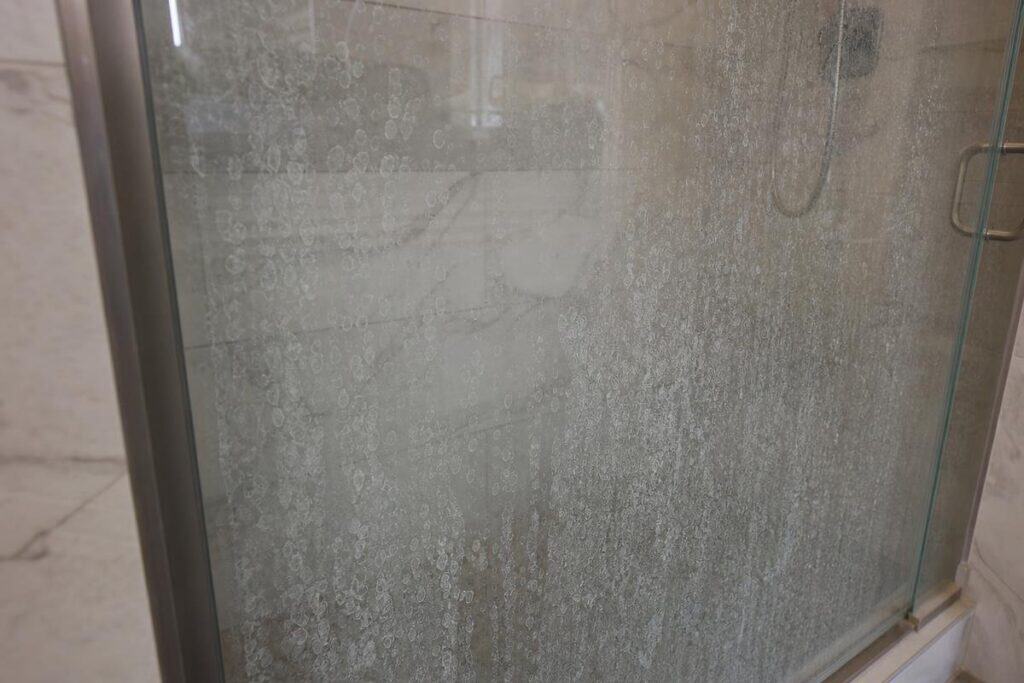
Hard water leaves clues everywhere in your home. The dissolved mineral ions in your tap water deposit limescale on every surface they touch, from your showerhead to the inside of your pipes. Here is a practical checklist you can run through right now, before calling anyone.
Visible Signs You Can Spot Right Now
- White or chalky crust on faucets and showerheads. That crusty buildup is limescale left behind as water evaporates.
- Spots on dishes straight out of the dishwasher. Mineral deposits dry onto glass and flatware before you can wipe them off.
- Soap scum that won’t rinse clean. Hard water reacts with soap to form a sticky residue instead of lather.
- Dingy laundry and stiff towels. Scale-forming minerals bind to fabric fibers, leaving clothes looking dull and towels feeling rough.
- Dry, itchy skin and dull hair after showering. The same mineral film that coats your fixtures coats your skin.
Quick DIY test: Fill a clear bottle halfway with tap water. Add a few drops of dish soap and shake it hard. If the water looks milky and produces little to no lather, your hardness is likely above 7 grains per gallon. Temecula and San Marcos homeowners who try this test are often surprised by the results.
Signs Hidden Inside Your Plumbing and Appliances
- Reduced water pressure throughout the house. In homes with copper or galvanized pipes, decades of mineral deposits narrow the pipe interior until flow drops noticeably. We see this regularly in older neighborhoods across Southwest Riverside County.
- Popping or rumbling from your water heater. Sediment accumulation on the tank floor forces the burner to work harder and makes noise. If you hear that sound, water heater maintenance should be your next call.
Tankless units are not immune. Error codes, inconsistent output temperature, and efficiency loss are direct symptoms of scale blocking the heat exchanger. Our team handles tankless water heater repair caused by mineral buildup more often than any other single issue.
What Does Hard Water Actually Cost San Marcos Homeowners?

Hard water is not just an annoyance. It is a slow, steady drain on your budget. Mineral deposits accumulate inside pipes, tanks, and appliances year after year. By the time most San Marcos homeowners notice the damage, they are already looking at repair or replacement bills that could have been avoided with proper hard water treatment.
Appliance Lifespan and Energy Bills
A quarter inch of mineral deposits inside a water heater tank can cut heating efficiency by 25 to 40 percent. Your unit works harder, runs longer, and uses more energy every single cycle. In soft-water conditions, a tank water heater typically lasts 10 to 12 years. In a high-hardness area like this, many fail in 6 to 8 years. Scheduling regular water heater maintenance helps, but untreated dissolved solids will keep winning that battle.
Dishwashers, washing machines, and coffee makers face the same shortened lifespan. The scale-forming minerals coat heating elements and restrict water flow inside every appliance connected to your supply line. That is money leaving your home quietly, every month.
Plumbing Repair Costs You Can Avoid
Pipe scaling is a long game. Over decades, limescale narrows the interior of copper and galvanized lines until flow drops noticeably. In established neighborhoods like Copper Canyon and Bear Creek, we find supply lines from the 1980s and 1990s with near-complete mineral occlusion. At that point, repiping installation is the only real fix.
Kitchen fixtures take the hit early. Faucets, spray heads, and supply valves are the first casualties of sediment accumulation, and kitchen plumbing repair calls for scale-damaged fixtures are among the most common we handle across San Marcos and Temecula. HVAC humidifier components also suffer, working harder against mineral-laden water. If you have a whole-home humidifier, check our humidifier installation and service page for what to watch for.
Hard Water Treatment Options: Which One Is Right for Your Home?

At 15-25+ grains per gallon, the tap water across Southwest Riverside County and northern San Diego County is firmly in the “very hard” range. That level of dissolved mineral content narrows your options quickly. Not every treatment system performs equally at those concentrations. Here is a plain breakdown of what actually works, what the trade-offs are, and where California regulations come into play.
Salt-Based Ion-Exchange Water Softeners
This is the most effective option for tap water testing above 15 gpg. A resin tank swaps the scale-forming mineral ions in your water for sodium ions before the water reaches your pipes, fixtures, and appliances. The result is genuinely soft water throughout the whole house. You will need to add 40-50 lb salt bags roughly every four to six weeks and allow for brine tank regeneration cycles.
One important note for homeowners in the Eastern Municipal Water District service area: California restricts timer-based self-regenerating softeners in certain zones due to chloride discharge concerns. Demand-initiated regeneration models are typically permitted where timer-based units are not. Our team can confirm which models are approved for your specific address before any installation. You can also explore our full water quality treatment services to see how softeners fit into a broader plan.
Salt-Free Conditioners and Template-Assisted Crystallization (TAC)
TAC systems convert dissolved mineral ions into microscopic crystals that pass through your plumbing without sticking to pipe walls. No salt, no wastewater discharge, no electricity. For homeowners in Temecula or San Marcos who are concerned about California’s softener regulations or prefer to avoid added sodium, TAC is a practical alternative.
One honest caveat: TAC systems lose effectiveness above roughly 20 gpg. If your water tests at the higher end of our regional range, a salt-based system will outperform it.
Whole-House Filtration and Reverse Osmosis
Point-of-use reverse osmosis removes virtually all dissolved solids and is excellent for drinking water quality at the kitchen tap. Whole-house RO is expensive and rarely necessary when a softener or TAC system is already handling hardness at the main line. A targeted approach, combining a softener with an under-sink RO unit, covers both bases without the cost of treating every drop of irrigation water. See our water quality treatment page for system pairing options we install across the region.
Descaling Services for Existing Buildup
Installing a new softener stops future scale accumulation. It does not clear the limescale already coating your pipes, water heater tank, or fixture valves. That existing sediment accumulation stays put and keeps restricting flow until it is physically removed. Our Flo-Tech descaling service clears mineral deposits from pipes and water heaters without requiring full repiping.
In older homes across the Bear Creek and Copper Canyon areas, we regularly find galvanized supply lines with near-complete scale occlusion. Descaling first, then installing a treatment system, is the right sequence.
Not sure which system fits your home’s water hardness level? Call us at (760) 858-3830 and we will walk you through the right options for your address.
Hard Water and Your HVAC System: A Connection Most Homeowners Miss
Most homeowners think hard water only affects pipes and fixtures. But dissolved mineral ions in your water supply quietly damage water heaters, tankless units, and whole-home humidifiers too. We see this constantly in homes across the French Valley and Wildomar areas. It’s one of the most overlooked sources of rising energy bills and early equipment failure.
How Scale Affects Your Water Heater and Tankless Units
Sediment accumulates on the floor of a tank water heater over time. That layer of limescale forces the burner to run longer to heat the same amount of water. You pay more on your gas or electric bill, and the tank wears out faster. Rumbling or popping sounds from your water heater? That’s often mineral deposits cracking under heat, not a plumbing emergency, but a clear warning sign.
Tankless units are even more vulnerable. Scale clogs the heat exchanger directly, triggering error codes and dropping flow rates. If your tankless unit is throwing errors or running cold, tankless water heater repair may be needed sooner than you think. Annual water heater maintenance catches mineral accumulation before it causes irreversible damage. Not sure whether to call a pro? Read our guide on when to call a pro for water heater problems.
Hard Water’s Impact on Humidifiers and Indoor Air Quality
Whole-home humidifiers running on untreated water develop scale on the water panel and evaporator pad fast. Output drops, and in some cases the unit circulates fine mineral particles into your home’s air. During Santa Ana wind season, when dry conditions push homeowners to run humidifiers daily, that buildup accelerates quickly.
Treating water before it enters the humidifier extends the unit’s life and keeps your indoor air cleaner. If your current unit is underperforming, our humidifier installation team can assess whether a replacement or a water treatment upgrade makes more sense for your home.
Hard Water in San Marcos, Murrieta, Temecula, and Orange: What Local Homeowners Need to Know

Hard water is not a San Marcos-only problem. Homeowners across this region are dealing with the same dissolved mineral load in their pipes, fixtures, and appliances. The source is the same blended water supply. The damage looks the same. And the fix is the same.
Why Southwest Riverside County Has Some of California’s Hardest Water
Cities across this region share a common water source problem. Homeowners in French Valley and Wildomar receive water managed through Eastern Municipal Water District, blending Colorado River and State Water Project supplies. Both sources carry high concentrations of dissolved minerals. The result is tap water that regularly tests in the very hard range.
It is the same story in northern San Diego County. Our San Marcos service area receives water through the San Diego County Water Authority, which also draws heavily from Colorado River allocations. Hardness levels there mirror what we see in zip codes 92562 and 92563. Orange County homeowners face identical conditions through Metropolitan Water District sourcing. This is a regional reality, not a neighborhood quirk.
If you are searching for whole house water filtration in Southern California or looking into water softener installation, knowing your neighbors face the same challenge helps. Treatment solutions that work here work across the region.
Neighborhoods and Home Ages Most at Risk
Pipe age matters as much as water hardness. Homes built in the 1980s and 1990s in established zip code 92562 neighborhoods often have copper or galvanized supply lines that have been accumulating limescale for 20 to 30 years. We frequently open up these pipes during inspections and find flow reduced to a fraction of the original diameter. If you want to understand what that looks like, read our guide to common plumbing issues in older homes.
Newer construction along the Hot Springs corridor in 92563 uses PEX tubing, which resists scale adhesion better. But the water heaters, dishwashers, and fixtures in those homes still take the same mineral hit. No home in this region is immune.
A plumbing inspection is the most reliable way to know exactly what scale accumulation looks like inside your specific home’s pipes. We can tell you what you are actually dealing with before you spend a dollar on treatment.
Frequently Asked Questions
How hard is the water in San Marcos, CA?
Local tap water typically tests between 15 and 25+ grains per gallon, depending on the season and how the San Diego County Water Authority blends its supply. The EPA classifies anything above 7 gpg as hard. You can request a water quality report directly from your water district, or we can run an in-home test for you.
What is the best hard water treatment for a Southern California home?
For homes testing above 15 gpg, a salt-based ion-exchange softener gives the most complete protection against scale-forming minerals. Salt-free conditioners are a solid alternative if discharge regulations apply to your area. Our water quality treatment service helps you find the right fit for your home and budget.
Are water softeners legal in San Marcos and Murrieta?
California restricts timer-based self-regenerating softeners in areas where brine discharge affects recycled water systems. Demand-initiated regeneration models are typically permitted where timer-based units are not. We only install equipment that meets current California regulations.
How much does water softener installation cost in San Marcos?
Cost varies by home size, hardness level, and system type. We give you a clear, upfront price before any work begins. No surprises.
Will a water softener fix the scale already in my pipes?
A softener stops new mineral deposits from forming, but it won’t dissolve existing buildup. For that, our Flo-Tech descaling service clears existing limescale from your pipes without requiring full repiping.
How do I know if my water heater damage is from hard water?
Popping, rumbling, or banging from the tank is a common sign of sediment accumulation at the bottom. Reduced hot water output and rising energy bills point the same direction. A water heater maintenance visit confirms the cause and tells you how much life is left in the unit.
Ready to stop replacing showerheads, paying higher energy bills, and watching your water heater age faster than it should?
Call We Care Plumbing, Heating and Air at (760) 858-3830 to schedule an in-home water hardness test. You can also visit us at 445 Ryan Dr # 101 San Marcos, CA 92078 . Our team will assess your home’s specific hardness level, walk you through the right treatment options, and give you a clear price before any work begins. Hard water is a regional reality across San Marcos and the Inland Valley. The damage it causes is not.
Ready to Get Started with We Care Plumbing, Heating and Air?
Call (760) 858-3830 to speak with our team directly. We’re ready to answer your questions, walk you through your options, and help you find the right solution for your needs. Whether you’re just starting to plan or ready to move forward, we’ll make the process simple and stress-free.
Reach out today and let’s talk about how we can help.