

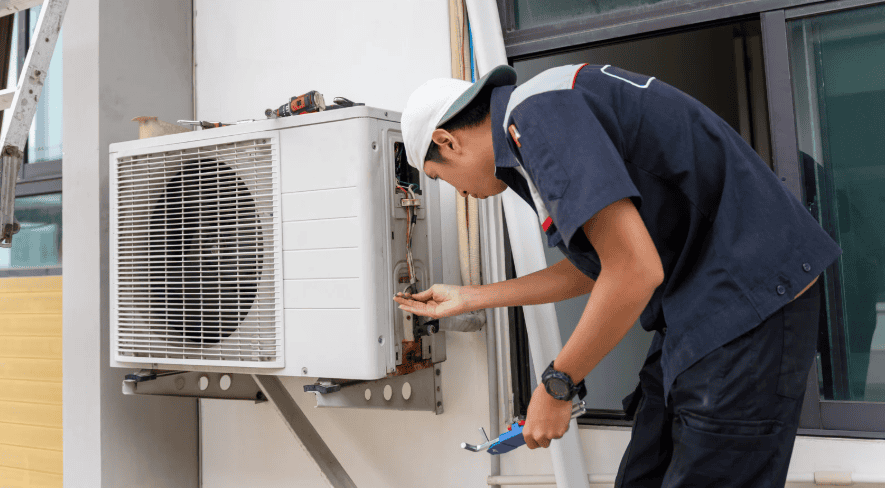
We Care Plumbing, Heating and Air has been serving Murrieta homeowners since 2000, and we know what Southern California summers demand from your AC system. When temperatures push past 100°F in the Inland Valley, a failing unit is not just uncomfortable, it is a real problem. A professional AC inspection catches small issues before they become expensive repairs, and our team checks everything from refrigerant levels and airflow to coils and drain lines.
We are right here in Murrieta, and we know these systems inside and out. Schedule your AC inspection before the heat hits. Our Murrieta team is ready.
Key Takeaways
- A professional AC inspection covers refrigerant levels, airflow, coils, electrical components, and drain lines in one visit.
- Murrieta summers regularly exceed 100°F, making annual AC inspections especially important for local homeowners.
- Catching a small problem during an inspection almost always costs less than an emergency repair mid-summer.
- Homes built in the 1990s and 2000s may have HVAC systems at or near the end of their typical service life.
- Our NATE-certified team is based in Murrieta and also serves Temecula, San Marcos, and Orange, CA.
It’s late June. Temps near the Murrieta Hot Springs corridor are pushing 100°F. Your AC has been running for hours and the house still won’t cool down. We see this every summer, and nine times out of ten, a skipped inspection is the reason.
Think about when you last had your system inspected. If you can’t remember, that’s your answer. Below we cover what a professional HVAC inspection in our service area actually includes, why Southern California’s inland valley climate makes it non-negotiable, and what to watch for between visits.
Our company has been doing this since 2000. Our technicians are NATE-certified and EPA 608 certified for refrigerant handling, and we operate under our California CSLB contractor license. We know what these systems need out here, and we’re here to help you stay ahead of the heat.
What Does a Professional AC Inspection Actually Include?
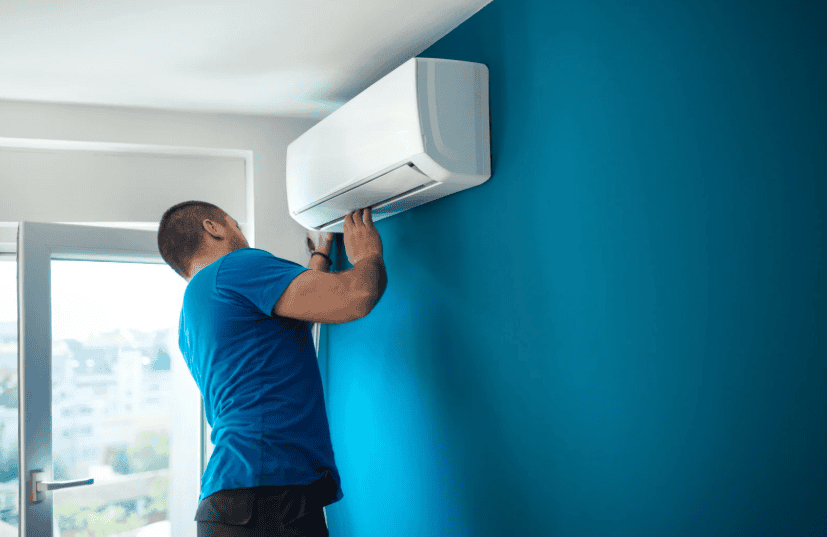
A real AC inspection is not a quick glance at your outdoor unit. Our technician follows a documented HVAC inspection checklist, from the disconnect box outside to the air handler in your garage or attic. Every finding gets documented, often with photos, so you can see exactly what we found and why it matters.
Electrical Components and Connections
We start at the electrical side because a failing capacitor or burned contactor is one of the most common reasons systems quit on a 105-degree afternoon. Our tech tests the capacitor with a capacitance meter to verify it is holding the correct microfarad rating. A weak capacitor stresses the compressor motor every time the system starts, which quietly shortens the life of your most expensive component.
We also inspect the contactor for pitting and burn marks. Then we check wiring at the disconnect box and air handler for corrosion or loose terminals. Loose connections generate heat. Heat causes failures. Verifying tight connections and healthy components during an ac inspection extends system longevity and keeps your energy draw where it should be.
Refrigerant Level and Coil Condition
Low refrigerant does not just reduce cooling. It causes the evaporator coil to run too cold, leading to ice bridging that blocks airflow entirely. We measure superheat and subcooling to verify the system has the correct charge. These are precise measurements, not guesswork, and they require the EPA 608 certification our technicians carry.
We also inspect the evaporator coil for frost or ice buildup and the condenser coil for dirt fouling. In the Inland Valley, dry and dusty summers accelerate condenser coil fouling faster than coastal climates like Carlsbad or Encinitas. A fouled condenser raises head pressure and forces the compressor to work harder.
Wildfire smoke from Riverside and San Diego County fires makes this worse, pushing fine particulates deep into coil fins. If your coils are dirty, check out our summer energy-saving tips for your HVAC system to understand how coil condition directly affects your electric bill.
Airflow, Filters, and Ductwork
Poor airflow is a quiet efficiency killer. We run a static pressure test across the air handler to measure how freely air moves through the system. We inspect the blower wheel for dust cake buildup, which reduces CFM and makes every room harder to cool. Filter condition and MERV rating get checked too.
Temecula’s older neighborhoods, where a lot of the housing stock dates to the first wave of valley development, are especially prone to flex-duct leaks at collars and take-offs. Those leaks bleed conditioned air straight into unconditioned attic spaces. You pay to cool your attic instead of your living room. A proper attic insulation inspection paired with duct sealing can recover a significant portion of that lost efficiency.
The Difference Between an AC Inspection and a Tune-Up
An AC inspection is a diagnostic evaluation only, while a tune-up includes hands-on corrective work based on what the inspection finds. During an inspection the technician measures, tests, and documents. No parts are replaced. No chemicals are added. You get a written report. A tune-up builds on those findings and acts on them. We get this question constantly. Here is the clearest way to think about it.
What an Inspection Covers
Section 2 covers the full checklist in detail. The short version: the technician goes through every major component, records what they find, and hands you a written findings report. Many of our reports include a visual diagram of the system so you can see exactly where a problem lives. Nothing gets touched or treated. You leave with information.
What a Tune-Up Adds
A tune-up takes the inspection findings and acts on them. That means condenser coil cleaning, condensate drain line clearing with a wet-vac and a treatment tablet, lubrication of all moving parts, and thermostat calibration verification. These are hands-on corrective tasks, not just observations.
For homes in Orange, CA and across the Inland Valley, systems run 8 to 10 months per year. That runtime is well above the national average. Wear accumulates faster. The March to April pre-season window is the best time to combine both services before the heat arrives. You get the diagnostic picture and the corrective work in one visit. Our heating maintenance visits follow the same paired approach in fall.
If you want a full seasonal checklist to keep on hand, our year-end HVAC maintenance checklist is a good reference point for planning both visits. Bottom line: the inspection tells you what is wrong. The tune-up fixes it. For Southern California systems, doing both together once a year is the most cost-effective approach.
Ready to schedule your pre-season inspection? Our Murrieta team has openings this week. Call (951) 277-6848 to grab one before the calendar fills up.
Why Southern California Homes Need Regular AC Inspections More Than Most
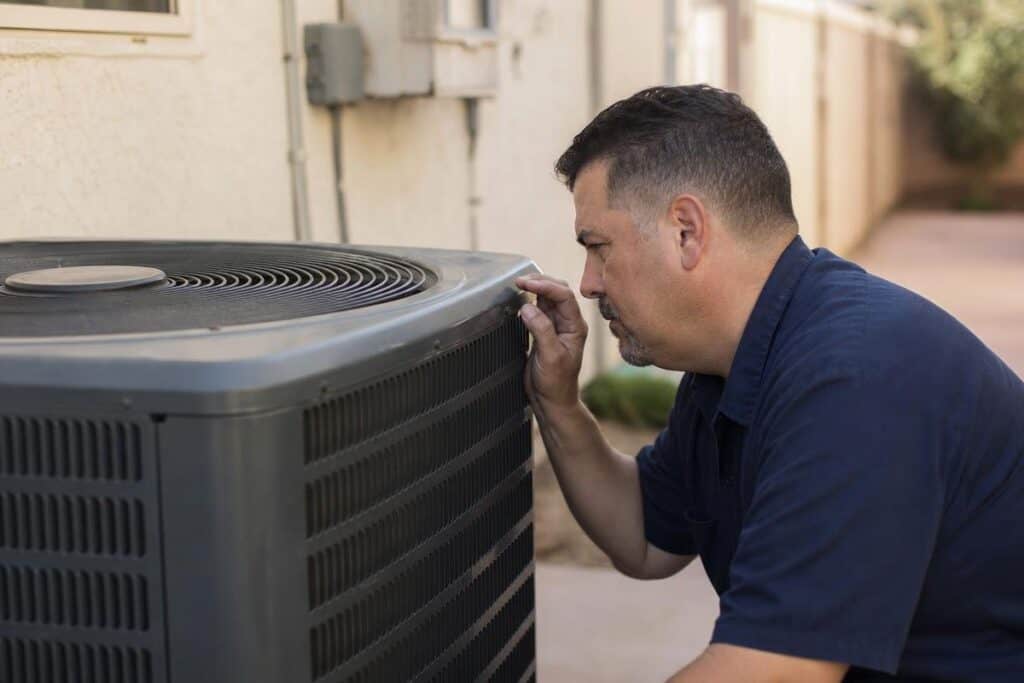
If your cousins in Carlsbad or Encinitas seem to get more years out of their AC systems, there is a real reason for that. The marine layer keeps coastal temperatures 10 to 15 degrees cooler all summer. Out here in the Inland Valley, we hit triple digits regularly, and your system runs hard from May through October. That is a lot more cooling hours per year than most systems are designed to handle without regular attention.
The Murrieta and Inland Valley Heat Load
Summer temperatures in zip codes 92562 and 92563 regularly push past 100°F. Your AC does not get a break. Capacitors, contactors, and compressor valves wear down faster under high-cycle-count conditions than they would in a milder climate. An annual HVAC inspection catches those early signs of wear before they turn into a full breakdown on the hottest day of July. That is not a coincidence. That is exactly when overstressed parts fail.
Murrieta’s residential boom came with master-planned communities like Bear Creek and California Oaks that filled in through the late 1990s and 2000s. Many of those homes are now running original equipment at or past its typical service life, so an ac maintenance check every year is not optional for these systems. It is what keeps them going.
Wildfire Smoke and Dust Impact on AC Systems
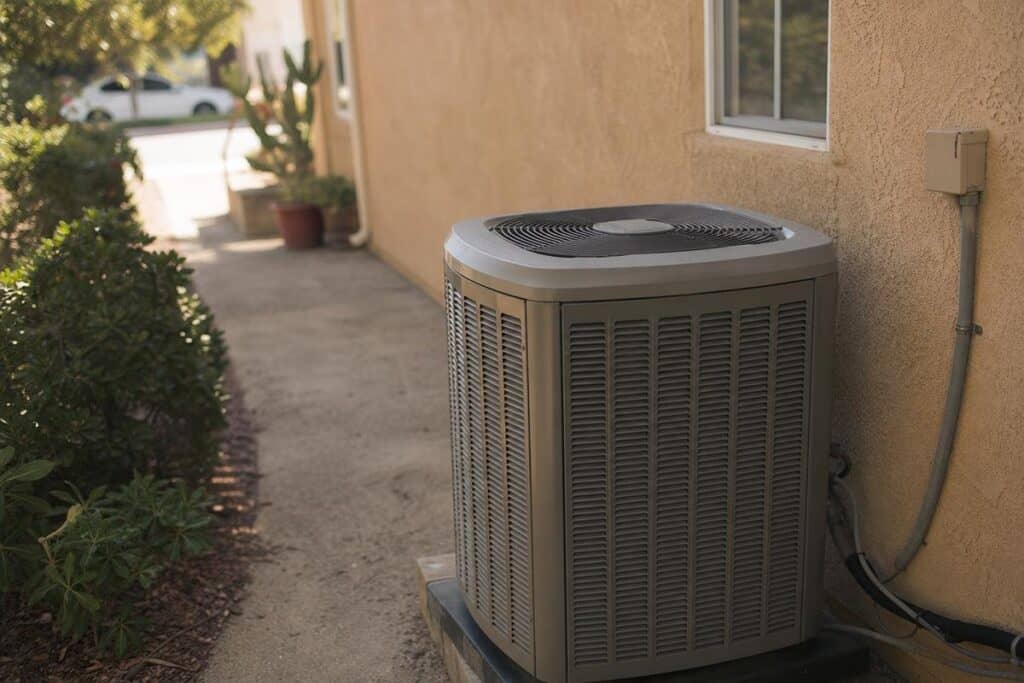
Seasonal fires in both Riverside and San Diego counties push fine particulate matter (PM2.5) into the air across our entire service area. Standard 1-inch filters do not stop it. That smoke coats evaporator coils and blower wheels, reducing airflow and forcing your system to work harder for less cooling output. We see this every year after fire season.
Read our guide on preparing your HVAC system for wildfire season for more on protecting your equipment. If air quality is a concern in your home, ask us about the CareAire air scrubber, which actively reduces airborne particulates between inspections.
Hard Water Scale on HVAC Components
The water supply in this region carries elevated levels of calcium and magnesium. Over time, those minerals build up inside condensate drain pans and PVC drain lines. The result is a clogged drain that overflows, and that overflow goes straight into your drywall or ceiling. We find this constantly during air conditioning inspections, particularly in older San Marcos homes where a single drain line has been running untreated for years.
It is a regional problem tied directly to local water quality. Our water quality treatment options can reduce mineral buildup throughout your home, not just in your HVAC system.
When Should You Schedule an AC Inspection in Murrieta?
Schedule your AC inspection between February and April. That window gives our team time to catch problems before the first heat wave hits. By May, booking lead times stretch out significantly across the Inland Valley. Customers in Orange, CA face the same crunch. The inland cooling season starts earlier here than most of the country, and everyone realizes it at the same time.
The Best Time of Year
February through April is the sweet spot. Our HVAC services in San Marcos and across our service area fill up fast once temperatures climb. We are available Monday through Friday from 7am to 8pm and Saturday through Sunday from 8am to 5pm, so pre-season scheduling is easy to fit around your week. Homes in established neighborhoods near Bear Creek Golf Club, many built during that late-1990s buildout, often have original equipment running on borrowed time. Do not wait until June to find that out.
Signs You Should Not Wait for the Annual Checkup
Some situations call for an AC inspection right now, not next spring. Call us if you notice any of these:
- Your house takes more than 30 minutes to drop 2 degrees after the system kicks on
- You hear grinding, squealing, or clicking from the air handler or condenser
- Your electric bill is up 15 to 20 percent compared to the same month last year
- Ice is forming on the refrigerant lines
- There is standing water or visible mold in the condensate drain pan
- The system short-cycles every few minutes and never completes a full run
We hear it often: “We haven’t had maintenance in five years.” That gap shows up fast when summer arrives. Check our guide on warning signs your HVAC system needs urgent attention if you are unsure whether to call now or wait. Do not wait until your AC quits on a 105-degree day. Call us at (951) 277-6848 to book your inspection before the season rush.
What Happens After the Inspection: Understanding Your Report
Before our technician leaves your home, you get a written findings report. We walk you through it in person. Nothing gets emailed to you later with no explanation. You see exactly what we found, what it means, and what needs to happen next.
The report is organized into three tiers. Safety concerns that need immediate attention come first. Performance issues affecting efficiency come second. Preventive recommendations for the next one to two seasons round out the list. That structure makes it easy to see what is urgent and what can wait.
How Technicians Communicate Findings
Our technicians take time to explain each finding in plain language. Customers like Chris, Tyler, and Matthew have noted that our team is patient, informative, and never pushy. That is intentional. You deserve to understand what is happening with your system before you make any decisions.
A failed capacitor or an active refrigerant leak goes in the urgent column. Minor coil fouling or an aging but functional contactor may be something we monitor over the next season. We tell you which is which, and we explain why. If you want to read more about what makes a thorough HVAC evaluation worth the investment, check out our post on why a PEARL-certified HVAC technician is worth it.
Prioritizing Repairs vs. Replacements
Not every finding requires a repair today. We help you sort urgent issues from conditions you can monitor. That is the honest approach, and it is how we have worked since 2000. Homes near the Bear Creek Golf Club corridor built in the 1990s and early 2000s are now at or past the typical 15 to 20 year HVAC service life. When a system that age shows multiple failing components, continuing to repair it may cost more than replacing it.
We present both paths clearly. You decide. If replacement makes sense, we can talk through options including heat pump installation or address a specific component through heating repair. No pressure either way.
We Care Has Served Murrieta, Temecula, Orange, and San Marcos Since 2000
Our company has been in this community since 2000. That is over two decades of HVAC inspections, repairs, and installations across the Inland Valley and into the San Diego County corridor. We are not a national home warranty company dispatching whoever is available. We are a family-owned business based at 41085 Golden Gate Circle, Murrieta, CA 92562, and our technicians are NATE-certified and EPA 608 certified, not just trained to pass a sales call.
Our credentials back that up. We have earned the Southern California Edison Contractor of the Year award, the ACCA Contractor of the Year award, and the Dave Lennox Award five times. We hold a BBB A+ rating and carry a 4.8-star average across more than 8,400 reviews. Those numbers reflect real customers in Corona, Lake Elsinore, Wildomar, and the communities we drive through every day.
If a one-time HVAC inspection in Murrieta, CA is not enough coverage for you, ask us about our VIP Club. It is our maintenance plan for homeowners who want scheduled tune-ups, priority service, and discounts built in year-round. Residents near Chino Hills and Menifee have found it especially useful for keeping aging systems running through peak summer heat.
We also offer an HVAC maintenance plan for homeowners in the San Marcos area if that is closer to home. We believe in giving back to the communities we serve. Our Referral Program and community partnerships are part of how we operate, not an afterthought. Call us at (951) 277-6848 to schedule your AC inspection or get an online quote today.
Frequently Asked Questions
How long does an AC inspection take?
Most inspections run 45 to 90 minutes. System size, age, and number of zones affect the time. We give you an estimate when you book so you can plan your day.
How much does an AC inspection cost in Murrieta?
Pricing depends on your system type and whether you add a tune-up. We quote you upfront before any work begins. No surprises on the bill. VIP Club members get priority scheduling and discounted rates, which adds real value across a long cooling season like ours in the Inland Empire.
How often should I have my AC inspected?
Once a year is standard. Aim for late winter or early spring before the heat arrives. Older systems running through an April-through-October cooling season may benefit from a mid-season check as well.
Can I do an AC inspection myself?
You can check filters, clear debris from the condenser, and verify thermostat settings. Refrigerant charge, electrical testing, and heat exchanger inspection require a licensed technician with specialized tools. Those are not DIY tasks.
What is the difference between an AC inspection and a tune-up?
An inspection is diagnostic only. A tune-up adds hands-on corrective work. Many homeowners in Corona and the surrounding area schedule both at the same visit to save time.
Does We Care Plumbing, Heating and Air offer AC inspections in Temecula and San Marcos?
Yes, both cities are fully served. See our Temecula plumbing, heating, and air conditioning services page or our HVAC services in San Marcos page for details.
Ready to know exactly where your system stands? Call us at (951) 277-6848 to schedule your AC inspection. Our team is available Monday through Friday from 7am to 8pm and Saturday through Sunday from 8am to 5pm. Book before the heat hits and skip the summer rush.
Ready to Get Started with We Care Plumbing, Heating and Air?
Call (951) 277-6848 to speak with our team directly. We’re ready to answer your questions, walk you through your options, and help you find the right solution for your needs. Whether you’re just starting to plan or ready to move forward, we’ll make the process simple and stress-free. Reach out today and let’s talk about how we can help.