

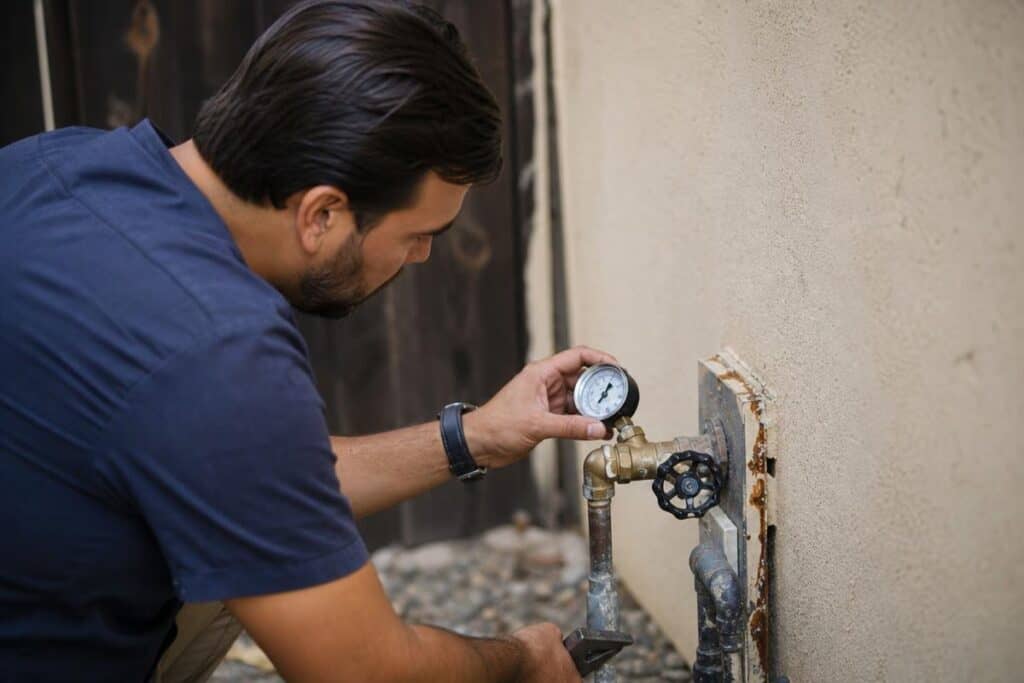
If you’re asking why your water pressure is low, you’re not alone. Murrieta homeowners deal with this more than most. The Rancho California Water District delivers water at a healthy pressure, so if your taps feel weak, the problem is almost always inside your home. This part of the Inland Valley has notoriously hard tap water, and that mineral buildup quietly chokes your pipes over time.
We Care Plumbing, Heating and Air has been diagnosing and fixing these problems for local homeowners since 2000. We know exactly where to look. Weak water pressure in Murrieta? We can find the cause fast.
Key Takeaways
- Low water pressure is usually caused by something inside your home, not a problem with the city supply.
- Murrieta’s hard water deposits mineral scale inside pipes and fixtures, reducing flow over time.
- Common causes include faulty pressure regulators, partially closed valves, and corroded or scaled pipes.
- Homes built in the late 1980s and 1990s may have aging copper lines that are increasingly prone to buildup and pinhole leaks.
- A plumbing inspection can identify why your water pressure is low before it turns into a bigger repair.
Low water pressure is almost always caused by one of a handful of in-home problems: mineral scale buildup, a failing pressure regulator, a partially closed shutoff valve, or a hidden leak. If your taps feel weak in Murrieta neighborhoods like Greer Ranch or Spencer’s Crossing, the supply line from your water district is usually fine. The problem is inside your house.
Below, we cover the most common low water pressure causes, a quick self-diagnosis checklist, and when to call a plumber. We Care Plumbing, Heating and Air has served Murrieta and the wider Inland Valley since 2000. Our team handles everything from targeted repiping installation for homes where aging pipes are the root cause to simple in-line fixes you may be able to handle yourself.
What Does Normal Water Pressure Look Like?
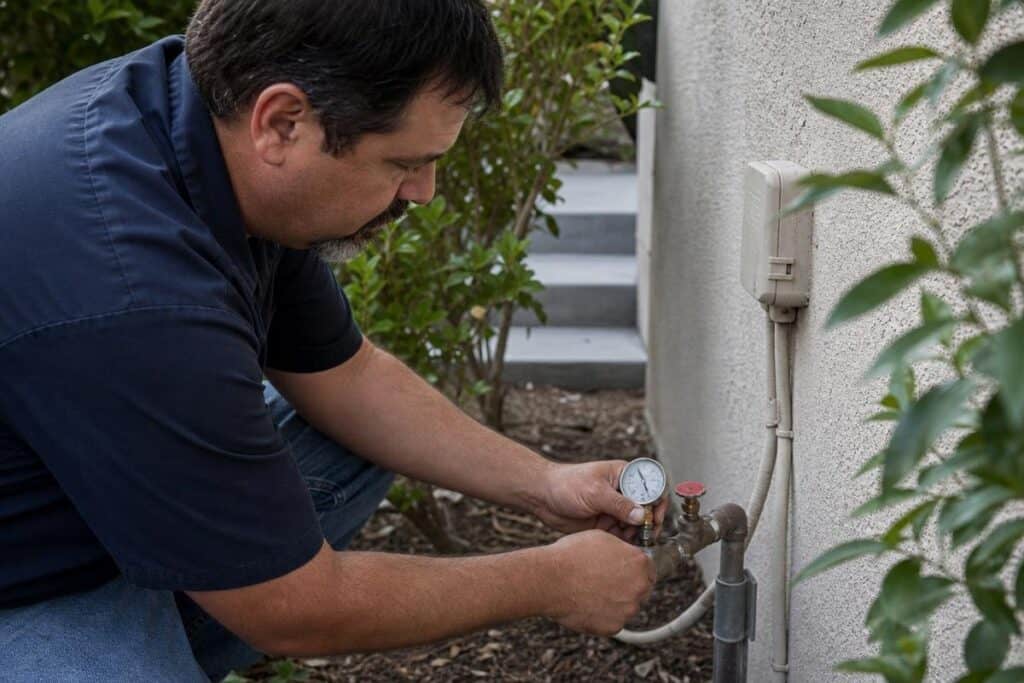
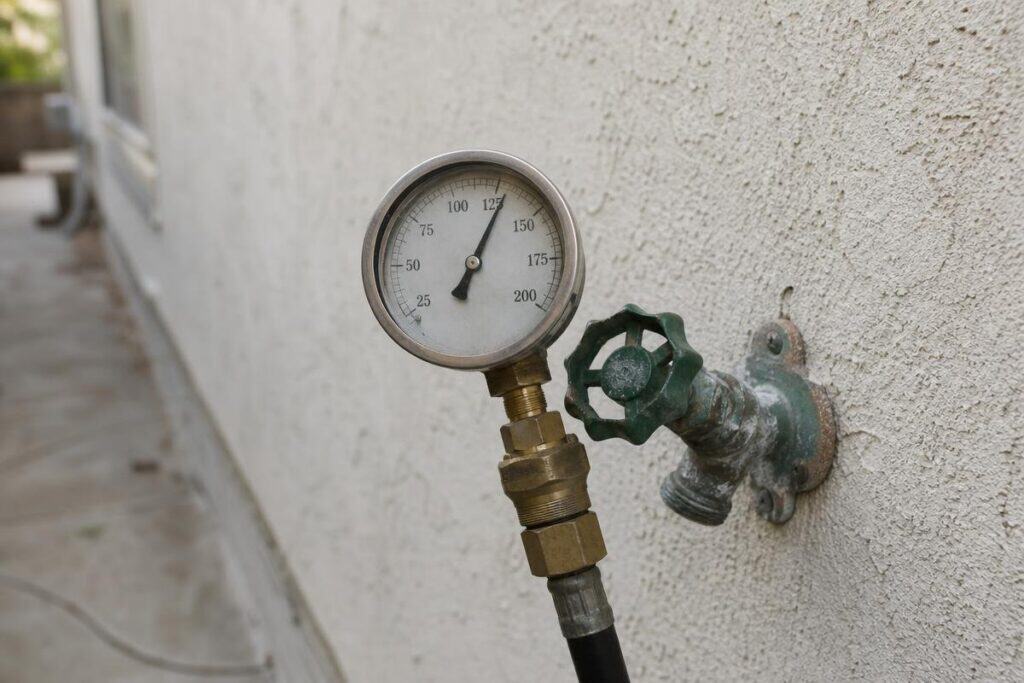
Normal residential pressure runs between 40 and 80 PSI (pounds per square inch). Below 40 PSI and you’ll notice weak flow at faucets and showers. Above 80 PSI and you risk damaging fixtures, appliances, and pipe fittings over time. The sweet spot for most homes is 50 to 70 PSI.
Ideal PSI Range for Murrieta Homes
The Rancho California Water District, which serves Murrieta and surrounding communities, targets a delivery pressure of 50 to 75 PSI at the meter. If your Murrieta home is reading below 40 PSI consistently, the district is most likely delivering adequate pressure. The drop is happening somewhere inside your own plumbing system. That distinction matters. It tells you the fix is on your side of the meter, not a call to the utility company.
How to Check Your Home’s Water Pressure
You do not need a plumber to get a baseline reading. Pick up a standard threaded pressure gauge at any hardware store. Thread it onto the hose bib closest to your main shutoff, usually on the side or rear of the house. Turn on the bib fully and read the dial. That number reflects your whole-house supply pressure.
Testing at a single bathroom faucet tells a different story. Low flow at one fixture usually points to a localized clog or a worn aerator, not a whole-house pressure problem. If the hose bib reads fine but a faucet runs weak, the issue is isolated. If the hose bib reads low, you have a broader problem worth a professional plumbing inspection to track down the source.
Why Is My Water Pressure Low All of a Sudden?
When pressure drops across the whole house at once, three culprits lead the list: a shutoff valve that shifted to a partially closed position, a pressure regulator that finally failed, or a break in the main supply line. A gradual decline over months usually points to mineral scale narrowing your pipes instead. Below we break down the eight causes we see most often, ranked from quick DIY fixes to jobs that need a licensed plumber.
The 8 Most Common Reasons Your Water Pressure Is Low
There are eight common low water pressure causes we see repeatedly in Murrieta homes and across the Inland Valley. Some you can fix yourself in five minutes. Others need a licensed plumber. Here is how to tell the difference.
Mineral Buildup Inside Your Pipes
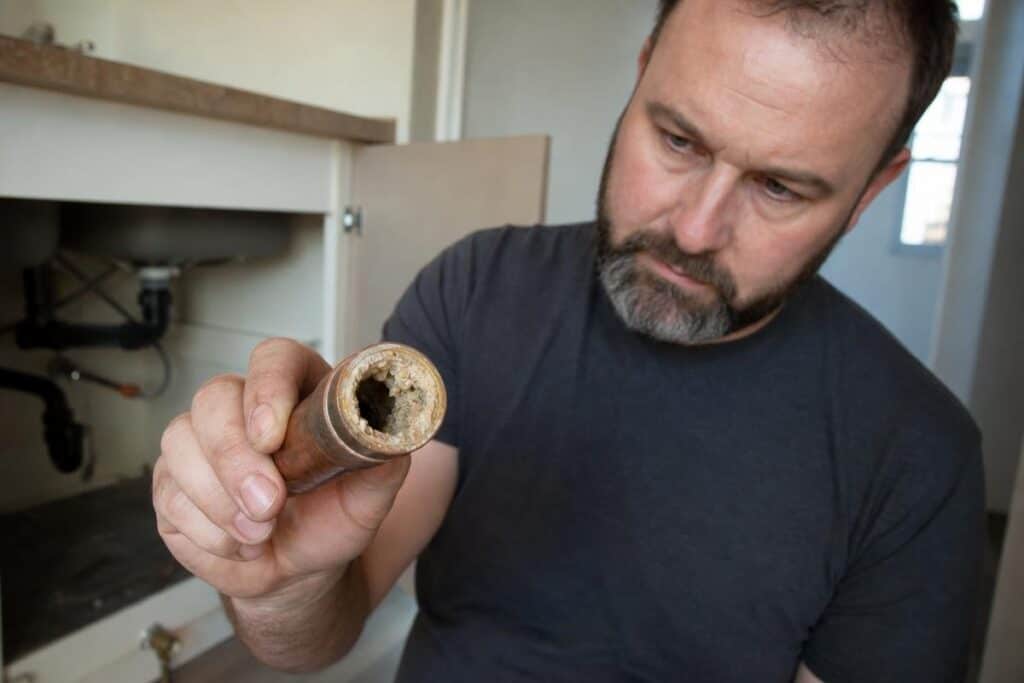
Southern California has some of the hardest tap water in the country. The Murrieta and Temecula corridor typically measures 15 to 25 grains per gallon, and that calcium and magnesium deposits on the interior walls of your pipes over time. A pipe that was once three-quarters of an inch across can shrink to a fraction of that opening after years of scale accumulation.
Pre-2005 homes are especially vulnerable because the buildup has had decades to grow. Our Flo-Tech descaling service clears that scale without tearing open walls, and whole-house water quality treatment slows the process down long-term.
A Failing Pressure Regulator Valve
Most homes in the area have a pressure regulator valve set between 50 and 70 PSI at installation. These valves last roughly 7 to 12 years before they start to fail. Many 1990s-era Murrieta tract homes were plumbed with Watts or Zurn regulators, and by now a large share of them are well past that service window.
When a PRV goes bad, you typically see a sudden whole-house pressure drop, not just one fixture. You can adjust the valve yourself with a wrench, but if adjustment does not restore pressure, the valve needs replacement. That is a job for a licensed plumber, not a DIY fix.
Partially Closed Shut-Off Valves
Your home has two main shut-off valves: one on the meter side owned by the water district, and one on the home side near where the main line enters the house. Either one being partially closed after a repair or meter reading will drop pressure throughout the whole house. Check both valves first before calling anyone. They should be fully open, turned all the way counterclockwise on a gate valve or parallel to the pipe on a ball valve.
Hidden Leaks Behind Walls or Under the Slab
A slab or wall leak bleeds system pressure constantly, even when no fixtures are running. Watch for unexplained spikes in your bill, warm or damp spots on the floor, or the sound of running supply lines when everything is off. These are signs you have a hidden leak pulling pressure away from your fixtures. Our blog covers practical ways to detect plumbing leaks in your home before they cause serious damage. Slab leak detection requires professional equipment, so call us if you suspect one.
Corroded Galvanized Pipes
Homes built before the mid-1980s in older parts of the region may still have galvanized steel supply lines. These pipes corrode from the inside out, and in severe cases the interior diameter narrows to near zero. You will notice consistently low pressure throughout the house, often with discolored water as well. Descaling will not fix this one. The permanent solution is full repiping installation. Our post on common plumbing issues in older homes explains what else to watch for in aging systems.
Peak Municipal Demand Hours
The Rancho California Water District targets delivery pressure of 50 to 75 PSI, but municipal pressure dips when everyone draws simultaneously. In Murrieta and surrounding areas, that happens between 6 to 9 AM and again from 5 to 8 PM. If your pressure is weak during those windows but normal at mid-morning or late evening, the supply side is the likely cause, not your pipes.
This is a supply-side issue you cannot fix at home, but confirming the pattern helps rule out an in-home problem.
Clogged Aerators and Showerheads
If only one or two fixtures have low flow, check the aerator screen on the faucet or the nozzles on the showerhead first. Mineral deposits from hard water clog these small openings quickly across the Inland Valley. Unscrew the aerator, soak it in white vinegar for 30 minutes, and reinstall. If pressure returns to that fixture, you found your problem. If every fixture in the house is weak, the issue is upstream.
Water Heater Supply Restrictions
Low pressure on hot supply only points directly to the heater. Sediment buildup in the tank, a partially closed heater supply valve, or a failing dip tube can all restrict hot flow without touching cold. This applies to both tank-style and tankless units. Start by checking that the supply valve on top of the heater is fully open. If that does not help, schedule water heater maintenance to flush sediment, or contact us about tankless water heater repair if you have a tankless system showing the same symptom.
Is It a DIY Fix or Time To Call a Plumber? A Quick Checklist
You can fix low water pressure yourself sometimes. Other times, you cannot. Here is how to tell the difference before you pick up the phone.
Things You Can Check and Fix Yourself
Start here. These checks take less than 30 minutes and cost nothing.
- Check both shut-off valves (at the meter and under the sink) and make sure they are fully open.
- Unscrew faucet aerators and rinse out any debris or mineral buildup.
- Soak your showerhead in white vinegar overnight to dissolve scale deposits. The hard water in the Murrieta and Temecula corridor runs 15 to 25 grains per gallon, so this step alone often restores flow.
- Test pressure at your main hose bib with a gauge. Rancho California Water District targets 50 to 75 PSI at delivery. If your reading is above 40 PSI, the problem is likely a single fixture, not your supply line.
- Confirm whether low pressure is whole-house or limited to one fixture. Isolated pressure loss almost always points to a clogged aerator or a partly closed valve.
Signs You Need a Licensed Plumber
Some low water pressure causes are not DIY territory. Call us if any of these apply. Read through the list carefully before deciding.
- Pressure is low at every fixture at the same time.
- You hear running water with all fixtures off. This can signal a hidden leak. Our post on what to do before the plumber arrives covers the right steps here.
- Your home was built before 1985 and has galvanized steel pipes. Many established neighborhoods in the area have exactly this.
- Your water bill has spiked with no change in usage.
- Aerators are clean, valves are fully open, but pressure is still low.
- Your pressure regulator valve is more than 10 years old or you cannot locate it.
If two or more items on that second list apply, it is time for a professional plumbing repair visit. Our goal is to give you the real answer, not to generate an unnecessary service call. Not sure if it’s your PRV or your pipes? Schedule a diagnostic visit and we will tell you exactly what’s wrong before any work begins.
Why Low Water Pressure Is a Bigger Problem in Southern California

Low water pressure problems are more common here than in most parts of the country. Southern California consistently ranks among the hardest water regions in the U.S. In the Murrieta and Temecula corridor, hardness levels typically run 15 to 25 grains per gallon. That is more than double the 7 GPG threshold considered hard. Neighboring communities across the Inland Valley see similar numbers. This is a regional pattern, not a one-street problem.
Hard Water Accelerates Pipe Scale Faster Here
Mineral buildup in pipes across the region moves faster than homeowners expect. At 15 to 25 GPG, scale accumulates inside supply lines and at fixture connections year after year. The result is a steadily narrowing flow path. You feel it as dropping pressure at the tap. A whole-house water quality treatment system or a properly functioning softener slows this down considerably. If your softener has not been serviced recently, our water softener repair service is a good place to start.
Aging Copper Lines in Murrieta’s Established Neighborhoods
Much of Murrieta’s residential development happened fast, through the late 1980s and into the 1990s, as tract communities filled in across the city. Those homes now have copper supply lines that are 30 to 40 years old. Copper holds up well in most conditions, but hard water accelerates pinhole leaks and scale buildup at fittings and valves. Older sections of the surrounding Inland Valley face the same situation.
If you are seeing pressure problems in a home built during that era, the pipes themselves may be the cause. Our guide on common plumbing issues in older homes covers what to watch for. When lines are too far gone, repiping is the long-term fix.
How We Care Plumbing, Heating and Air Diagnoses and Fixes Low Water Pressure

Our team has been solving pressure problems for homeowners across the Inland Valley since 2000. We know the pipe ages in Murrieta’s tract neighborhoods, the mineral content in the local supply, and the PRV failure patterns we see repeatedly in established communities throughout the region. When you call us about low pressure, we show up with a clear process, not guesswork.
What Happens During a Diagnostic Visit
Our plumbing inspection starts at the main line. We take a whole-house pressure reading first. That single number tells us whether the problem is inside your home or upstream. From there, we test individual fixtures to isolate where the drop occurs.
We check the pressure regulator valve, inspect all visible shut-off valves, and look for signs of active leaks or mineral debris around fittings. Technicians like Jacob, Chris, and Tyler walk you through what they find before touching anything. Customers consistently tell us they appreciate hearing the problem explained in plain language first.
Long-Term Solutions We Recommend
The fix depends on what the diagnosis shows. Here is what we typically recommend based on the root cause:
- PRV replacement: Usually a one-to-two hour job. A failing regulator is one of the most common causes of low pressure in homes built in the late 1980s and 1990s.
- Flo-Tech descaling: Our Flo-Tech descaling service clears mineral buildup from inside your pipes without opening walls. This is the right call when scale is restricting flow but the pipes themselves are still sound.
- Whole-house repiping: For lines with pinhole leaks or severe corrosion, full repiping is the lasting fix.
- Whole-house water treatment: Chronic hard-water scale calls for a whole-house water quality treatment system that stops the buildup from coming back.
We are based at 41085 Golden Gate Circle in Murrieta, CA 92562, which puts our team close to homeowners across the city. With a 4.8-star average across more than 8,400 reviews, we stand behind every diagnosis we make.
Frequently Asked Questions
Why Did My Water Pressure Drop Suddenly Across the Whole House?
Three things cause this most often. Your main shut-off valve shifted to a partially closed position, your pressure regulator valve failed, or there is a break in the main supply line. Check both shut-off valves first. If they are fully open and pressure is still low, call a licensed plumber right away.
Can Low Water Pressure Damage My Appliances?
Yes. Chronic low pressure stresses washing machine pumps and dishwasher spray arms over time. Tankless units need a minimum flow rate, typically 0.5 GPM, to activate the burner. Drop below that threshold and the unit will not fire. You get cold water and wear on the system. Our tankless water heater repair service can diagnose flow-related ignition failures quickly.
How Much Does It Cost to Fix Low Water Pressure?
It depends entirely on the cause. Cleaning a clogged aerator costs nothing. A pressure regulator valve replacement runs a few hundred dollars in parts and labor. Full repiping is a larger investment. We run a complete diagnosis before any work begins so you know exactly what you are dealing with.
How Do I Know If the Problem Is My Water District or My Home?
If neighbors on your street are also experiencing low pressure at the same time, contact your local district to check for a main-line issue or scheduled maintenance. If pressure is low only at your address, the problem is inside your home.
How Long Does a Pressure Regulator Valve Replacement Take?
A straightforward PRV replacement typically takes one to two hours for a licensed plumber. Supply to the home must be shut off during the repair. Most homeowners have flow restored the same day.
Will a Water Softener Fix My Low Water Pressure?
Not directly. A softener prevents the mineral scale buildup that slowly chokes your pipes over time. It does not increase existing pressure. For homes already dealing with scale, combining our water treatment system with a descaling service is the most effective long-term approach.
Low pressure rarely fixes itself. If you have worked through the checklist and flow is still weak, call our team at (951) 277-6848.
We will send a licensed plumber, run a full pressure diagnostic, and give you a clear answer before any work begins. Visit us at 41085 Golden Gate Circle, Murrieta, CA 92562, or book online. We Care Plumbing, Heating and Air is ready to help.
Ready to Get Started with We Care Plumbing, Heating and Air?
Call (951) 277-6848 to speak with our team directly. We’re ready to answer your questions, walk you through your options, and help you find the right solution for your needs. Whether you’re just starting to plan or ready to move forward, we’ll make the process simple and stress-free.
Reach out today and let’s talk about how we can help.