

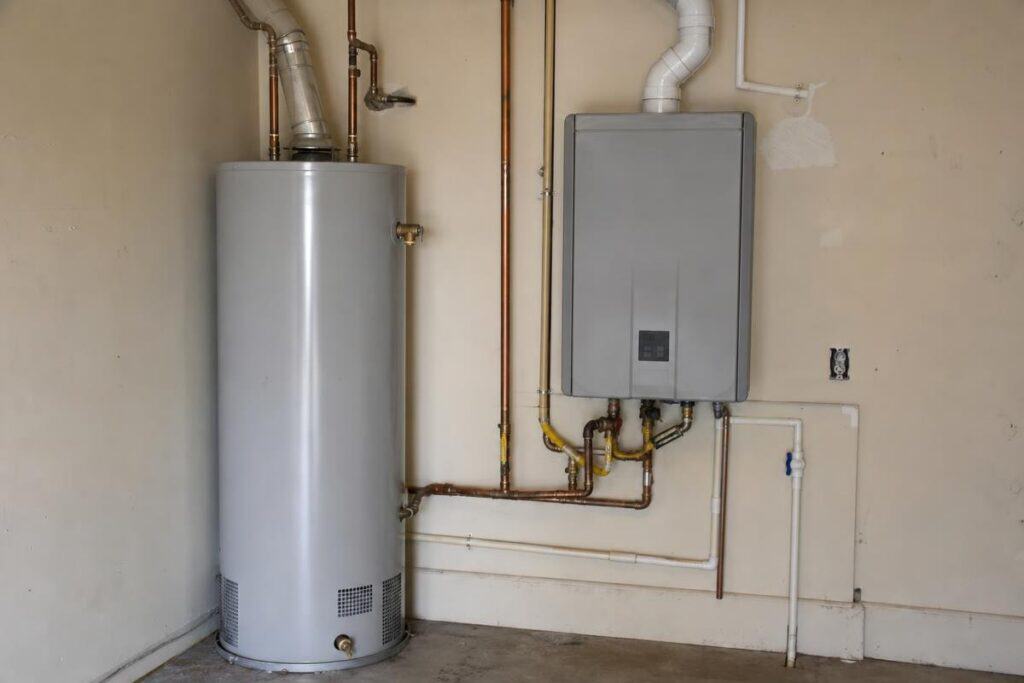
If your water heater is getting close to that 12-year mark, you’re probably weighing your options. The tank vs tankless water heater debate comes up constantly in Murrieta, and the right answer depends on your home, your budget, and your hot water habits.
We Care Plumbing, Heating and Air has been helping Riverside County homeowners make this call since 2000. We know the local water conditions supplied by Eastern Municipal Water District, the permit requirements, and what each system actually costs to install and run here. Not sure which water heater is right for your home? We can help you decide.
Key Takeaways
- Tank water heaters cost less upfront but typically need replacement every 10-12 years, and many Murrieta homes are at that threshold now.
- Tankless units heat water on demand, cutting energy use, but require a larger upfront investment and sometimes a gas line upgrade.
- Murrieta’s very hard water (15-25 GPG) accelerates scale buildup in both systems, making regular maintenance critical regardless of which type you choose.
- The right choice between a storage tank and an on-demand system depends on your household size, hot water demand, and available space.
- Installation costs in the Inland Empire typically range from $1,800 to $6,000 depending on system type and any required infrastructure upgrades.
Your tank water heater is 12 years old. It’s August along the Murrieta Hot Springs Road corridor, the AC is running hard, and you’re getting lukewarm showers. Sound familiar? That moment is exactly when homeowners across the area start asking whether to replace like-for-like or finally make the switch to tankless.
We’ve helped homeowners in Bear Creek, Copper Canyon, Greer Ranch, and neighborhoods throughout Murrieta face this same decision. The answer isn’t always the same. It depends on your home’s age, your household size, your water quality, and your budget. Below we cover how each system works, what each one actually costs, how our very hard local water affects both options, and a straight recommendation based on your situation. Our water heater installation and repair services cover all of it.
We Care Plumbing, Heating and Air, licensed with the CSLB (License #683053), has been doing this work since 2000. We’ll give you a real answer, not a sales pitch.
How Tank and Tankless Systems Work
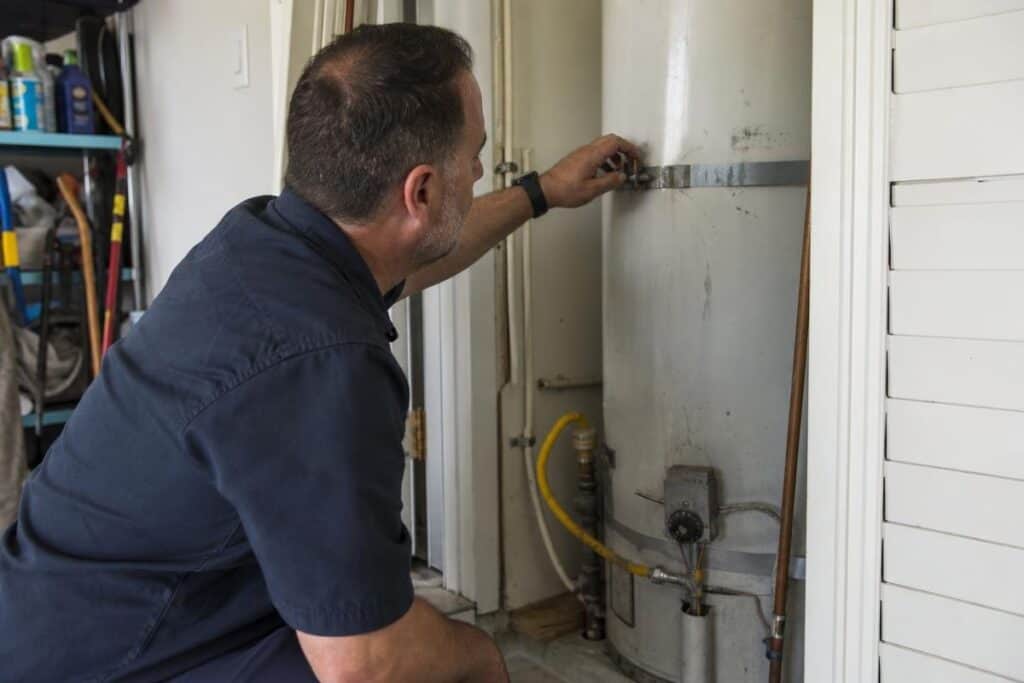
These two systems heat your water in completely different ways. Understanding the difference helps you make a smarter choice for your home and your budget. Here is the quick side-by-side before we get into the details.
Factor | Storage Tank | Tankless (On-Demand) |
|---|---|---|
Upfront cost (installed) | $800 to $1,600 | $1,300 to $3,500+ |
Lifespan | 8 to 12 years | 18 to 20 years |
Energy efficiency | Standby heat loss reduces efficiency | 24% to 34% more efficient for typical use |
Space required | Roughly 60 in. tall floor unit | Wall-mounted, about the size of a carry-on |
Hot water supply | Limited to tank capacity | Continuous, limited by GPM rating |
How a Storage Tank Water Heater Works
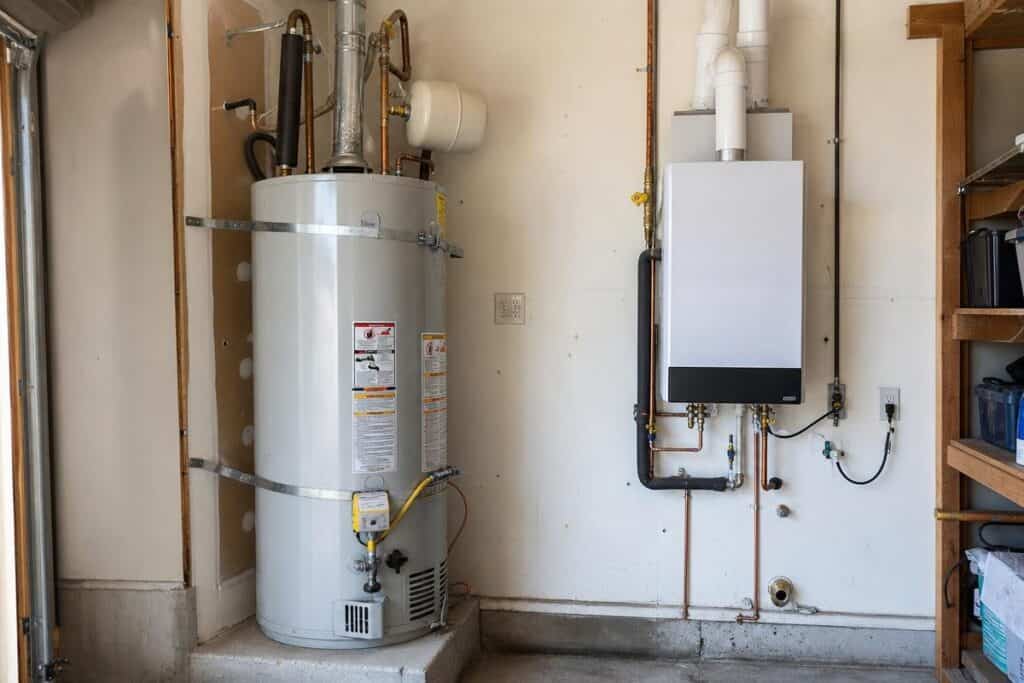
A storage tank unit holds between 30 and 80 gallons of water. It heats that water and keeps it hot around the clock, typically between 120 and 140 degrees Fahrenheit. A burner or heating element cycles on and off all day to maintain that temperature, even when nobody in the house is using hot water. That constant reheating is called standby heat loss, and it costs you money every month whether you use the hot water or not.
Tank units run on natural gas, propane, or electricity. Around Murrieta, gas models heat faster and generally cost less to operate given local utility rates. Most tank water heaters last 8 to 12 years. Many homes in the Historic Old Town Murrieta area and in neighborhoods off Murrieta Hot Springs Road built in the 1980s and 1990s still have original tank units approaching or past that mark right now in 2026.
How a Tankless Water Heater Works
A tankless unit, sometimes called an on-demand water heater, works differently. There is no storage tank. When you open a hot tap, cold water flows through a heat exchanger inside the unit. That exchanger fires up instantly and heats the water as it passes through. When you close the tap, the unit shuts off completely. No stored water means no standby heat loss.
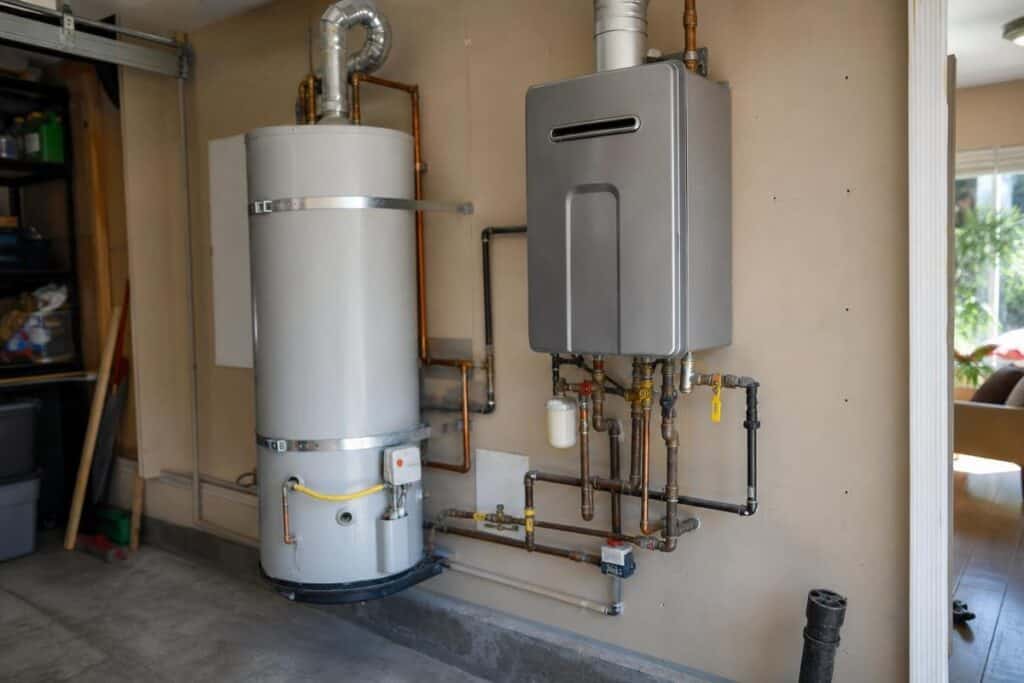
Tankless units are wall-mounted and roughly the size of a large carry-on suitcase. That smaller footprint is a real advantage in tighter utility spaces. However, switching from a tank to a tankless system is not always a straight swap. Many older Murrieta homes, particularly those built before the 1990s, have undersized gas lines that need upgrading before a tankless unit can run properly. Electric tankless models often require a panel upgrade too.
These are real added costs that homeowners frequently miss when comparing sticker prices. A professional plumbing inspection before you commit can save you from an expensive surprise. Not sure if your gas line can handle a tankless conversion? Call (951) 277-6848 and we’ll check before you buy.
If you already have a tankless system and need service, our tankless water heater repair team handles diagnostics, parts, and maintenance across our service area.
What Does Each System Cost? Purchase, Installation, and Long-Term
Upfront Purchase and Installation Costs
Let’s talk real numbers. A standard gas tank water heater (40-50 gallon) runs $500-$1,000 for the unit. Add labor and you’re looking at $800-$1,600 installed in the Inland Empire. That’s a straightforward swap in most homes.
A whole-home gas tankless unit is a different story. Brands like Navien, Rinnai, and Noritz are common here in California. The unit itself runs $800-$2,000. Labor adds $500-$1,500, especially if gas line or venting work is needed. Total installed cost: $1,300-$3,500. In older Murrieta neighborhoods with undersized original gas lines, that number can climb. Electric tankless units have lower unit costs, but a panel upgrade to 200-amp service can add $1,000-$3,000 to the project.
Permits are required under California Title 24 energy code, and the City of Murrieta enforces that just as every jurisdiction in Riverside County does. We handle the permit process as part of professional water heater installation, so you don’t have to chase paperwork. Want firm numbers for your home instead of a range?
Long-Term Operating Costs and Payback Time
The U.S. Department of Energy estimates tankless units are 24-34% more energy efficient for homes using 41 gallons or less per day. For high-usage homes above 86 gallons daily, that advantage narrows to 8-14%. Typical monthly gas savings run $5-$15, putting payback time at roughly 7-12 years.
Here in Riverside County, SoCalGas rates are among the highest in the nation. That makes even modest monthly savings add up faster than they would in a lower-rate state. Over 20 years, total cost of ownership often favors tankless. Hard water throughout Murrieta accelerates scale buildup in both systems, which affects efficiency and lifespan over time (more on that in the next section).
Annual maintenance matters for both types. Skipping it costs you more in the long run. Our water heater maintenance service keeps both tank and tankless systems running at peak efficiency, protecting your investment year after year.
Why Murrieta’s Hard Water Changes the Equation

Water hardness in Murrieta runs between 15 and 25 grains per gallon (GPG). That puts our region firmly in the “very hard” category. Anything above 10.5 GPG qualifies. Eastern Municipal Water District blends imported supply with local groundwater, and both run mineral-heavy. That mineral load is the single biggest factor shaping how long any water heater lasts here, whether it has a tank or not.
What Hard Water Does to Tank and Tankless Systems
In a storage tank unit, minerals drop out of the water and settle on the tank floor as sediment. That layer sits between the burner and the water, forcing longer and hotter cycles to reach temperature. You may hear rumbling or popping sounds. That is the burner working through the buildup. Efficiency drops 25 to 40 percent before the unit finally fails early.
Tankless units fail differently. Scale coats the narrow passages inside the heat exchanger. Flow slows, error codes appear, and if the buildup goes untreated long enough, the heat exchanger can crack. We have pulled scale-packed exchangers out of Murrieta homes that were only five or six years old. The best water heater for hard water conditions is not just about the unit you pick. It is about how you maintain it.
How Murrieta Homeowners Can Protect Their Investment
For tank units, flush the tank annually to clear sediment. Replace the anode rod every three to five years. Hard water burns through anode rods faster than the manufacturer’s standard schedule assumes, so do not skip this step.
For on-demand water heaters, descale the heat exchanger at least once a year. In very hard water zones like ours, every six months is smarter. Our team uses a citric acid pump-and-flush process. You can see the details on our Flo-Tech descaling service page. The highest-ROI upgrade for any system here is a whole-home water softener installed upstream. It protects the water heater and every fixture in the house.
Our water quality treatment options cover softeners and filtration systems sized for local water conditions.
Performance Differences That Actually Matter Day to Day
Most homeowners don’t think about their water heater until someone gets a cold shower. That’s the real test. Not energy ratings or price sheets. Just: does everyone in the house get hot water when they need it?
Hot Water Supply and Recovery Rate
A standard 50-gallon tank holds roughly 35 to 40 gallons of usable hot water before cold water starts mixing in. For a family of four in Murrieta, that means two back-to-back showers plus a running dishwasher can push you right to the limit. Gas tanks recover in 30 to 40 minutes. Electric tanks take 60 to 80 minutes. That lukewarm stretch in between is the complaint we hear most.
Tankless units heat water on demand, so supply is theoretically unlimited. But “unlimited” depends on the unit’s GPM rating. A typical residential gas tankless unit delivers 6 to 10 GPM. Run two showers, a dishwasher, and a washing machine at the same time and you can exceed that capacity. The result is the “cold water sandwich” effect: a brief burst of cold water between hot draws. Proper sizing matters.
Larger homes in Greer Ranch and Copper Canyon with three or more bathrooms often need a 9 to 10 GPM unit, sometimes paired with a small buffer tank to handle simultaneous demand. Our team can help you size it correctly before installation. See our tankless water heater repair and service page for what ongoing care looks like after install.
Space, Flexibility, and Home Fit
A 50-gallon tank runs about 60 inches tall and 20 inches wide. In newer Murrieta tract homes with finished garages, that footprint is a real problem. A tankless unit is roughly 20 by 14 by 6 inches and mounts on a wall. Our mild inland climate also means tankless units can go on an exterior wall outdoors, which frees up interior utility space entirely.
Large single-story homes are a different challenge. If the water heater is far from the master bath, you’re waiting a long time for hot water to travel through the pipes. A recirculation pump solves that. It keeps hot water circulating near the fixtures so you’re not running the tap for 90 seconds. Scheduling a plumbing inspection before you decide helps us flag these layout issues before they become post-install surprises.
Not sure which system fits your home’s layout and demand? Call us at (951) 277-6848 and we’ll walk you through it.
Which Water Heater Is the Right Choice for Your Home?
The right answer depends on your home, your household size, and how long you plan to stay. There is no universal winner when you weigh a storage tank against an on-demand system. But there is a right answer for your specific situation. Here is how to think through it.
When a Tank Water Heater Makes More Sense
Stick with a tank if budget is your primary concern right now. A like-for-like tank replacement costs significantly less upfront, and that gap matters if you are selling the home in the next few years or managing a rental property. You will not recoup the tankless premium on a short timeline.
A tank also makes sense if your existing gas line is undersized. Upgrading that line adds real cost to any tankless project. Our NATE-certified technicians assess your gas supply, venting, and water hardness before recommending anything. That assessment saves you from an expensive surprise mid-installation. A professional plumbing inspection before you commit is always worth it.
Tank systems also hold up well for households that use hot water in concentrated morning bursts with long quiet periods in between. The storage model fits that pattern naturally.
When Tankless Is the Better Investment
If you plan to stay in your home for ten or more years, tankless pays off. Families of four or more who regularly run out of hot water are strong candidates. So are homeowners who are adding solar PV. An electric tankless unit can offset your water heating load with daytime solar generation, which is a smart pairing under our abundant inland sun.
Timing matters too. If you already have a kitchen or bathroom remodel planned, that is the moment to switch. Walls are open. Gas lines may already be exposed. Our team can handle the full kitchen plumbing installation alongside the water heater upgrade, which keeps labor costs down.
Whichever direction you go, annual water heater maintenance extends the life of either system significantly. Our crew has been installing and servicing water heaters here since 2000. We know what fits and what lasts.
Water Heater Decisions Across Murrieta Neighborhoods
Your neighborhood and your home’s age matter more than most people realize. We serve communities all across Southwest Riverside County, and each area has its own patterns. Here is what we see on the ground in Murrieta.
215 Corridor and Southwest Neighborhoods
A large portion of homes along the 215 corridor were built between 1995 and 2010. In 2026, many of those original tank units are at or past the 12-year mark. That is the natural replacement window. If your home falls in that build era, now is a smart time to schedule a professional plumbing inspection before you end up with an emergency replacement instead of a planned one.
Greer Ranch and Larger Custom Homes
Larger custom homes in Greer Ranch and the hillside neighborhoods frequently have four or more bathrooms and significant square footage. Those homes need serious hot water output. Tankless units rated at 9 to 10 GPM are often the right fit. Undersizing here is a common mistake we see corrected after the fact.
Historic Old Town and Older Build-Era Homes
Homes around Historic Old Town Murrieta and other pre-1990 pockets often have smaller utility closets and original undersized gas lines. A tankless conversion may require a gas line upgrade before installation. A plumbing inspection first saves you from surprise costs mid-project.
Newer Master-Planned Communities Like Copper Canyon
Newer construction in communities such as Copper Canyon sometimes came with tankless units already installed. In those homes, we get more tankless water heater repair and maintenance calls than full replacements. Annual servicing keeps those systems running efficiently.
Our team is based at 41085 Golden Gate Circle in Murrieta, CA 92562. We go the extra mile for homeowners across the entire region.
Frequently Asked Questions
How long does a tankless water heater last compared to a tank unit?
A properly maintained tankless unit lasts 18 to 20 years. A storage tank unit typically lasts 8 to 12 years. The word “maintained” is doing real work in that sentence. In areas with hard water like Murrieta and Southwest Riverside County, annual descaling is non-negotiable. Skip it, and that lifespan drops fast. Our annual water heater maintenance service keeps both types running at full efficiency.
Does hard water in Murrieta void a tankless water heater warranty?
Yes, it can. Navien, Rinnai, and Noritz all have warranty language that excludes scale damage caused by failure to maintain the unit. Most dealers don’t mention this at the point of sale. If you have hard water and skip annual descaling, a warranty claim can be denied. Pair your tankless unit with a water softener and schedule professional descaling service every year. That combination protects both the unit and your warranty coverage.
Can I switch from a tank to a tankless water heater in the same location?
Rarely a direct swap. A gas tankless unit needs a 3/4-inch or 1-inch gas line. Most tank water heaters run on a 1/2-inch line. Venting requirements are also different. Electric tankless units often require a panel upgrade. Get a professional plumbing inspection before you purchase anything. Buying the unit first and then finding out your infrastructure needs upgrading is an expensive order of operations.
How much does it cost to install a tankless water heater in Murrieta, CA?
For a gas tankless water heater installation in Murrieta, expect a total installed cost of $1,300 to $3,500. That range includes the unit, labor, and standard venting. If your gas line needs upgrading or your electrical panel requires work for an electric model, costs rise from there. We give you a clear price before any work begins. No surprise invoices.
Do tankless water heaters work with solar energy systems?
Electric tankless units pair well with residential solar PV. Your water heating load can run on daytime generation, which is a real advantage for homeowners in a sunny inland community like Murrieta. Gas tankless units don’t run on solar electricity directly, but they still reduce your overall energy consumption compared to a storage tank.
What size tankless water heater do I need for a family of four in Murrieta?
For a 3 to 4 bathroom home with four occupants, an 8 to 10 GPM gas unit is the right starting point. Local groundwater temperatures run 65 to 70 degrees Fahrenheit in summer, which reduces the heating lift the unit has to do. That’s an advantage for sizing. Larger custom homes with higher demand may need a 10 GPM unit or a dual-unit setup.
Ready to stop guessing and get a straight answer for your home? Call We Care Plumbing, Heating and Air at (951) 277-6848 or schedule online. Our NATE-certified technicians will assess your gas line, venting, water hardness, and household demand before recommending a single unit. No surprise invoices. No pressure. Just a clear recommendation and a licensed install done right.
We serve Murrieta, Temecula, Orange, San Marcos, and the surrounding communities from our office at 41085 Golden Gate Circle, Murrieta, CA 92562.
Ready to Get Started with We Care Plumbing, Heating and Air?
Call (951) 277-6848 to speak with our team directly. We’re ready to answer your questions, walk you through your options, and help you find the right solution for your needs. Whether you’re just starting to plan or ready to move forward, we’ll make the process simple and stress-free. Reach out today and let’s talk about how we can help.