

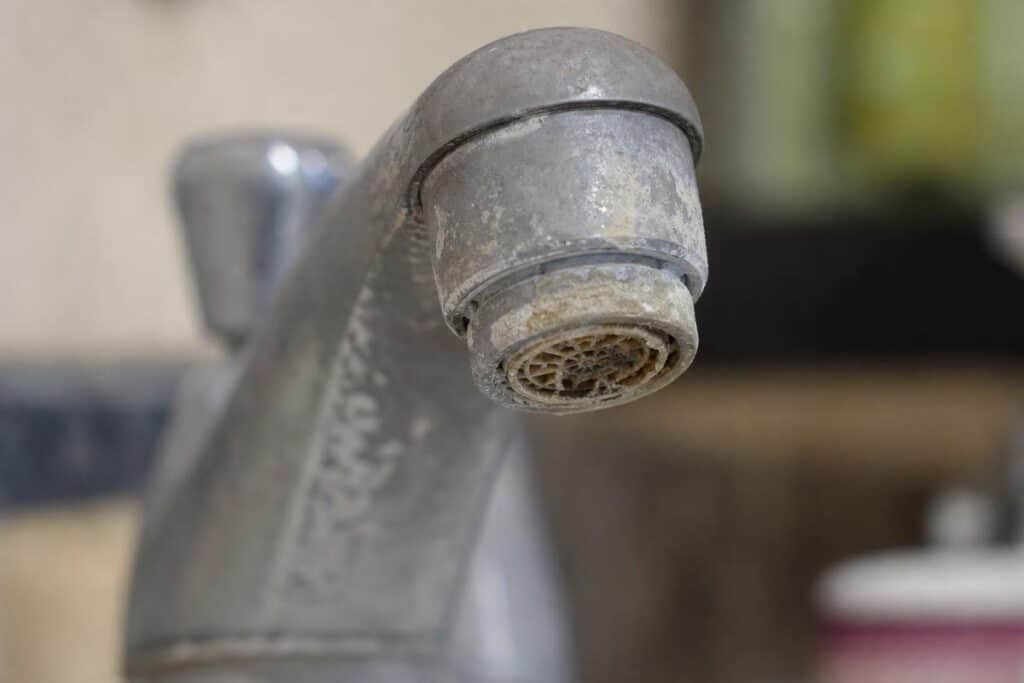
Murrieta water is hard. That’s not an opinion; it’s a measurement. Homes in the 92562 and 92563 zip codes regularly see hardness readings between 177 mg/L and 241 mg/L, putting local water squarely in the “hard” to “very hard” range. Those numbers matter because high water hardness levels quietly damage water heaters, clog pipes, and shorten the life of appliances you depend on every day. We Care Plumbing, Heating and Air has been working with Murrieta homeowners since 2000, installing and servicing softeners in neighborhoods from Greer Ranch to Copper Canyon, and we see the effects of the local water supply in homes across this community every week.
Find out what Murrieta’s water hardness is doing to your plumbing and what you can do about it.
Key Takeaways
- Murrieta water hardness levels commonly range from 177 to 241 mg/L, which is classified as hard to very hard.
- Hard water leaves mineral scale inside pipes, water heaters, and appliances, reducing efficiency and shortening their lifespan.
- Older homes with copper or galvanized pipes face compounded risk after decades of hard water exposure.
- A whole-home water softener or filtration system is the most effective way to protect your plumbing long term.
Understanding the Water Hardness Scale: What PPM and GPG Actually Mean
Water hardness levels are measured in two units you will see constantly: PPM (parts per million, which is the same as mg/L) and GPG (grains per gallon). Your local Consumer Confidence Report uses mg/L. Your water softener manual asks for GPG. They are measuring the same thing, just in different units, and knowing how to read both saves a lot of confusion.
The quick rule to remember: anything above 120 mg/L puts you in hard water territory. Homes in Riverside and San Bernardino counties regularly test above that line, and the numbers matter because hard and very hard water cause real, documented damage to pipes, water heaters, and appliances over time.
The Standard Hardness Classification Chart
The Water Quality Association and USGS both use a four-tier scale. Here is how it breaks down:
Classification | PPM / mg/L | Grains Per Gallon (GPG)
|
|---|---|---|
Soft | 0 to 60 mg/L | 0 to 3.5 GPG |
Moderately Hard | 61 to 120 mg/L | 3.5 to 7 GPG |
Hard | 121 to 180 mg/L | 7 to 10.5 GPG |
Very Hard | 181+ mg/L | 10.5+ GPG |
Moderately hard water has minimal measurable impact on appliances. Once you cross into the Hard row, scale buildup becomes an active problem. Very hard water accelerates that damage significantly, shortening the life of your water heater and other equipment faster than most homeowners expect.
How to Convert Between PPM, mg/L, and Grains Per Gallon
PPM and mg/L are effectively the same number, so no conversion is needed between those two. To convert mg/L to GPG, divide by 17.1. That is the only formula you need.
For example: 177 mg/L divided by 17.1 equals approximately 10.3 GPG. Some zones in the Inland Empire test as high as 241 mg/L, which works out to about 14.1 GPG. Both of those figures land in the Hard to Very Hard range on the table above. If your water softener settings ask for GPG and your report gives you mg/L, just divide by 17.1 and you have the number you need.
Murrieta’s Water Hardness Numbers: Where Does Your Home Actually Stand?
Where Murrieta’s Water Comes From and Why It Runs Hard
Water in zip codes 92562 and 92563 comes primarily from the Rancho California Water District, which blends imported Colorado River water with local groundwater. Both sources travel through limestone and mineral-rich geology before reaching your tap. That means high dissolved calcium and magnesium is a geological fact, not a sign that something went wrong at the treatment plant.
Colorado River water is naturally loaded with calcium and magnesium carbonate. By the time it reaches homes in the Temecula Valley corridor, those minerals are already concentrated. There is no filtration process that strips hardness at the district level, so what comes out of your faucet reflects what was in the ground to begin with.
Hardness is not the only concern worth knowing about. PFAS compounds, a group of synthetic chemicals, have been detected in some local water samples above EPA advisory levels. That is a separate issue from hardness, but it is a real reason to consider whole-home water filtration rather than a softener alone.
Hardness Readings Across Murrieta Zip Codes
Here is what the actual numbers look like across service areas in the Inland Empire’s southwest corner:
- Typical baseline: 177 mg/L (10.3 GPG), classified as hard
- Seasonal or zone peaks: Up to 241 mg/L (14.1 GPG), classified as very hard
- Private wells in surrounding unincorporated areas: Readings can run even higher depending on local geology
Remember that anything above the 120 mg/L line already counts as hard water. Nearly every home on the district’s mains is running well beyond that threshold every single day.
Established neighborhoods like Bear Creek, built out largely in the 1980s and 1990s, cover a large share of the residential stock in this area. Those homes have copper and galvanized supply lines that have been exposed to this water for 30 to 40 years. Scale buildup inside those pipes is cumulative. A plumbing inspection can show you exactly how much scale has already built up inside your pipes before it causes a bigger problem.
For address-specific data, request your annual Consumer Confidence Report directly from the water district. It breaks down hardness and contaminant readings by service zone.
Wondering how much scale is already inside your pipes? Schedule a plumbing inspection and we’ll show you exactly what decades of hard water have left behind.
What Does Hard Water Do to Pipes, Appliances, and Water Heaters?
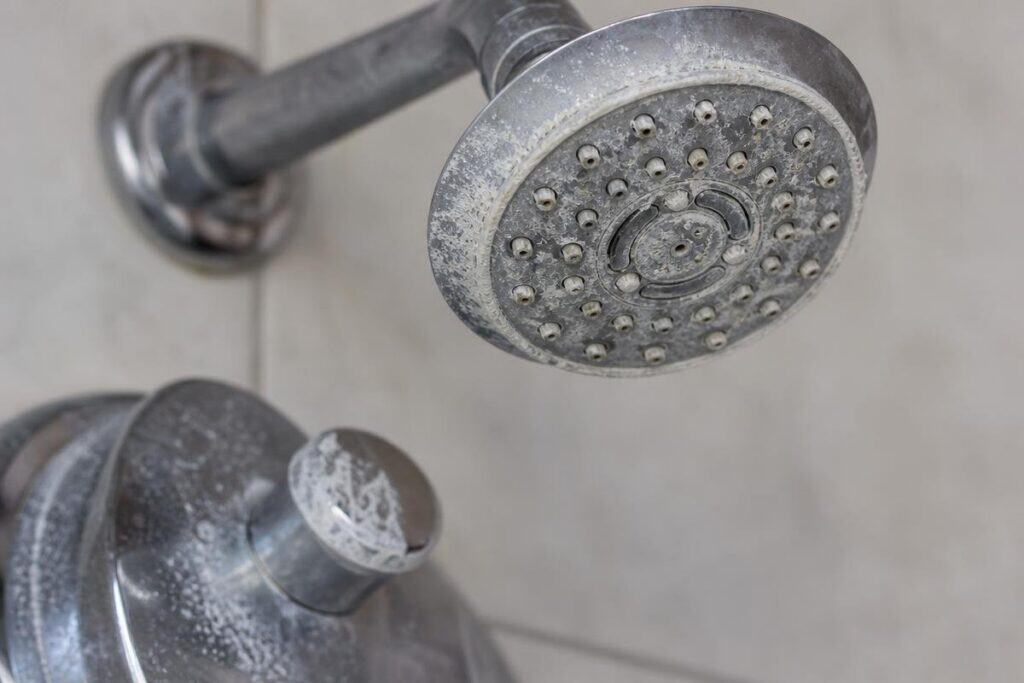
At 14 GPG, those peak readings are anything but harmless: the effects on plumbing in Riverside County homes are not slow or subtle. Calcium carbonate deposits, called limescale, start building inside your pipes, fixtures, and appliances from the first day hard water flows through them. Homes in Temecula and across the Inland Empire face the same problem. The damage is real, measurable, and it compounds over time.
Scale Buildup in Pipes, Fixtures, and Appliances
Limescale narrows the inside diameter of your pipes over time. Less diameter means less flow and lower water pressure at the tap. Showerheads and faucet aerators can clog visibly within just a few months at these hardness levels. Your dishwasher and washing machine develop scale on their heating elements, which shortens their working life.
Older homes across Menifee, Temecula, and surrounding communities may already have copper or galvanized supply lines carrying 30 to 40 years of mineral buildup. If you notice reduced water pressure or slow drains, our hydro jetting service can clear scale and restore flow without tearing into your walls.
Hard Water and Your Water Heater
Your water heater takes the hardest financial hit. Limescale settles on the tank bottom or coats the heating element, acting as insulation between the burner and the water. The unit runs longer to reach your set temperature. That extra run time can push energy consumption up by 20 to 30 percent compared to a scale-free system.
Tankless units are even more vulnerable. Scale restricts the narrow passages inside the heat exchanger, triggering error codes and reducing output. Routine water heater maintenance that includes descaling can extend the life of your unit significantly. If your tankless system is already throwing faults, our tankless water heater repair service can diagnose the issue and clear the restriction.
Skin, Hair, and Laundry: The Household Effects You Feel Every Day
Hard water reacts with soap to form a calcium soap scum instead of a proper lather. That film stays on your skin and hair after rinsing. Many families in Perris and San Jacinto notice dry, itchy skin and dull, lifeless hair without ever connecting it to their water supply.
Your laundry suffers too. Mineral deposits trapped in fabric fibers stiffen clothes and fade colors faster than normal. Dishes and glassware come out of the dishwasher with a white haze that no amount of rinsing removes. These are not cleaning problems. They are Murrieta hard water problems, and they have a direct solution.
How to Test Your Water Hardness at Home (and When to Call a Pro)
You can test your water hardness at home in about five minutes. The question is whether that test tells you enough to make a smart decision about treatment.
DIY Test Kits: What They Tell You and What They Miss
Basic test strips cost $10 to $20 at most hardware stores. You dip the strip, wait a few seconds, and match the color to a chart that shows water hardness PPM or GPG. For homeowners in Temecula and the surrounding southwest Riverside County area, the result is rarely a surprise. The strip almost always lands in the hard to very hard range, which lines up with what the district’s published data already shows.
But strips have real limits. They measure total hardness only. They cannot detect PFAS, chloramines, nitrates, or other contaminants that treated water may carry. They also cannot tell you how much scale has already built up inside your pipes or around your water heater. That information matters a lot, especially in homes from the 1980s and 1990s with copper or galvanized supply lines that have been exposed to hard water for decades.
One free resource worth knowing: the Rancho California Water District publishes an annual Consumer Confidence Report with detailed hardness and contaminant data. You can request the report for your specific address directly through the district at no cost.
What a Professional Water Test Reveals
A professional water quality treatment assessment goes well beyond hardness. Our team checks pH, total dissolved solids (TDS), chlorine and chloramine levels, iron, manganese, and local contaminants of concern including PFAS. That full picture is what determines which treatment system actually fits your home.
A salt-based softener handles hardness well but does nothing for PFAS. A whole-home reverse osmosis or carbon filtration system covers a broader range of contaminants. Without a multi-parameter test, you are guessing. If you want answers specific to your home, call us at (951) 277-6848 to schedule a professional water assessment.
Not sure what’s really in your water? We test for hardness, PFAS, chloramines, and more. Call (951) 277-6848 to schedule a professional water quality assessment.
Your Hard Water Solutions Guide: From Water Softeners to Whole-Home Filtration
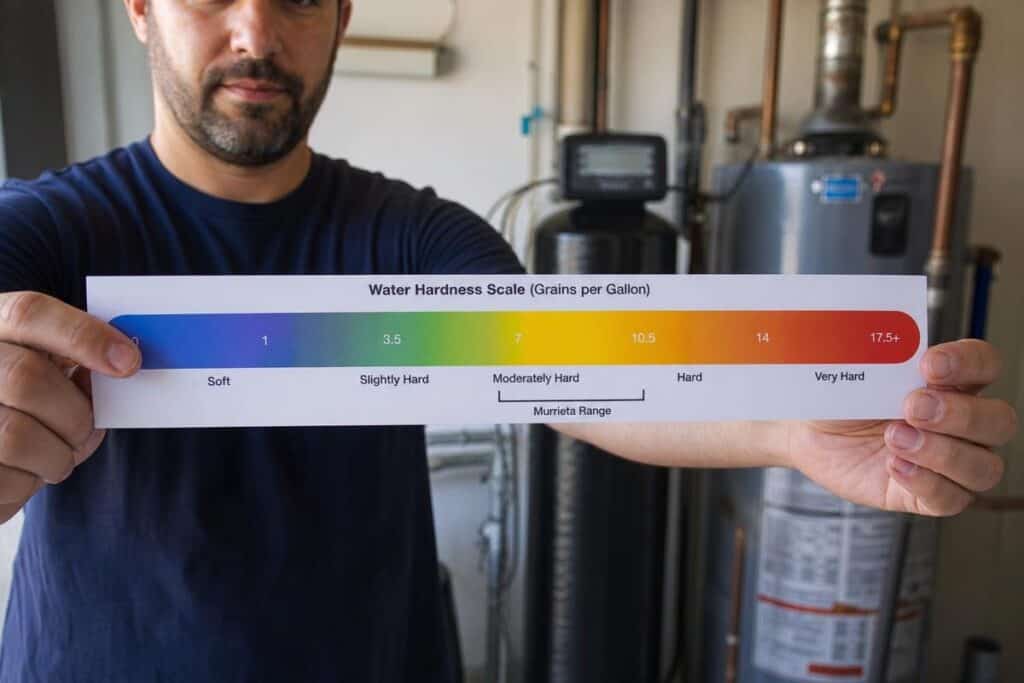
At those peak readings of 14 GPG, the water coming into homes across Temecula and the surrounding Southwest Riverside County area is firmly in the hard to very hard range. That level of hardness causes real damage over time, and a single solution does not always cover every concern. Here is a plain breakdown of your main options so you can choose what actually fits your home.
Salt-Based Ion Exchange Water Softeners
Salt-based ion exchange is the most effective treatment for hardness above 7 GPG. The system swaps calcium and magnesium ions for sodium ions as water passes through a resin tank. Scale stops forming. Soap lathers better. Your skin feels different after the first shower.
For a family of four at 12 GPG, you typically need a 32,000 to 48,000 grain capacity unit. It will regenerate every 7 to 10 days depending on water use. If you already have a softener that is not keeping up, our water softener repair service can diagnose whether it is undersized, needs new resin, or has a control valve issue.
Salt-Free Conditioners and TAC Systems
Template-assisted crystallization (TAC) systems do not remove minerals. Instead, they change the structure of calcium carbonate so it forms aragonite crystals that pass through your pipes without sticking. No salt, no electricity, no brine discharge into the sewer.
This is a good fit if you are on a low-sodium diet or if your HOA restricts softener discharge. The trade-off is honest: your soap lather and skin feel will not improve the way they do with a salt-based system. Scale protection is solid, but the experience is different.
Whole-Home Filtration and Reverse Osmosis
Hardness is not the only water quality concern in this area. PFAS contamination has been detected in some local water samples above EPA advisory levels. A softener alone does not remove PFAS. That is why many families in communities like Menifee and San Jacinto choose a combined approach: a softener for hardness plus a carbon block or reverse osmosis (RO) system for chemical contaminants.
A whole-home RO system treats every tap. An under-sink RO unit treats only your drinking and cooking water. For most households, the softener plus under-sink RO combination is the most cost-effective starting point. If your pipes already carry years of scale buildup, our Flo-Tech descaling service can restore flow before a new softener goes in. You can also explore our full plumbing installation services if you are adding a filtration system from scratch.
Ready to stop scale before it starts? Get a water softener quote sized for your household and your hardness level.
Hard Water in Murrieta Homes: What Local Homeowners Should Know
We have been working inside homes in this zip code since 2000, and the pattern is consistent. The effects on plumbing here do not show up all at once. They build quietly over decades, and by the time a homeowner notices something is wrong, the damage is already compounding. Every technician we send out is licensed, background-checked, and trained on the specific water conditions in this valley.
Older Homes and Pipe Materials: A Compounding Problem
A large share of the housing stock in established Southwest Riverside County neighborhoods was built between 1980 and 1999. That means copper supply lines in many of these homes have been absorbing mineral deposits for 30 to 40 years straight. Internal scale narrows the pipe, traps moisture against the walls, and creates the conditions for pinhole corrosion.
Galvanized steel pipes, found in some pre-1990 builds, face an even steeper challenge. Scale and corrosion work together inside those pipes simultaneously. If you are seeing signs of aging plumbing like low pressure or discolored water, the pipe interior may be the reason. In some cases, whole-home repiping is the more cost-effective long-term solution rather than treating pipes that are already compromised.
Before spending money on a water softener, schedule a plumbing inspection. You want to know what condition your pipes are in before you start protecting them.
Hard Water’s Hidden Impact on HVAC and Indoor Air Quality
Most homeowners think of Murrieta hard water as a plumbing problem. It affects your HVAC system too. When hard water evaporates inside humidifiers or evaporative coolers, it leaves behind mineral residue. That residue can settle into ductwork and onto system components over time.
Whole-home humidifiers connected to hard water lines scale up fast. Output drops, maintenance intervals shorten, and in some cases mineral particulates enter the air supply. If you are considering whole-home humidifier installation, water quality is a real factor in which system and setup makes sense for your home.
Southern California’s dry climate makes humidity control important. Just make sure the water feeding that equipment is not working against it.
Frequently Asked Questions
What is the water hardness level in Murrieta, CA?
Water in the 92562 and 92563 zip codes typically tests between 177 mg/L and 241 mg/L, or roughly 10.3 to 14.1 GPG. That puts most homes in the hard to very hard range on the standard water hardness scale. You can request your Consumer Confidence Report directly from the district, or pick up a test strip at any hardware store for a quick reading at your tap.
Is hard water in this area safe to drink?
Yes. Calcium and magnesium are minerals your body actually uses, and the EPA does not classify hardness as a health contaminant. That said, PFAS detections in some local water samples are a separate issue entirely. A salt-based softener does not remove PFAS. If chemical contaminants concern you, a certified carbon block filter or an under-sink reverse osmosis system is the right tool for that job.
Do I need a water softener, a whole-home filter, or both?
If your main problems are scale buildup, appliance wear, and poor soap lather, a salt-based softener handles those directly. If PFAS or chloramines are also a concern, you need filtration beyond what a softener provides. Many homeowners in Temecula and the surrounding Southwest Riverside County area choose both systems together for full coverage. Our team can walk you through the options during an on-site water quality treatment assessment.
How much does a water softener installation cost?
Cost depends on system capacity, brand, and your home’s existing plumbing configuration. We give upfront pricing after an on-site look, because every home is different. There is no accurate number without seeing your setup first. Schedule an assessment and we will give you a clear quote before any work begins.
Will a softener fix the white spots on my dishes and fixtures?
Once a softener is running, new mineral deposits stop forming. Existing scale on fixtures usually needs a descaling solution to remove manually. If you have significant buildup inside your pipes, a professional Flo-Tech descaling before installation gives the softener a clean start.
How often does a water softener need servicing?
Plan to add salt every four to eight weeks. At 10-plus GPG, expect to be at the more frequent end of that range. Annual checks of the resin bed, brine tank, and control valve keep the system regenerating efficiently. If anything seems off between visits, our water softener repair team can diagnose and fix the problem quickly.
Ready to Get Started with We Care Plumbing, Heating and Air?
Call (951) 277-6848 to speak with our team directly. We’re ready to answer your questions, walk you through your options, and help you find the right solution for your needs. Whether you’re just starting to plan or ready to move forward, we’ll make the process simple and stress-free.
Reach out today and let’s talk about how we can help.