

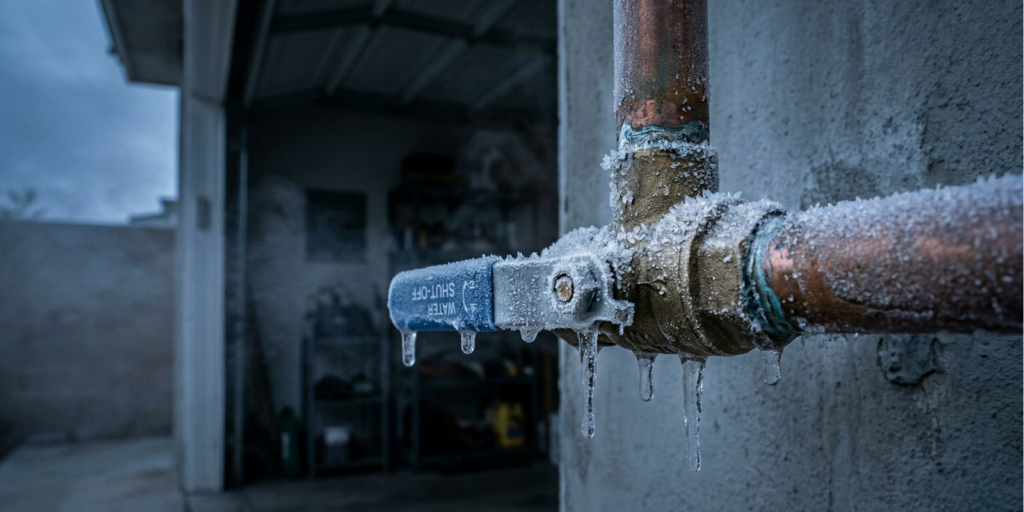
Most Orange County and San Diego homeowners do not think much about frozen pipes. Southern California winters are mild by national standards, and temperatures that would cause widespread pipe freezing in other states are uncommon here. But uncommon is not the same as impossible, and when temperatures drop below freezing during the occasional cold snap or Santa Ana reversal, pipes in vulnerable locations can and do freeze.
In Southern California homes, the pipes most at risk are those in exposed or uninsulated locations such as exterior walls, under raised foundations, in attic spaces, in garages, and in outdoor structures like workshops or guest units. These locations receive little to no insulation against cold air compared to interior plumbing, and even a few hours at or below freezing can cause water inside the pipe to expand and potentially crack or burst the pipe.
This guide from We Care Plumbing, Heating and Air walks through how to identify a frozen pipe, how to thaw one safely, and what to watch for when your pipes thaw out.
How to Tell If You Have a Frozen Pipe
The first sign that a pipe may have frozen is reduced or no water flow from a faucet during or after a cold overnight period. If you turn on a faucet and nothing comes out, or the flow is significantly slower than normal, the supply line feeding that fixture may be frozen.
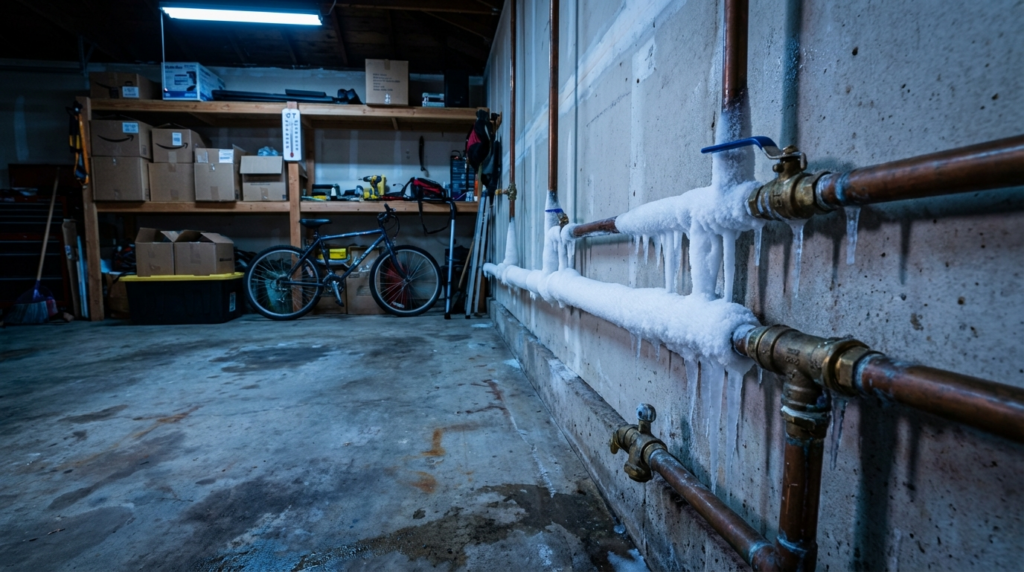
You may also notice visible frost on exposed pipes in a garage, crawl space, or exterior wall. In some cases, you can feel that a section of pipe is unusually cold or that the pipe surface feels slightly swollen compared to adjacent sections.
It is important to note that a frozen pipe that has not yet burst is preferable to one that has. If you have lost water pressure to a fixture overnight and suspect freezing, act quickly to thaw the pipe before the expanding ice causes a crack or split in the pipe wall.
Locate the Frozen Section
Before attempting to thaw a frozen pipe, try to identify approximately where the freeze has occurred. Start at the faucet where flow has stopped and work backward along the supply line toward the main shut-off.
In Orange County and San Diego area homes, the most common freeze locations are pipes running through exterior walls where insulation is thin or absent, pipes in unheated garages or workshops, pipes under raised foundations in homes where cold air circulates freely beneath the floor, and supply lines to outdoor hose bibs or irrigation systems that were not properly winterized.
Knowing which fixture has lost pressure helps narrow the location. A frozen bathroom faucet in a bedroom adjacent to an exterior wall points to a different location than frozen pipes in the kitchen.
Turn Off the Water Supply Before Thawing
Before you begin thawing, locate your home’s main water shut-off valve and know how to turn it off quickly. If the pipe has already cracked or split and you do not realize it, water will begin flowing rapidly as soon as the ice thaws. Being positioned near the shut-off valve allows you to stop the flow immediately if a burst is discovered.
For most Southern California homes built in the last 30 years, the main shut-off is located near the water meter, which is typically in a ground box near the street, or at the entry point where the main water line enters the house. Knowing where yours is before an emergency arises is a valuable piece of household preparedness.
Safe Methods for Thawing Frozen Pipes
Once you have identified the frozen section and are positioned near the water shut-off, you can begin thawing using one of several safe methods. The goal is to apply gentle, consistent heat to the frozen section until full water flow resumes. Never use open flames, blow torches, or propane heaters to thaw pipes. These create an immediate fire hazard and can cause plastic pipes to melt or metal pipes to overheat and deform.
A hair dryer is one of the simplest and most effective tools for thawing an accessible frozen pipe in a Southern California home. Set it to a medium or high heat setting and move it back and forth along the frozen section, starting closest to the faucet and working back toward the supply line. Keep the faucet open during thawing so steam and water can escape as the ice melts.
Portable electric space heaters work well for pipes frozen in a garage or enclosed crawl space where a hair dryer is difficult to maneuver. Position the heater so warm air circulates around the frozen section and allow 20 to 30 minutes before checking for restored flow. Heat tape or heating cable designed for pipes can also be applied directly to the pipe and plugged in to provide steady warmth.
Warm towels soaked in hot water wrapped around the frozen section provide gentle heat for pipes in accessible but tight locations. Replace them every few minutes as they cool.
What to Do If the Pipe Has Already Burst
If you turn on a faucet and notice no pressure but then see water leaking or spraying from a pipe elsewhere in the home, the pipe has already burst. Turn off the main water supply immediately and call a licensed plumber. Burst pipes in Orange County and San Diego homes are a plumbing emergency that requires professional repair.
While waiting for a plumber to arrive, move any valuables or furniture away from the affected area and place towels or buckets to manage standing water. Document any visible damage with photographs for insurance purposes. Do not attempt to patch or repair a burst pipe yourself with tape or sealant, as these are temporary measures that will fail under normal water pressure and mask the underlying problem.
How to Prevent Pipes From Freezing in Southern California
Preventing pipe freezing in Orange County and San Diego homes during cold snaps requires some advance preparation, particularly for pipes in vulnerable locations.
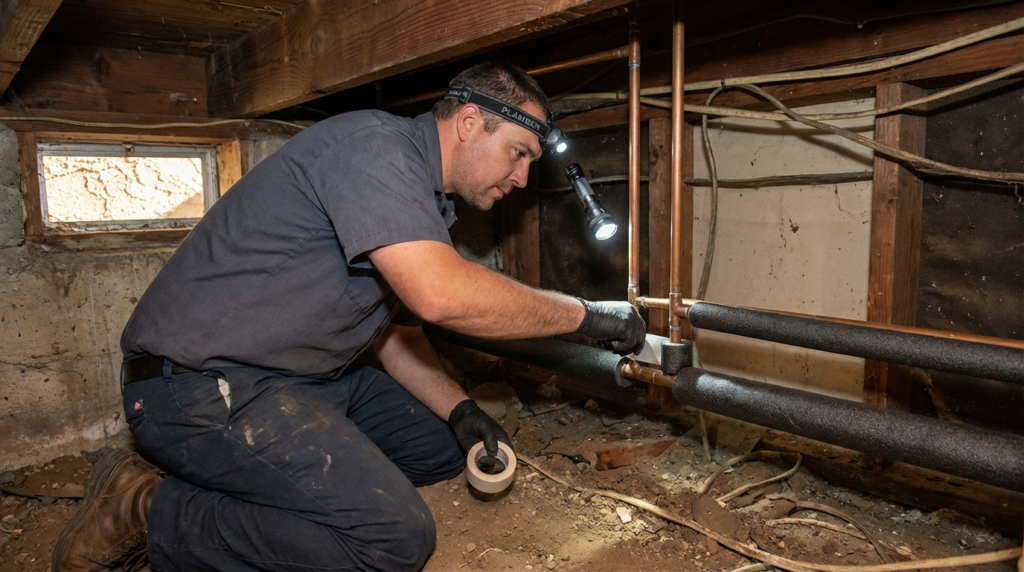
Insulate pipes in exposed or unheated areas. Foam pipe insulation is inexpensive and available at any Southern California hardware store. Wrap it around pipes in the garage, attic, crawl space, and along exterior walls.
Disconnect and drain garden hoses when temperatures are forecast to drop below freezing. Water left in hoses can freeze and back-pressure into the hose bib supply line, causing a freeze at the bib or in the wall behind it.
During a freeze event, let a thin trickle of water run from faucets fed by pipes in exterior walls. Moving water freezes at a lower temperature than standing water. On particularly cold nights, open cabinet doors under sinks on exterior walls to allow warm interior air to reach the pipes.
If you are planning to leave your Orange County or San Diego home unoccupied during winter months, set the thermostat to at least 55 degrees Fahrenheit and have someone check on the property during cold snaps.
For persistent pipe freezing issues or to upgrade insulation on vulnerable pipe runs, contact We Care Plumbing, Heating and Air at (760) 309-3474. Our plumbers serve homeowners throughout Orange County, San Diego County, and the Inland Empire.
Frequently Asked Questions
At what temperature do pipes freeze in a Southern California home?
Water in pipes begins to freeze when the air temperature around the pipe drops to or below 32 degrees Fahrenheit and stays there long enough for the pipe to reach the same temperature. In Southern California, this most often occurs with pipes in uninsulated garages, exterior walls, crawl spaces, or outdoor fixtures. Even a brief overnight freeze can affect vulnerable pipes, especially those with little insulation in older Orange County or San Diego construction.
Can I thaw a frozen pipe inside a wall in my Southern California home?
Frozen pipes inside a wall are more difficult to thaw because you cannot access them directly. You can try using an electric heating pad held against the outside of the wall at the suspected freeze location, or a space heater directed at the wall. If thawing inside-the-wall pipes is not resolving the issue, or if you suspect the pipe has burst, call a licensed plumber rather than opening the wall yourself.
How long does it take to thaw a frozen pipe?
Thawing time depends on how frozen the pipe is, how long it has been frozen, and how much access you have to apply heat. A lightly frozen section accessible in a garage may thaw in 10 to 20 minutes with a hair dryer. A more thoroughly frozen pipe in a tight crawl space may take 30 to 45 minutes or longer. Continue until full water pressure is restored to the affected fixture.
Are Orange County and San Diego homes built to handle freezing temperatures?
Southern California homes are not typically built with the same cold-weather protections as homes in colder climates. Pipe insulation in walls may be minimal, and garages and crawl spaces are often unheated. This means that during rare but real freeze events, Southern California homes can be more vulnerable to frozen or burst pipes than homes in regions where building codes account for sustained freezing temperatures.
Should I call a plumber even if I successfully thaw a frozen pipe?
Yes. A pipe that has frozen may have developed small cracks or stress fractures that are not immediately apparent once water flow is restored. These can become leaks days or weeks later as water pressure and temperature cycling work on the damaged area. Having a plumber inspect the thawed section gives you peace of mind and catches any damage before it becomes a larger problem.
About We Care Plumbing, Heating and Air
We Care Plumbing, Heating and Air has been serving Southern California homeowners with trusted plumbing, heating, and air conditioning services for over 25 years. Our licensed technicians serve Murrieta, Temecula, San Marcos, Orange County, and communities throughout San Diego County and the Inland Empire. We are available 24 hours a day, seven days a week for plumbing emergencies.
Call We Care at (760) 309-3474 or visit wecareteam.com to schedule service today.