

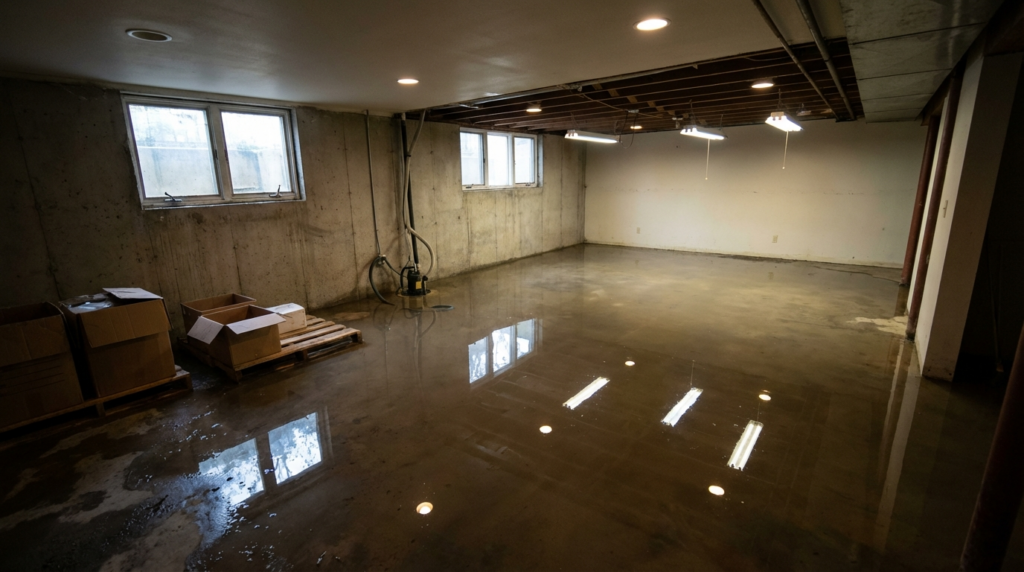
Basements are less common in San Diego County than in other parts of the country, but they do exist in some parts of the region, particularly in older hillside homes, some custom-built properties in East County, and certain neighborhoods in the foothills above El Cajon, La Mesa, and Alpine. When a basement in San Diego County floods, the response needs to be fast and systematic because water damage and mold can develop quickly in Southern California’s warm climate.
Flooding in a basement or below-grade space can come from multiple sources. A plumbing leak or pipe burst is one of the most common causes. Heavy winter rainfall and saturated soil can overwhelm foundation drainage and cause water intrusion through walls or the floor. A sewer backup can send wastewater into the lowest point in the home. Or a water heater, washing machine, or other appliance failure in the basement can discharge large volumes of water into the space.
Regardless of the source, the steps you take in the first hours after discovering a flooded basement significantly affect the extent of the damage and the cost of recovery. Here is what We Care Plumbing, Heating and Air recommends for San Diego County homeowners who find water in a below-grade space.
Step 1: Stop the Source of Water If Possible
The most important first action is identifying and stopping the water source if it is within your ability to do so. If the flooding appears to be coming from a broken pipe, a burst supply line to an appliance, or a failed plumbing connection, turn off the main water supply to your home immediately. The main shut-off is typically located at the water meter or at the point where the main supply line enters the home.
If the flooding is coming from a backed-up floor drain, a slow backup through a toilet or tub drain, or a sewage-like odor accompanying the water, the source is likely a sewer backup or blockage. In this case, stop using all water-consuming fixtures in the home and avoid running the washing machine, dishwasher, or flushing toilets until the blockage is cleared. Call a plumber as soon as possible.
If the flooding appears to be groundwater intrusion from heavy rainfall and there is no obvious way to stop the source immediately, focus on protecting the space and managing the water while working to get professional help.
Step 2: Ensure Electrical Safety Before Entering
Before entering a flooded basement, verify that the electrical power to that area is off. Water and electricity are a deadly combination, and standing water in contact with live electrical circuits, outlets, or appliances creates a serious shock hazard.
Locate your electrical panel and turn off the circuit breakers for the basement and any circuits that serve appliances in that space. If the panel is itself located in the flooded area and is inaccessible without entering water, do not enter. Contact your utility provider or a licensed electrician to assess and de-energize the space before anyone enters.
If you are uncertain whether the space is electrically safe, treat it as though it is not and wait for professional evaluation. This step is non-negotiable. Electrocution in flooded spaces is a real and preventable risk.
Step 3: Document the Damage for Insurance
Before removing any water or beginning cleanup, document the damage thoroughly with photographs and video. Photograph the waterline on walls, the depth of standing water, any visible damage to flooring, walls, stored items, appliances, and structural elements.
Contact your homeowner’s insurance carrier as soon as possible to report the loss. Flood damage coverage under a standard homeowner’s policy varies significantly depending on the source of the water. Plumbing failures that cause sudden and accidental water discharge are typically covered. Groundwater intrusion and surface flooding from storm surge may require a separate flood insurance policy. Your insurance agent can clarify what is covered under your specific policy.
Preserving documentation before cleanup protects your ability to file a complete and accurate insurance claim.
Step 4: Begin Water Removal
Once the space is confirmed to be electrically safe and documentation is complete, water removal should begin as quickly as possible. The longer water sits in a basement, the greater the risk of structural damage, deterioration of drywall and wood framing, and mold growth. In San Diego County’s warm climate, mold can begin developing within 24 to 48 hours under the right moisture conditions.
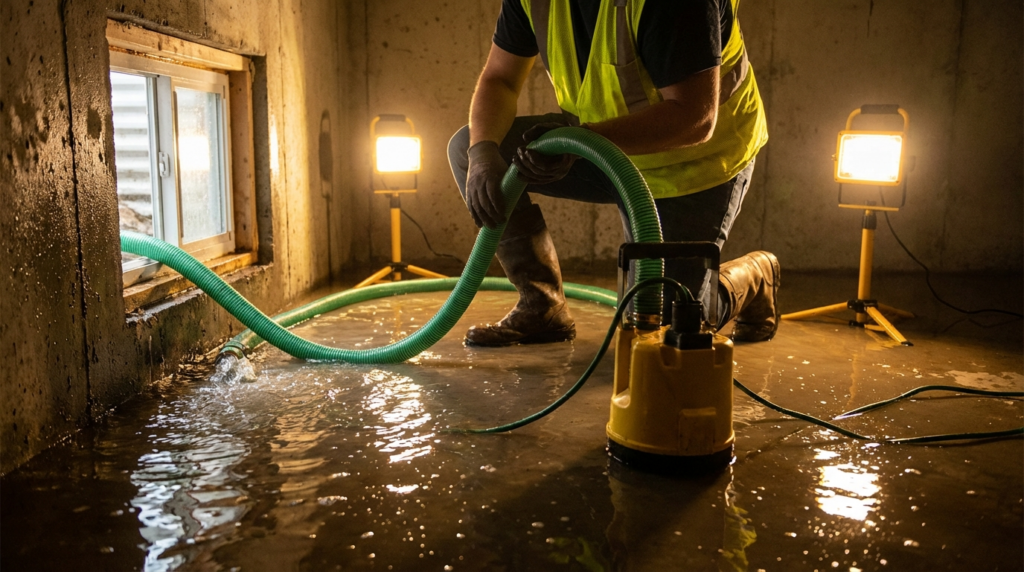
For smaller amounts of standing water, a wet-dry shop vacuum or submersible pump can remove the bulk of the water. Larger volumes of water typically require a gas-powered or electric submersible sump pump capable of high gallons-per-minute output. Equipment rental is available at many San Diego County hardware stores if you do not own a pump.
After bulk water removal, use fans, dehumidifiers, and open windows to begin drying the space. Concrete floors and walls absorb significant moisture and require extended drying time, sometimes several days, to reach acceptable moisture levels. A moisture meter can help confirm that materials have dried adequately before any reconstruction begins.
Step 5: Address the Cause With a Professional
Once the immediate emergency is managed, the cause of the flooding must be properly diagnosed and repaired to prevent recurrence. A flooded basement that is not addressed at the source will flood again.
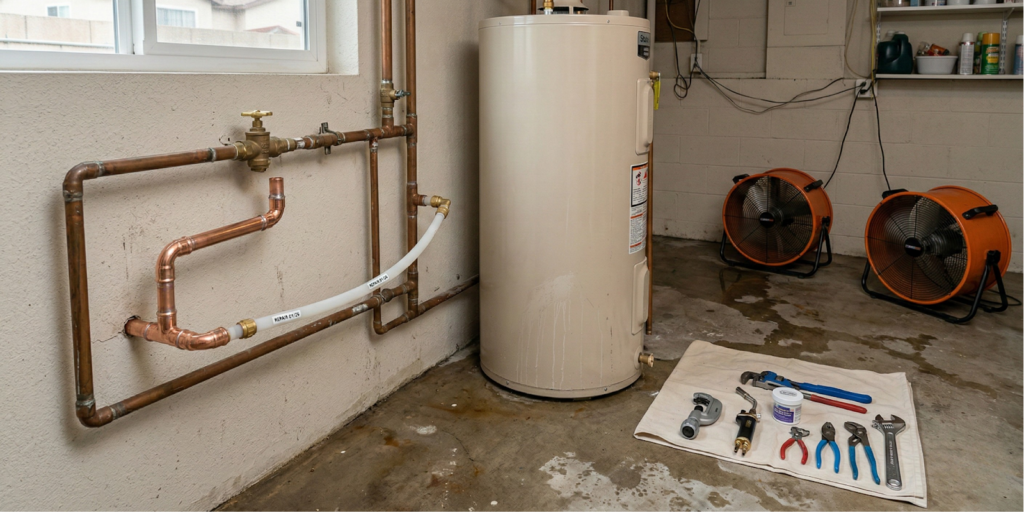
For plumbing-related causes such as burst pipes, sewer backups, failed water heater connections, or drain line blockages, a licensed plumber should inspect the affected plumbing, diagnose the failure, and perform the necessary repair. We Care Plumbing serves San Diego County homeowners for all plumbing-related water damage causes including emergency pipe repair, sewer line inspection and clearing, water heater replacement, and drain system service.
For groundwater intrusion through foundation walls or floor, a waterproofing contractor may need to evaluate and improve the basement’s drainage and waterproofing systems. This may involve interior drain tile systems, sump pump installation, exterior waterproofing membrane work, or improved grading and drainage around the foundation.
Signs of Sewer Backup in a San Diego County Basement
Sewer backups are one of the specific causes of basement flooding that require immediate professional attention and careful handling due to the health risks associated with sewage contamination. Signs that your basement flooding involves a sewer backup include water that has a sewage odor, water that appears discolored or has solid material in it, water coming up through floor drains or through a toilet or tub at ground level, and multiple drains slow or backing up simultaneously throughout the home.
Sewage-contaminated water, classified as Category 3 or black water in the restoration industry, should not be handled without appropriate protective equipment. Avoid contact with the water and call a plumber and a licensed water damage restoration contractor immediately. Category 3 water requires professional remediation, not a DIY cleanup with a shop vac.
We Care Plumbing can respond to sewer backup emergencies throughout San Diego County and clear blockages in your main sewer line using hydro jetting or mechanical cleaning. Call us at (760) 309-3474 for emergency plumbing service.
Frequently Asked Questions
How common are flooded basements in San Diego County?
Fully below-grade basements are less common in San Diego County than in other parts of the U.S. because of the region’s soil and seismic considerations and building tradition. However, sub-grade spaces, walk-out basements, partial basements, and below-grade garages exist in many hillside neighborhoods and older properties. When these spaces flood, the cause is typically a plumbing failure, sewer backup, or stormwater intrusion rather than the prolonged heavy rainfall that causes basement flooding in other regions.
How long does it take for mold to grow after a basement flood in Southern California?
Mold can begin growing within 24 to 48 hours of a water event in warm, humid conditions. San Diego County’s warm climate means that mold development after a basement flood can begin relatively quickly, particularly if wet materials such as drywall, carpet, or wood framing are not dried promptly. Beginning water removal and drying as soon as safely possible is the most important factor in preventing mold growth.
Does homeowner’s insurance cover a flooded basement in San Diego?
Coverage depends on the source of the water. Sudden and accidental discharge from a plumbing system, such as a burst pipe, is typically covered under a standard homeowner’s policy. Sewer backup may require a separate endorsement. Surface water flooding from storms is typically not covered under a standard homeowner’s policy and requires a separate flood insurance policy through the National Flood Insurance Program or a private insurer. Contact your insurance agent promptly after any flooding event to understand your coverage.
Can I clean up a flooded basement myself in San Diego County?
Minor water intrusion from a clean water source, such as a supply line leak, can often be addressed with a wet-dry vacuum, fans, and dehumidifiers if the affected area is limited and the materials are not deeply saturated. However, larger flooding events, sewage-involved water, and any situation involving mold or significant structural material saturation generally warrant professional water damage restoration services. When in doubt, consulting a professional before beginning cleanup protects both your health and your insurance claim.
What should I do if my floor drain backs up in my San Diego basement?
A floor drain backing up in a basement is typically a sign of a blockage or capacity issue in the main sewer line or a branch line downstream of the drain. Stop using all plumbing fixtures in the home immediately to avoid sending more water through the system. Call a licensed plumber to perform a camera inspection and clear the blockage. Do not use chemical drain cleaners as a first response for a main line backup, as they are unlikely to be effective and can create additional complications.
About We Care Plumbing, Heating and Air
We Care Plumbing, Heating and Air has been serving Southern California homeowners with trusted plumbing, heating, and air conditioning services for over 25 years. Our licensed technicians serve Murrieta, Temecula, San Marcos, Orange County, and communities throughout San Diego County and the Inland Empire. We are available 24 hours a day, seven days a week for plumbing emergencies.
Call We Care at (760) 309-3474 or visit wecareteam.com to schedule service today.